

Age Alone Doesn't Tell You What You Think It Does
A 20-year-old roof that's been well-maintained can outperform a 10-year-old roof that was poorly installed. Age matters, but it's not the standalone signal most people treat it as.
On this page
Every Sign Points One of Three Ways
When homeowners look at their roof, they usually ask a yes-or-no question: do I need a new roof or not? In practice, every warning sign falls into one of three groups. Some usually mean a repair. Some usually point to replacement. And some can't be judged from the ground at all. They need a closer inspection before anyone should recommend anything.
This page walks through all three, so you know what you're looking at before you talk to a roofer. Including us.
Signs That Usually Mean a Repair
These problems are real, but they're usually contained. A good repair fixes the cause without replacing a roof that still has years left.
When the signs do point to replacement, we install a complete GAF roofing system as a GAF Certified contractor. See why we install GAF.
- One leak in one spot, especially around a pipe, vent, or chimney. Most leaks start at flashing and penetrations, not in the open field of the roof.
- Cracked rubber pipe boots. Albuquerque's sun breaks these down years before the shingles around them wear out.
- Flashing that's pulled loose at one wall, chimney, or skylight.
- A few missing or wind-lifted shingles after a storm, when the rest of the roof is still flat and sealed.
- Damage limited to one area, like where a branch hit.
- On a flat roof: a single blister, one open seam, or a clogged canale or scupper causing water to back up in one corner.
What an inspection looks for
Signs That Usually Point to Replacement
These signs matter because they're spread across the roof, or because they mean the layers under the surface are failing. Patching one spot doesn't stop the next one.
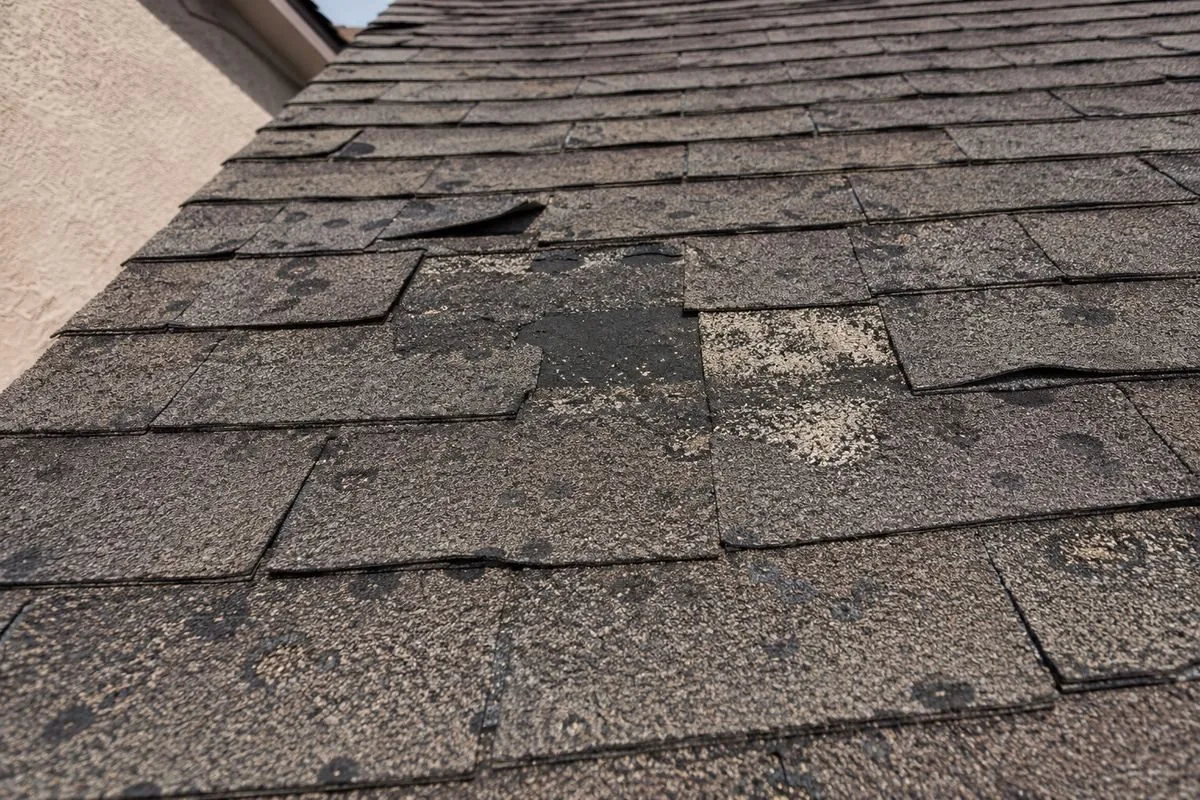
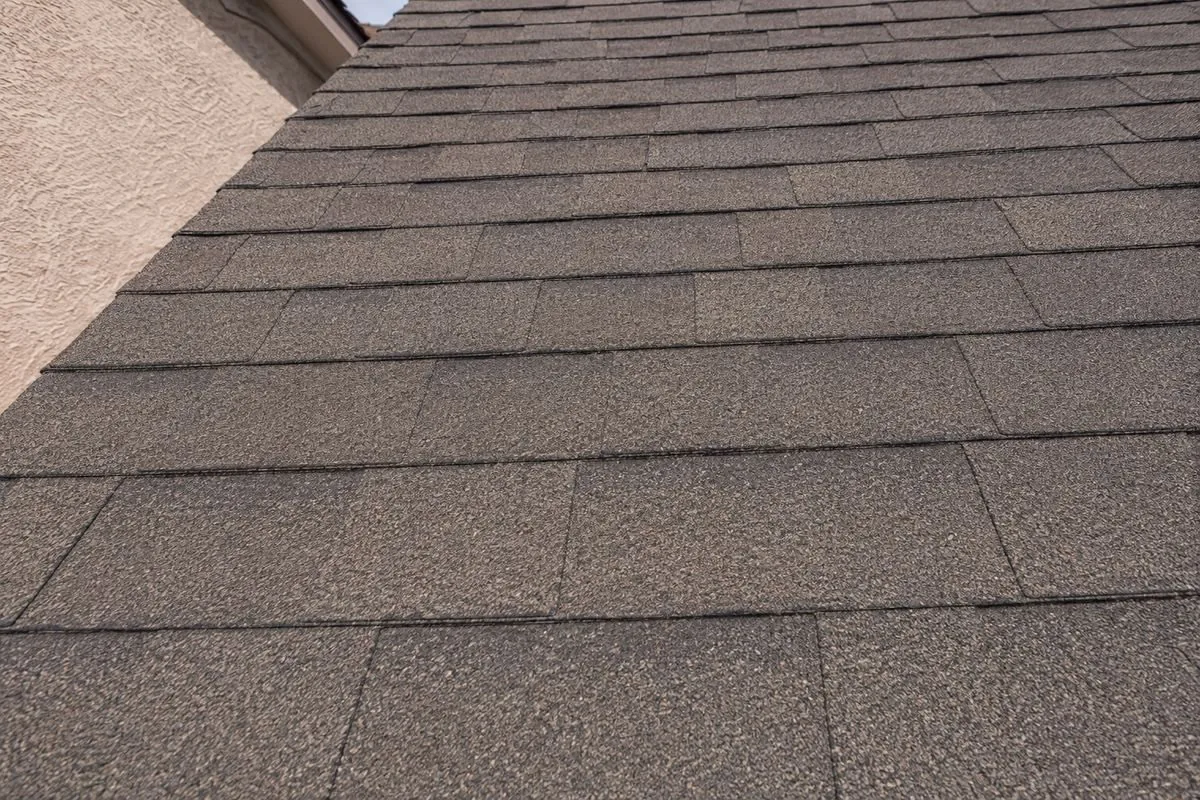
- Widespread granule loss that exposes the dark shingle mat across large areas, not just a few spots.
- Shingles curling, cupping, or no longer sealed down on several slopes of the roof.
- Repeated leaks in different places within a short time. That usually means the whole system is aging out, not one bad detail.
- A sagging roofline or soft, spongy spots when the roof is walked. That points to decking or structural problems underneath.
- Daylight through the roof deck when you look from inside the attic.
- Two layers of shingles already on the roof. Building code generally doesn't allow another layer on top, so the next roof requires a full tear-off.
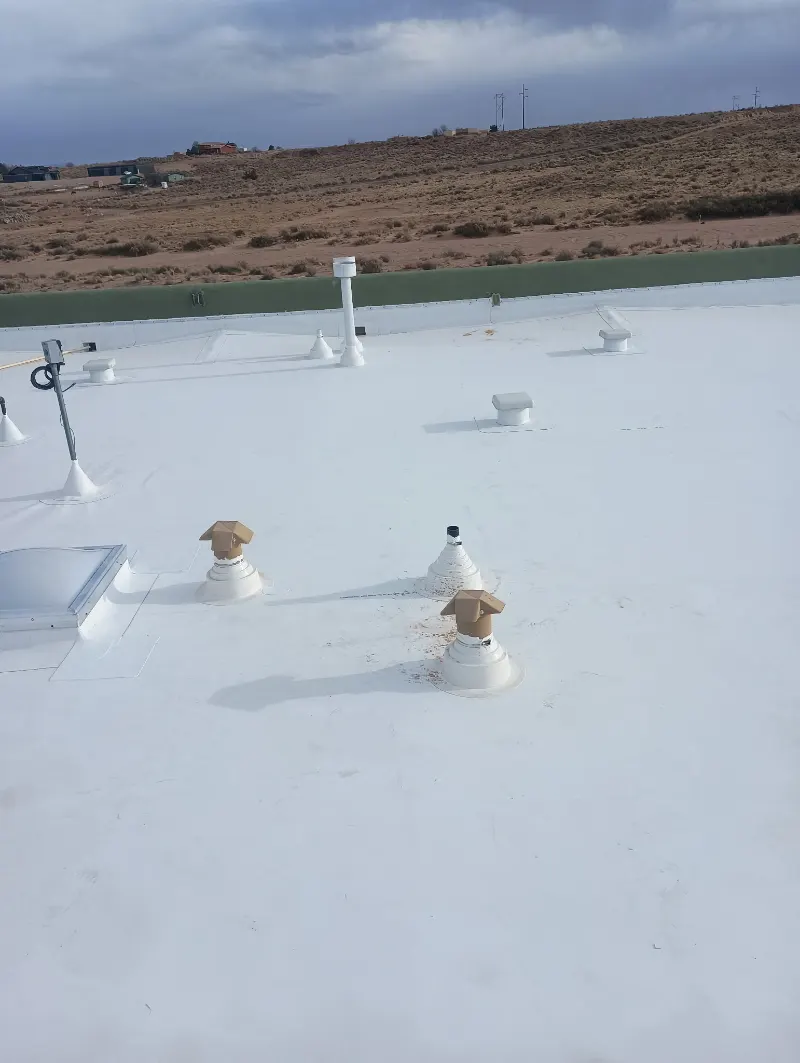
- On a flat roof: cracking across most of the surface, a membrane pulling away from the parapet walls, or ponding that keeps coming back after the seams have already been repaired.
Signs That Need a Closer Look First
This is the middle ground, and it's where homeowners most often get bad advice in both directions. These signs can mean something minor or something serious. The right move is to inspect before deciding.
- Possible hail marks. Hail bruising, normal wear, and manufacturing blisters can look similar from the ground. See our hail damage visual guide for what each one looks like up close.
- A ceiling stain with no obvious source. Water travels along the roof deck and rafters before it drips, so the stain is often several feet from the actual leak. More on that on our roof leak repair page.
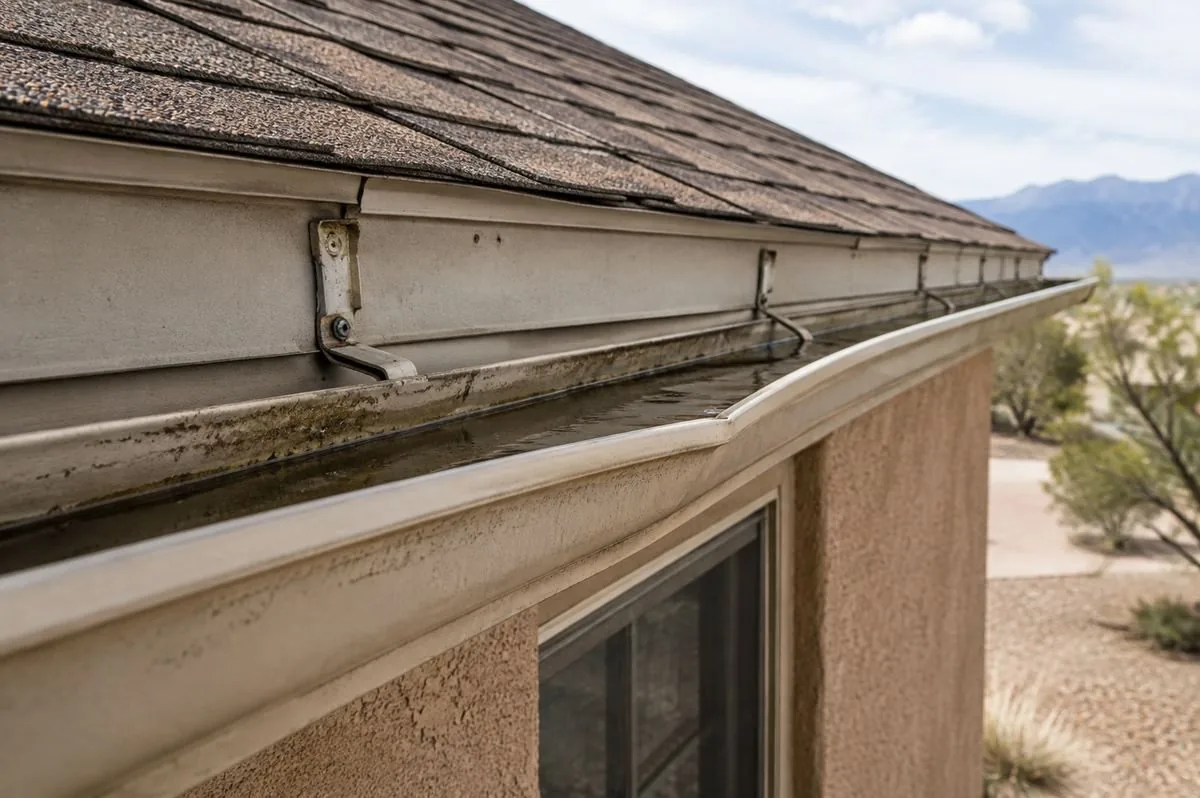
- Granules in your gutters. Some granule shedding is normal on a newer roof. On an older roof, heavy granules can mean the shingles are wearing through.
- Cracks in stucco near the roofline. These can come from settling, or from water getting behind the stucco at the roof-to-wall flashing. See storm damage vs. settling cracks.
- Moisture, staining, or a musty smell in the attic. This can be a leak, or it can be a ventilation problem. They're fixed very differently.
- Water still standing on a flat roof a couple of days after rain. Some ponding is a drainage issue that can be corrected. Some is a sign the roof structure has sagged.
Why Albuquerque Roofs Show These Signs Differently
Most national roofing advice is written for wetter, lower-elevation climates. Here, a few local conditions change how roofs age:
- High-altitude UV dries out the top surface of shingles and rubber seals faster than warranty timelines assume. See how altitude and UV age roofs.
- Big daily temperature swings expand and contract roofing materials over and over, which loosens fasteners and opens seams. See desert thermal cycling.
- Monsoon storms drive rain sideways under flashing that stays dry the rest of the year. That's why some leaks only show up in July and August. See monsoon roof damage.
- Flat roofs with parapet walls and canales are common here, and they fail at drains and wall edges long before the open membrane does. See canales and flat roof drainage.
What You Can Safely Check Yourself
Please don't climb onto your roof. You can learn a lot from the ground and the attic:
- Walk around the house and look at each slope. Note missing shingles, dark patches, or edges that look lifted.
- Check gutters and downspout outlets for heavy granules.
- With a flashlight, look at the underside of the roof deck in the attic for stains, damp wood, or daylight.
- Look at ceilings along exterior walls and around bathroom fans and vents.
- After a storm, look for dents in gutters, downspouts, and AC fins. They're a good sign hail was big enough to matter.
Take photos of anything you find. They'll help any roofer, and your insurance company if it comes to that. Our roof inspection checklist goes further.
What a Good Inspection Should Give You
Whoever inspects your roof should be able to show you, not just tell you. A trustworthy recommendation comes with:
- Photos of each problem, with its location on the roof
- Which of the three groups above each problem falls into, and why
- A repair option when repair is reasonable, not only a replacement price
- A clear explanation of what happens if you wait
If a roofer recommends replacement and can't show you why, that's a reason to get a second opinion. For how that decision should be made, see repair vs. replacement. When you get quotes, here's how to read them.
Frequently Asked Questions
My roof is old but I haven't had any problems — should I replace it anyway?
Not necessarily. A working roof with no real signs of failure doesn't need replacing just because of age. It's worth an inspection to confirm instead of assuming.
How urgent is it once I see one of these signs?
It depends which one. Daylight through the deck or structural sagging is worth prompt attention. Granule loss is worth scheduling but rarely an emergency.
Are granules in my gutters a bad sign?
It depends on the roof's age. A new roof sheds some loose granules for the first year or so, which is normal. On an older roof, heavy granules in the gutters, especially with dark patches visible on the shingles, usually means the surface is wearing through and should be inspected.
Can I just repair the damaged section if the rest of the roof is fine?
Often, yes. If the damage is limited to one area and the rest of the roof is still sealed and flexible, a targeted repair is usually the right call. Repairs get harder when the surrounding shingles are brittle or discontinued, because they can crack when lifted or won't match.
How do I know if a roofer is overselling a replacement?
Ask them to show you photos of each problem and explain why it can't be repaired. Ask for a repair price too, when repair is reasonable. If they can't point to specific, widespread problems, get a second opinion before signing anything.
Does a water stain on my ceiling mean I need a new roof?
Not by itself. Most stains come from one failed spot, often flashing or a pipe boot, and water can travel several feet before it shows up. Finding and fixing that source is usually a repair. A new roof only makes sense if the inspection finds widespread problems.
Ready for a Free Roof Report?
It's free, and you're under no obligation. You'll know exactly where your roof stands.