

Roof Leak Repair in Albuquerque: It's Rarely Where You Think It Is
Water travels before it shows up. A stain on your ceiling is often several feet from where the roof failed, and that's the most common reason DIY leak-chasing fails.
On this page
What We Check
Water runs along a rafter or decking seam before it drips down, which is why patching directly above the stain so often fails to fix the problem.
- Flashing points first: chimneys, vents, skylights (most leaks start here)
- Valleys and any place two roof planes meet
- The shingle field itself, last
How Water Travels Before It Shows Up
A roof leak rarely drips straight down. Water gets in at a weak point, then follows the easiest path: across the underlayment, along the roof deck, down a rafter, until it reaches a low spot where it can drip onto your ceiling. That's why a stain in the hallway can come from a pipe boot over the bathroom, and why patching the roof directly above the stain so often doesn't work.
- Entry point. Usually flashing, a penetration, or a seam, not the open field of the roof.
- Underlayment and deck. Water spreads under the surface, sometimes for several feet.
- Framing. It runs along rafters or trusses toward the lowest point.
- Ceiling. It finally soaks through the drywall, where you see it.
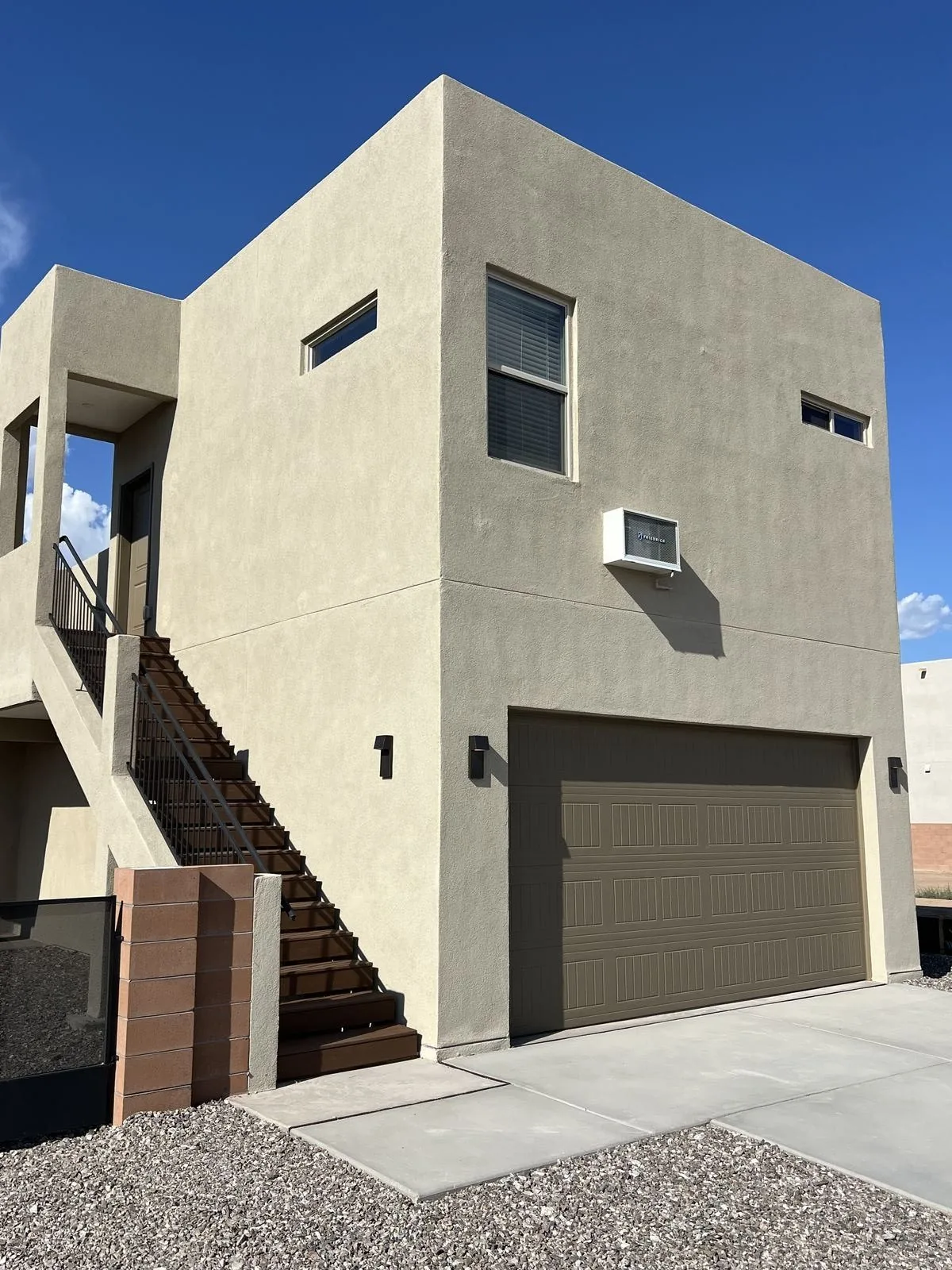
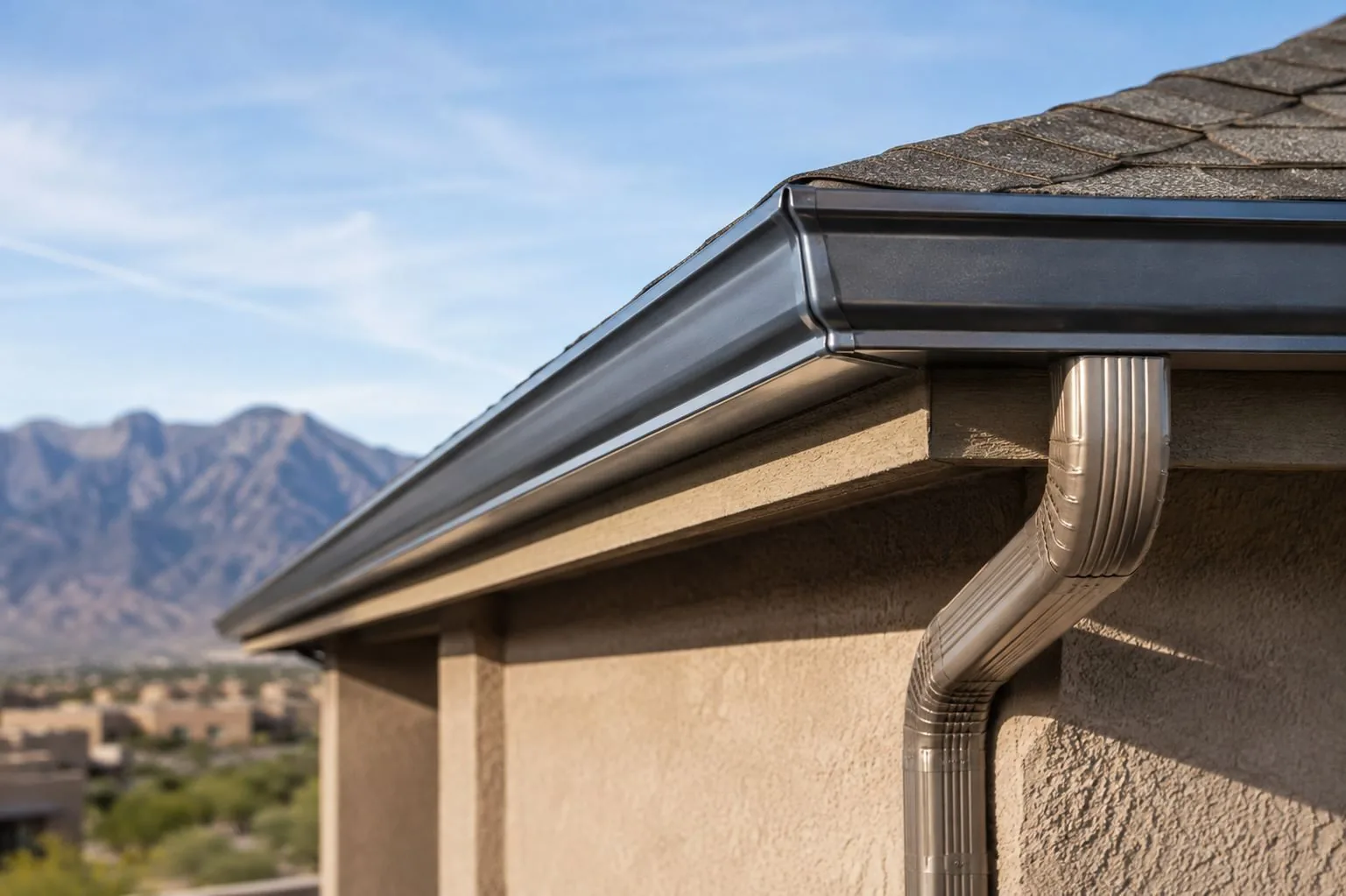
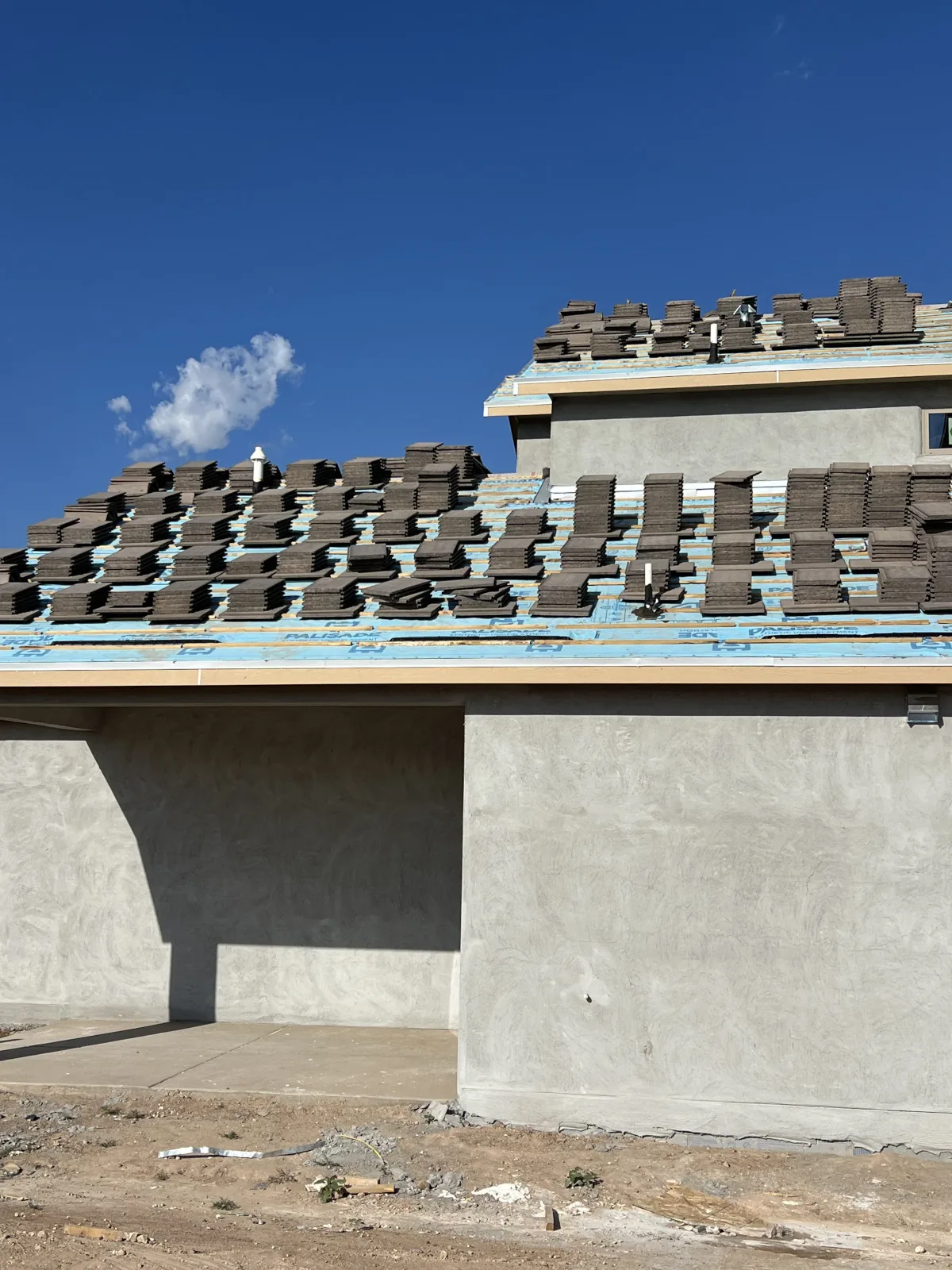
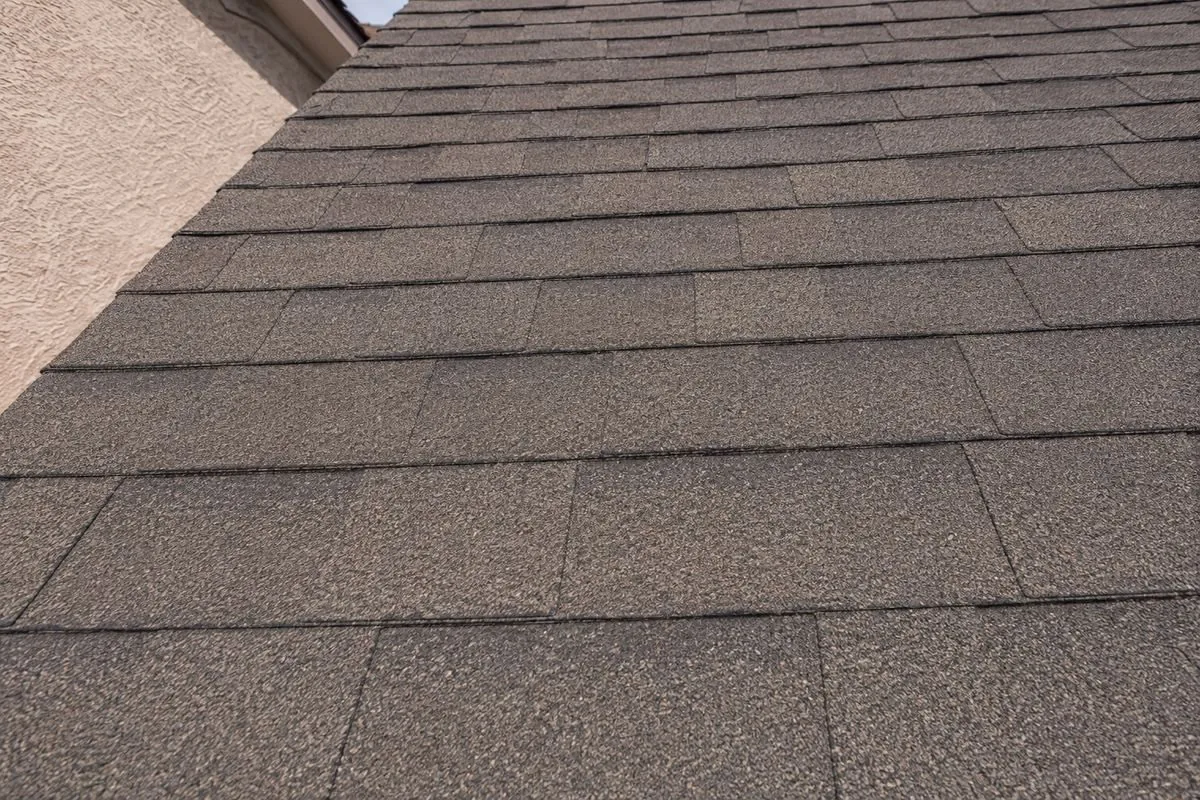
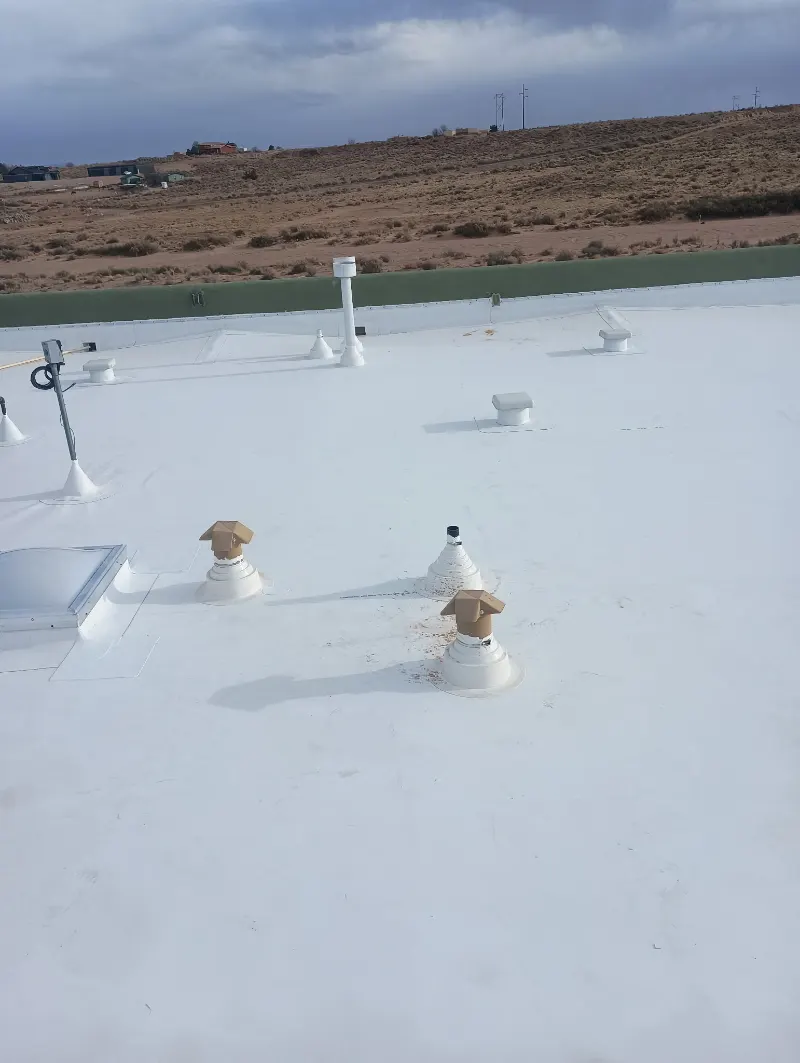
Examples of leak repair work
Where Albuquerque Roofs Usually Leak
On pitched roofs:
- Rubber pipe boots cracked by UV exposure, often years before the shingles wear out
- Wall and step flashing where the roof meets a stucco wall. See flashing repair.
- Chimneys and skylights. See why chimney flashing leaks.
- Valleys, where two roof slopes meet and carry the most water
- Swamp cooler mounts and lines, a very local problem. See swamp cooler roof leaks.
On flat and low-slope roofs:
- Parapet walls, where the membrane turns up the wall and the cap on top can open up
- Canales and scuppers that clog or pull away from the wall. See canales.
- Seams and ponding areas, where water sits long enough to find a weak spot. See flat roof drainage.
- Vigas where they pass through the parapet or roof. See why vigas leak.
Why Vigas Leak Where They Pass Through the Parapet
Vigas leak at the wall because wood and adobe or stucco move differently, so the joint around each viga cracks open and lets water into the wall and roof. The National Park Service's preservation brief on adobe notes that adobe won't permanently bond with wood and tends to separate or crack where the two meet. The viga itself shrinks as it dries and swells when it gets wet, so that gap keeps working, and a monsoon storm finds it.
The exposed viga end is the other weak spot. End grain soaks up water, and as the log dries in our sun it checks, meaning it splits along the grain. A check on top of a viga collects rain and feeds it into the wood. Viga restoration guidance used by UNM Facilities describes viga ends rotting on top from exactly that kind of crack.
Common fixes, depending on what the inspection finds:
- Seal and flash the penetration. The gap around the viga is cleaned out and sealed with a flexible sealant that can handle wood moving against masonry, and on the roof side the viga is flashed into the membrane like any other penetration.
- Cap or treat the viga end. Checks on top are filled or covered, and the end is protected with a metal cap or an end-grain sealer. A tail that's already soft may need a carpenter's repair or replacement.
- Repair the stucco around it. Cracked stucco at the viga is cut back and patched so water can't run in behind it. See stucco repair.
Vigas, canales and parapet caps all sit in the same wall, so it makes sense to check them together. See canales.
Why Some Leaks Only Show Up During Monsoon Storms
If your roof only leaks in July and August, you're not imagining it. Monsoon storms bring wind-driven rain that hits the roof sideways, pushing water up and under flashing that stays dry in a normal rain. Short, heavy downpours can also overwhelm canales, scuppers, and gutters, so water backs up behind parapet walls or over the edge of flashing. The rest of the year, the same weak spot never gets tested. See monsoon roof damage for more.
What Happens on a Leak Call
- Inside first. We look at the stain and the surrounding ceiling and walls to understand where the water is showing up.
- Attic trace. When there's attic access, we follow the water path back toward where it entered.
- Roof inspection. We check the likely entry points above that path: flashing, penetrations, valleys, seams, and drains.
- Photos and explanation. You see what we found and where, before any work is agreed on.
- The right fix. Most leaks are a repair. If the inspection shows wider problems, we'll explain why, with photos. See repair vs. replacement.
If water is actively coming in, we can tarp the area first to prevent more damage. See emergency roofing.
If a leak traces back to a worn-out roof rather than one bad spot, the replacement goes on as a complete GAF system, with GAF leak barrier at valleys, eaves and penetrations.
What to Do Before We Get There
- Put a bucket or towels under the drip and move furniture and electronics out of the way
- If the ceiling is sagging or bulging with water, keep people away from that area
- Take photos of the stain and any damage, with the date. They help with any insurance claim.
- Don't go up on the roof, especially when it's wet
Frequently Asked Questions
Is a small ceiling stain urgent?
Not usually an emergency, but it means water is already getting past the roof. Schedule it soon instead of waiting for it to spread.
Can you find a leak without tearing into my ceiling?
In most cases, yes. Attic inspection and checking from the roof side usually find it without any interior demo.
Why does my roof only leak when it storms hard?
Wind-driven rain and heavy downpours reach spots that normal rain doesn't, like the upper edge of wall flashing or a canale that backs up. A leak that only appears in monsoon storms usually points to flashing or drainage, not the whole roof.
Will a small leak cause bigger damage if I wait?
It can. Water that gets past the roof soaks the underlayment, decking, insulation, and drywall, and damp wood and insulation can lead to rot and mold over time. Small leaks are also the cheapest to fix, so it's worth scheduling soon.
Does homeowners insurance cover a roof leak?
It depends on the cause. Sudden damage from a covered event, like a storm, is often covered. Leaks from wear, age, or lack of maintenance usually aren't. See our insurance claims page for how to document damage before you call.
Why do vigas leak where they go through the parapet?
Wood and adobe or stucco move differently, so the joint around each viga cracks and opens up. Exposed viga ends also soak up water and check, and a split on top of the viga can feed rain into the wood and the wall.
How do you fix a leaking viga?
Seal and flash the gap where the viga passes through the parapet or roof, cap or treat the exposed end and any checks on top, and repair the cracked stucco around it. A viga tail that's already rotted may need a carpenter's repair.
Ready for a Free Roof Report?
It's free and there's no obligation. You'll know where your roof stands.