

Heat-Welded Seams, Built for Monsoon Drainage
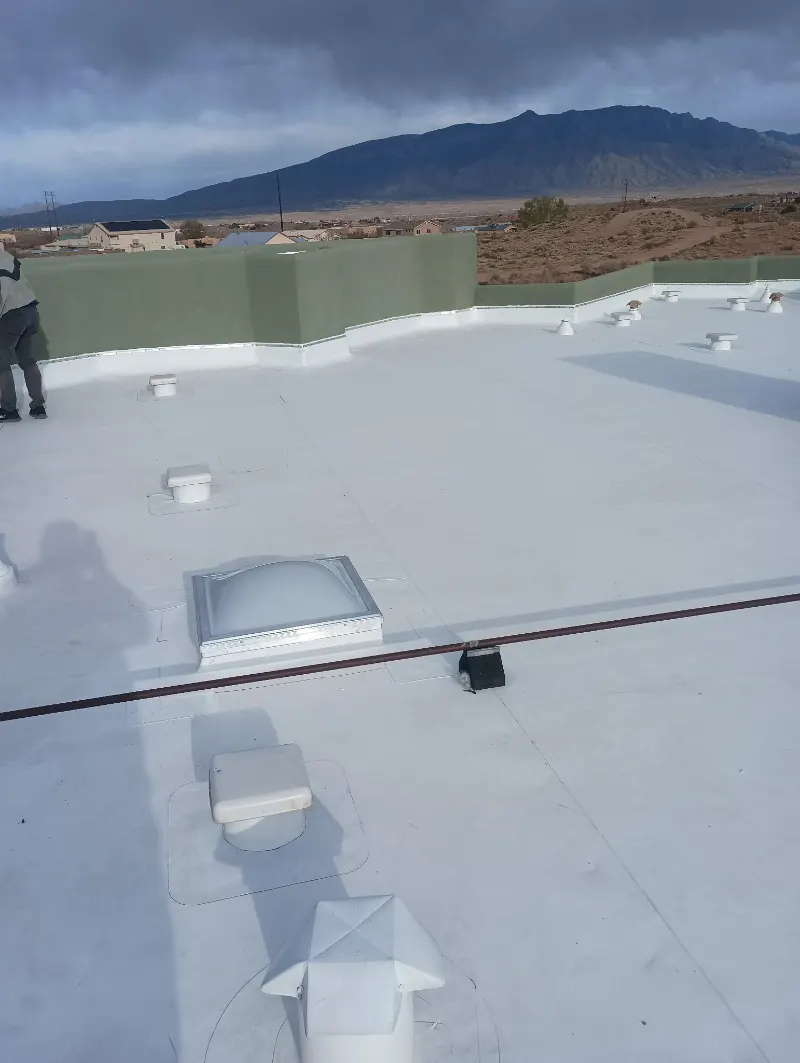
TPO is a single-ply membrane system for flat and low-slope roofs. The seams are heat-welded, not glued, and that difference matters most during Albuquerque's monsoon season.

On this page
What TPO Roofing Is (and Isn't)
TPO (thermoplastic polyolefin) is a single-ply membrane rolled out in wide sheets and heat-welded together at the seams to form one continuous waterproof surface. It's priced and installed differently than pitched shingle roofing, by square footage and membrane thickness instead of per shingle. TPO is not the same as a roof coating. It's a full membrane system, while a coating is a topical sealant applied over an existing surface.
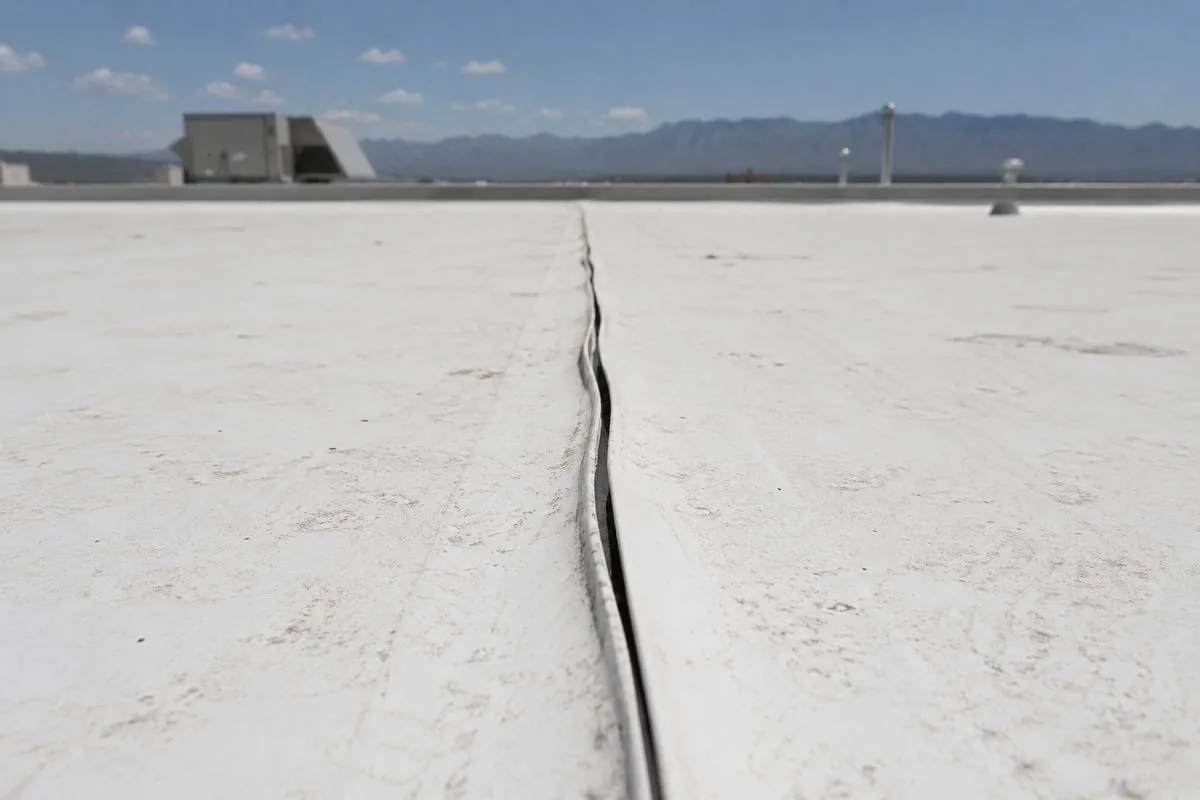
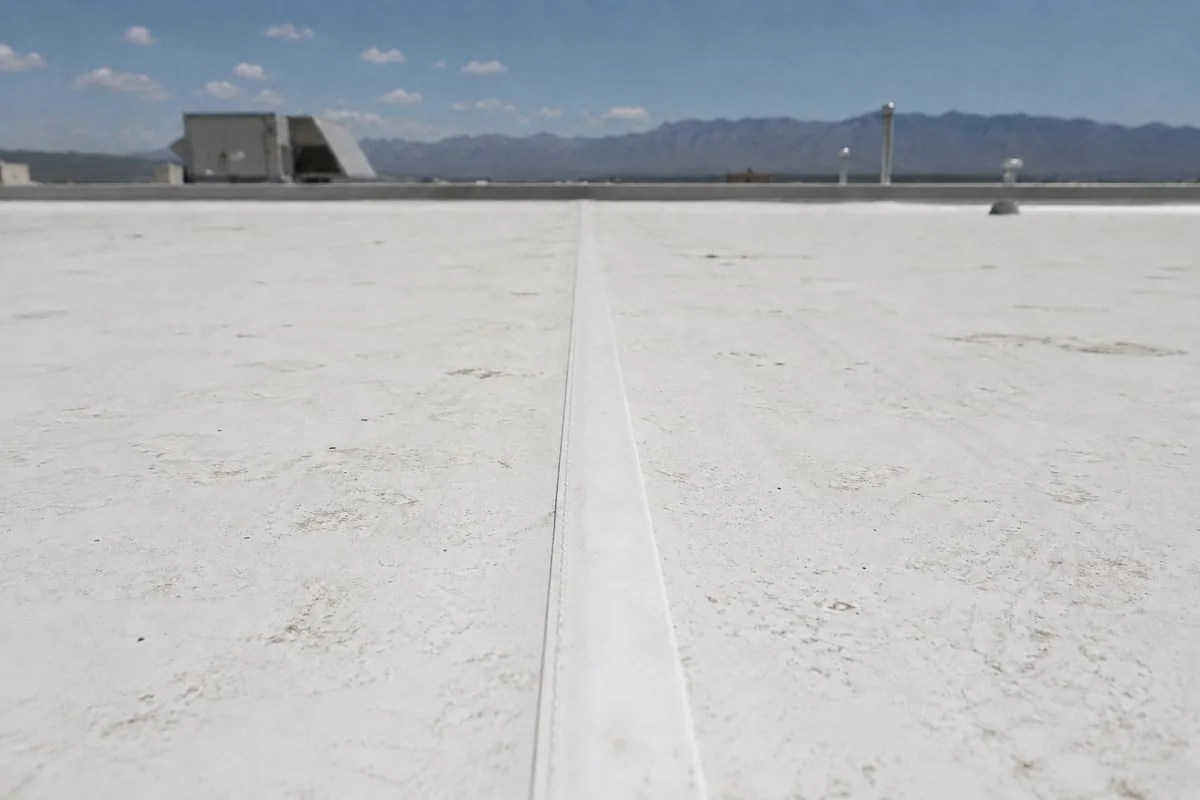
What Seam Separation Actually Looks Like
Drag the slider to compare a properly heat-welded TPO seam against one that has separated. This is the failure point a seam inspection checks for.
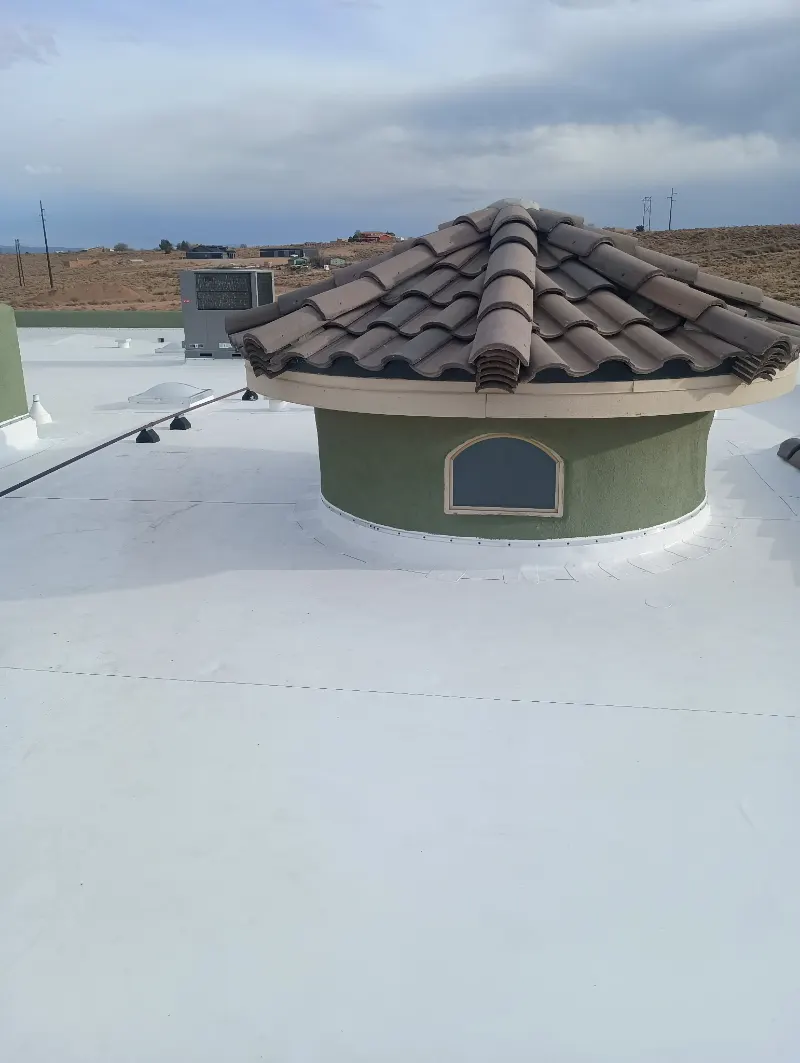
Examples of TPO details
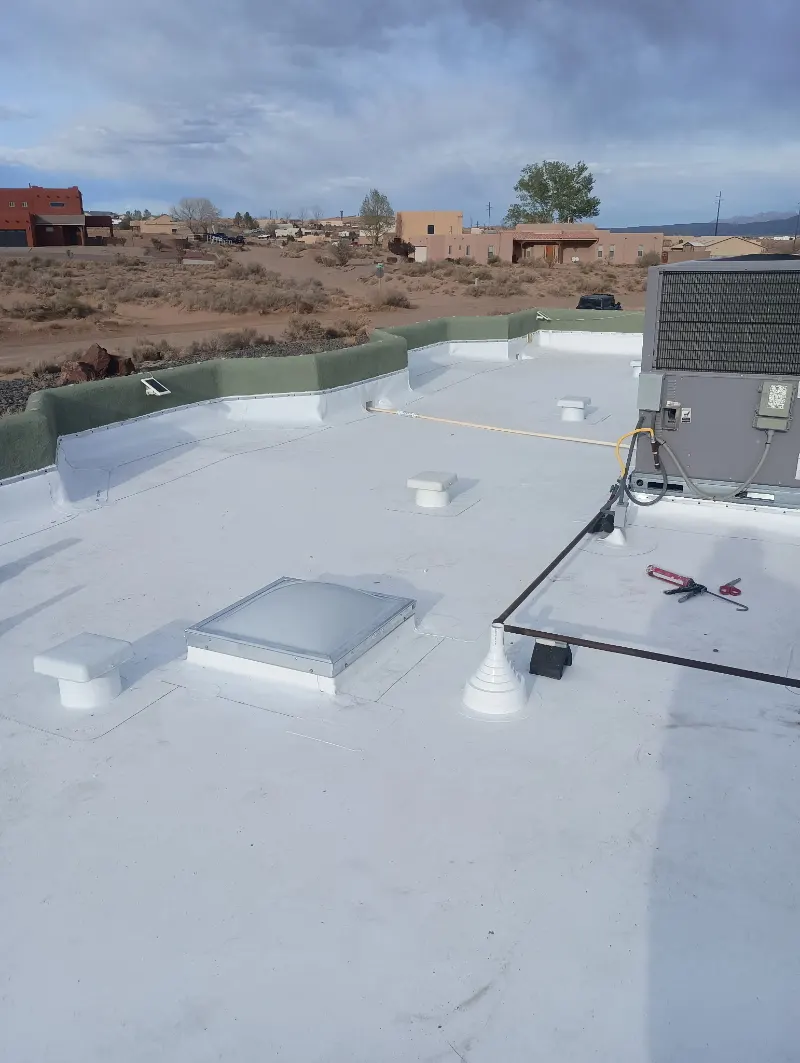
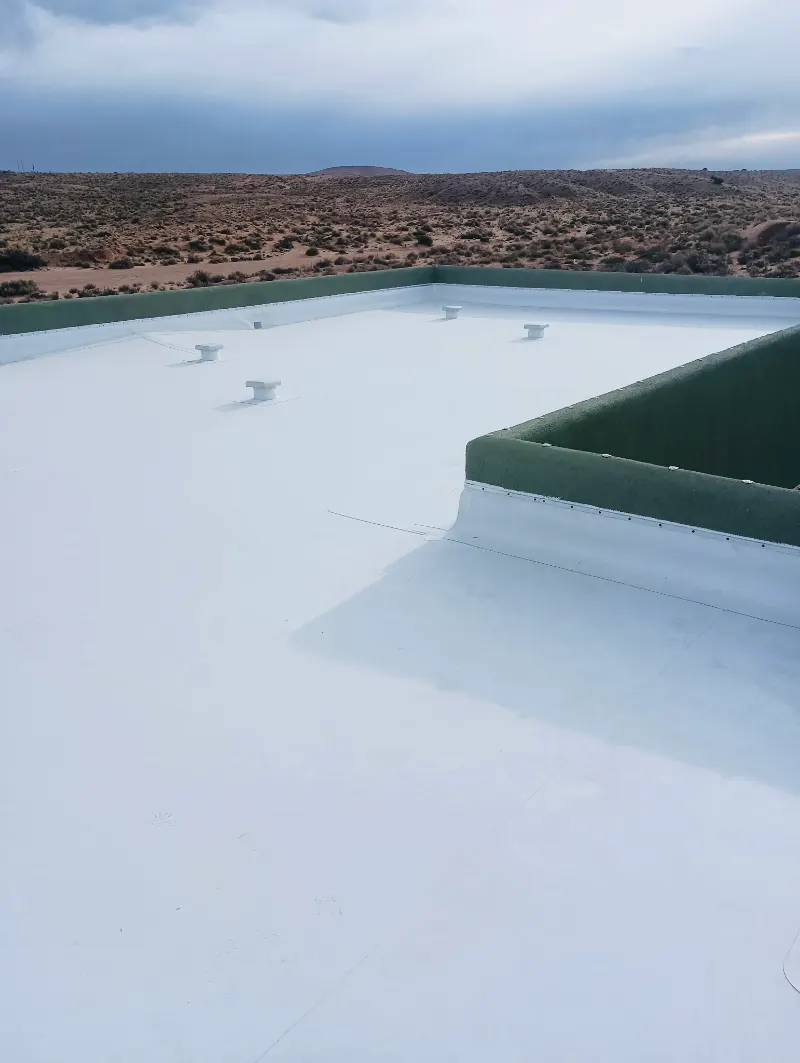
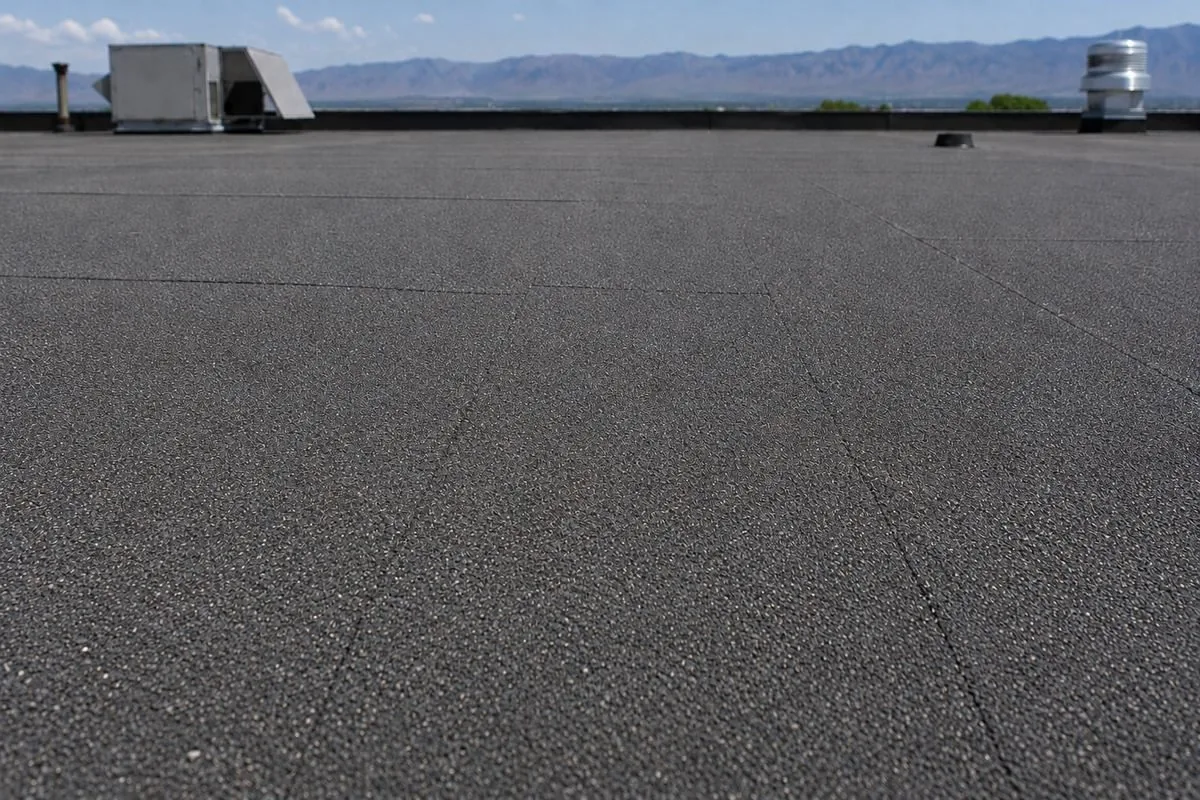
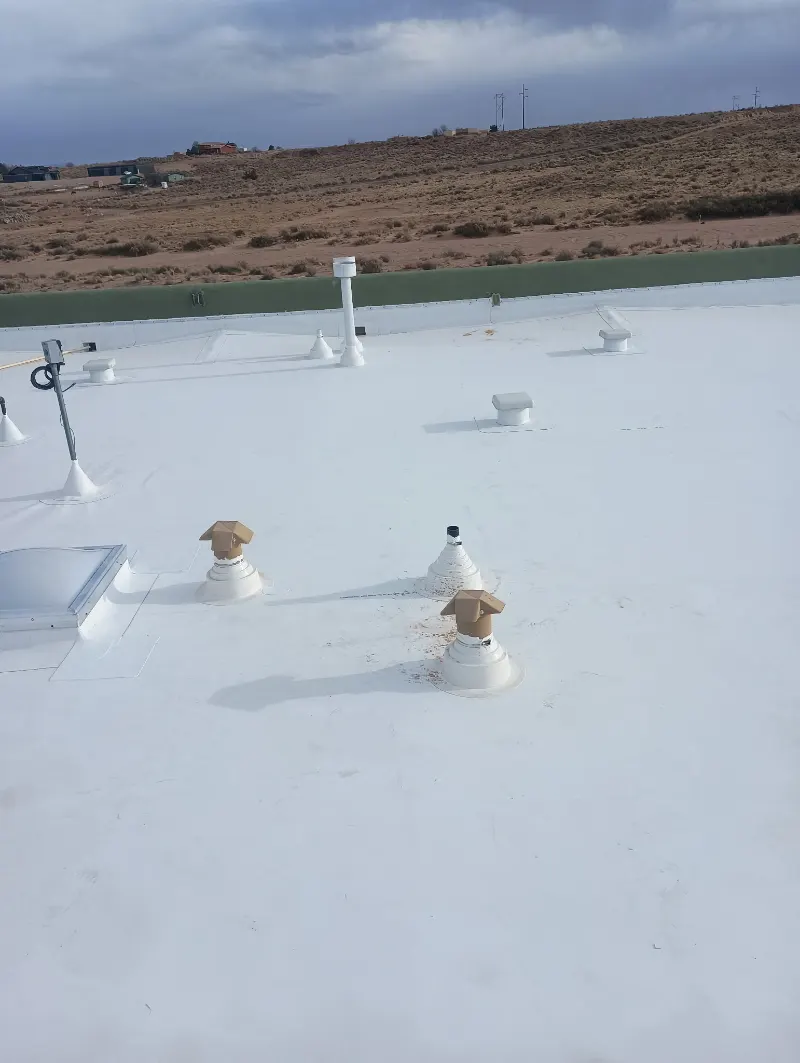
Why It Holds Up in Albuquerque's Climate
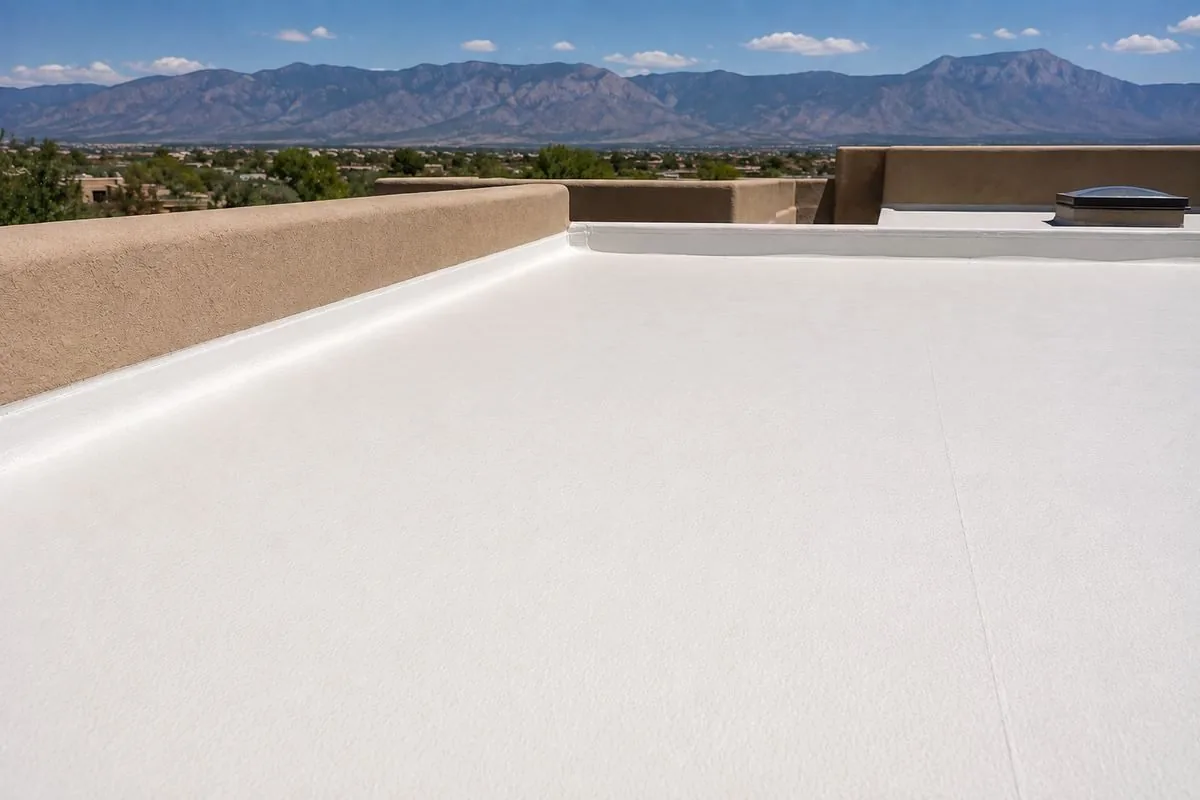
Flat and low-slope roofs face a different challenge than pitched roofs: standing water during monsoon season, roughly mid-June through late September. TPO's heat-welded seams create a continuous membrane with no gaps for water to work into over time, and that matters more here than the membrane's UV resistance alone. Even so, how well a TPO roof performs during monsoon season usually depends more on the drainage design underneath it (slope, scupper placement and drain sizing) than on the membrane material itself.
The Technical Specs
| Typical lifespan | 20-30 years depending on membrane thickness and maintenance |
|---|---|
| Underlayment | Insulation board substrate beneath the membrane, sized to the roof's specific drainage plan |
| Fastening pattern | Mechanically fastened or fully adhered, depending on roof size and wind exposure; seams are hot-air welded, not taped or glued |
| Manufacturer / product line | GAF EverGuard® TPO, or EverGuard® Fleece-Back TPO on re-cover jobs needing extra puncture resistance. Exact membrane thickness is confirmed at inspection based on roof size and slope. |
| Best suited for | Flat and low-slope roofs, including commercial buildings and flat residential sections such as additions or porch roofs |
Good Fit / Not a Good Fit
- Good fit for flat or low-slope roofs where a continuous waterproof membrane is needed
- Good fit when paired with a correctly engineered drainage plan for monsoon season
- Not used on standard pitched residential roofs, which call for asphalt shingle or metal
Built to commercial standards, even on residential jobs. Every residential TPO roof Timberwolf installs is designed to meet commercial standards, unless the customer requests a lesser design. We install it as a small commercial roof using the GAF EverGuard® TPO commercial system, and the GAF warranty coverage works the same way it does on a commercial building. A flat porch roof or room addition gets the same membrane and seaming approach used on a full commercial building.
Frequently Asked Questions
What is TPO roofing used for?
TPO is a single-ply membrane used on flat and low-slope roofs. It's most common on commercial buildings, but it's also used on flat sections of residential homes such as additions or porch roofs.
How does TPO handle Albuquerque's monsoon season?
TPO seams are heat-welded rather than glued or taped, which creates a continuous waterproof surface that holds up well against monsoon rainfall. That assumes the roof's drainage and slope were designed correctly in the first place.
Is TPO the same as EPDM or modified bitumen?
No. TPO, EPDM, and modified bitumen are different membrane systems with different installation methods and lifespans. TPO's heat-welded seams generally give it stronger seam durability than adhered or torch-applied systems.
Ready for a Free Roof Report?
It's free, and you're under no obligation. You'll know exactly where your roof stands.