

Commercial Roofing in Albuquerque, NM
Commercial roofing systems built around your building: TPO, PVC, modified bitumen, built-up roofing, and roof coatings. Before we recommend anything, we find out whether your roof needs a repair, a recover, a restoration, or a full replacement.

On this page
Commercial Roofing for Albuquerque Businesses
We work with property owners, property managers, facility managers, and developers across the Albuquerque metro. Every job is scheduled around your operating hours, because a leaking roof shouldn’t turn into lost business.
- Warehouses, industrial, and flex buildings
- Retail centers and restaurants
- Office and medical buildings
- Apartments and multifamily properties
- Churches and schools
- Multi-building portfolios
Repair, Recover, Restore, or Replace?
We don’t automatically recommend a new roof. A commercial roof can often be fixed or extended for far less than a full tear-off. The right answer depends on what’s under the membrane.
Repair
Leaks, failed seams, and flashing problems traced to the real source and fixed without replacing the whole roof.
Learn more Skip the tear-offRecover
A new membrane installed over the existing roof when the deck and insulation are still dry and sound.
Learn more Extend roof lifeRestore
A reinforced coating system that seals the existing roof and adds a reflective, seamless surface.
Learn more Start freshReplace
A complete new roof system, with new insulation and tapered drainage where it’s needed.
Learn moreWhat decides the right option: the condition of the membrane and deck, trapped moisture in the insulation, drainage and ponding, roof age, foot traffic, chemical or grease exposure, wind requirements, any existing warranty, your budget, and how long you plan to own the building.
Commercial Roofing Systems We Install
Timberwolf is a GAF Certified Commercial Contractor, and we install GAF’s full range of low-slope systems.
TPO Roofing
A white, heat-welded single-ply membrane and the most common choice for low-slope commercial roofs.
Learn more GAF EverGuard®PVC Roofing
A single-ply membrane with stronger chemical resistance, for restaurants and industrial buildings.
Learn more TPO & PVCFleece-Back & Recover
Fleece-backed membranes with added puncture resistance, built for going over an existing roof.
Learn more GAF RUBEROID®Modified Bitumen
Multi-ply asphalt-based membranes with built-in redundancy and many installation methods.
Learn more GAF GAFGLAS®Built-Up Roofing (BUR)
The traditional multi-layer roof, with more than a century of proven performance.
Learn more GAF CoatingsRoof Coatings & Restoration
Silicone, acrylic, and fabric-reinforced HydroStop® systems that extend an existing roof’s life.
Learn moreWhich Commercial Roofing System Fits Your Building?
There’s no single “best” commercial roof. Each system fits a different kind of building. Use this as a starting point, and we’ll confirm the right fit after we inspect your roof.
| System | Best suited for | Key strengths | How it’s installed |
|---|---|---|---|
| TPO | Most low-slope commercial buildings | Reflective white surface, heat-welded seams, strong value | Mechanically attached, adhered, induction-welded, or self-adhered |
| PVC | Restaurants, industrial, and buildings with chemical exposure | Chemical resistance, heat-welded seams, Class A fire rating | Mechanically attached, adhered, or induction-welded |
| Fleece-back TPO / PVC | Recover projects and roofs that need more puncture resistance | Goes over many existing roofs without a slip sheet or cover board | Low-rise foam adhesive or mechanically attached |
| Modified bitumen | Roofs with foot traffic or rooftop equipment | Multiple plies, tear and puncture resistance | Hot-mopped, cold-applied, heat-welded, mechanically fastened, or self-adhered |
| Built-up roofing (BUR) | Replacing or matching an existing BUR roof | Many layers of redundancy, long track record | Hot asphalt or cold adhesive, with gravel or a cap sheet |
| Coatings & restoration | Sound roofs that are aging but not failing | No tear-off, seamless reflective surface, minimal disruption | Spray, roll, or brush over the existing roof |
TPO Roofing
GAF EverGuard® TPO is a white single-ply membrane, and it’s the most common choice for commercial roofs today. GAF reports TPO is used in more than half of single-ply installs. Its seams are heat-welded, so the seams fuse into one continuous sheet instead of relying on tape or glue.
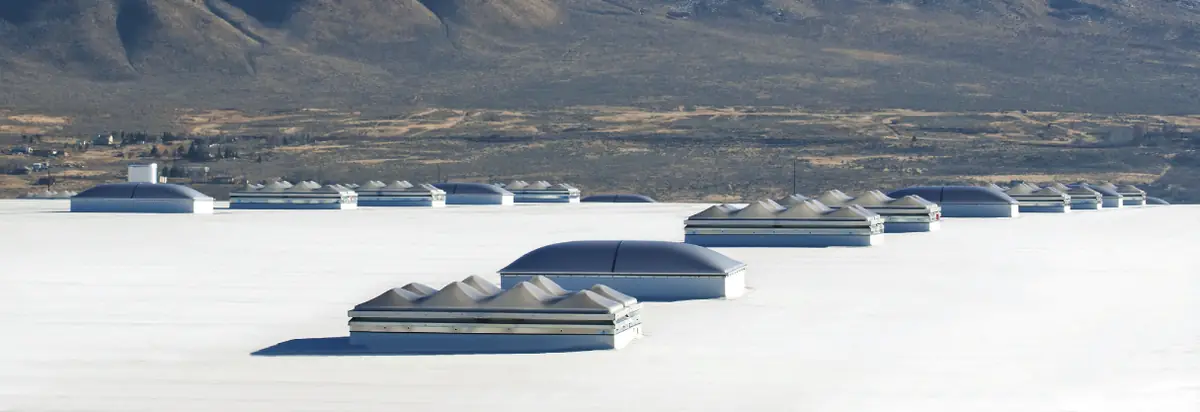
- Highly reflective white surface that helps keep the building cooler under Albuquerque’s strong high-desert sun
- Heat-welded seams that are stronger than taped seams
- Long-term heat, UV, and fungal resistance
- Flexible without plasticizers, which helps it handle our big day-to-night temperature swings
- Smooth and fleece-back versions, plus options for high wind uplift and added puncture resistance
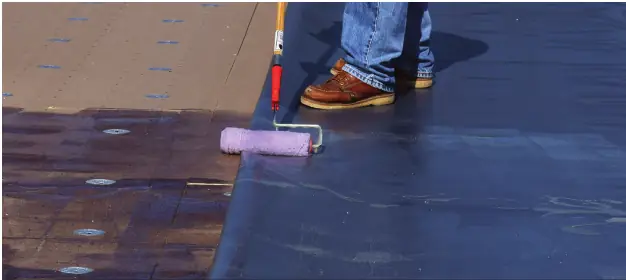
How TPO Is Attached
Mechanically attached: the membrane is fastened through the insulation into the deck, with the fasteners hidden in the seams. It’s fast, economical, and needs no adhesive.
Fully adhered: the membrane is glued to the insulation or cover board, giving a smooth, uniform look and strong wind performance.
Induction-welded: special plates are fastened under the membrane and bonded to it from above, so the membrane itself isn’t pierced and there’s less flutter in the wind.
Self-adhered: a peel-and-stick membrane with no spray adhesive and less odor, which helps on occupied buildings.
We pick the method based on your deck, the wind requirements for your building, and whether the building stays occupied during the work.
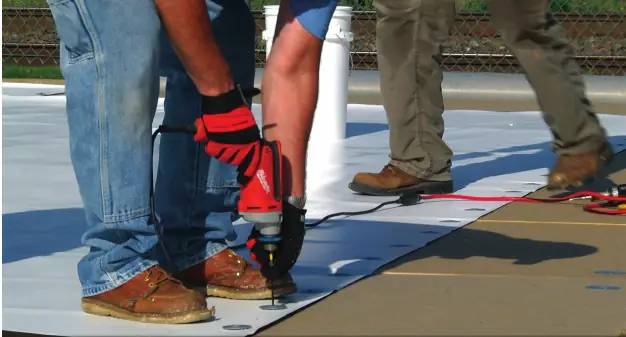
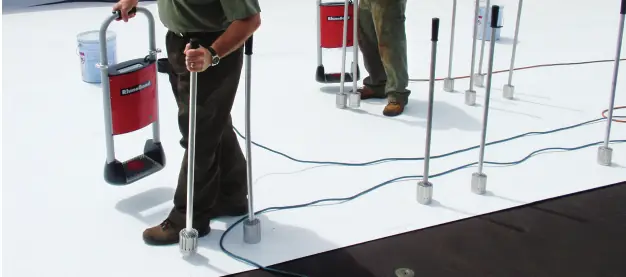
Images courtesy of GAF.
PVC Roofing
GAF EverGuard® PVC is a single-ply membrane with more chemical resistance than other single-ply options. That makes it a strong fit for restaurants with rooftop exhaust and for industrial buildings.
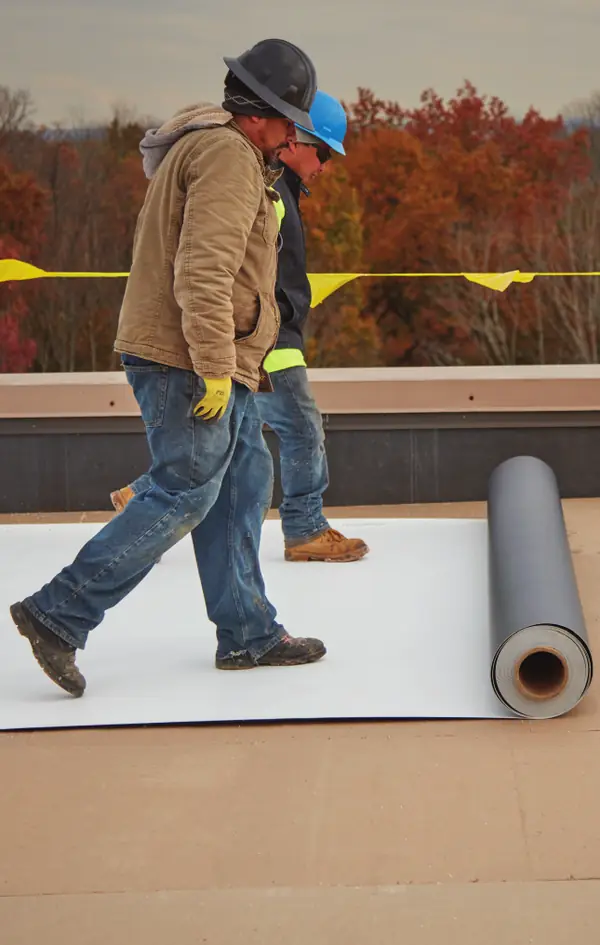
- Increased chemical resistance compared with other single-ply membranes
- Heat-welded seams for strong, continuous seams
- Class A fire rating when tested to ASTM E108
- Long-term weathering, fungal, and UV resistance
- Mechanically attached, fully adhered, or induction-welded
Good to know: GAF’s guarantees exclude damage from grease, animal fats, jet fuel, and certain chemicals, so we’ll talk through what’s on your roof and how to protect it (for example, grease containment at exhaust fans).
Fleece-Back Membranes & Roof Recover
If your existing roof is worn but the deck and insulation underneath are still dry and sound, a recover can give you a new watertight roof without a full tear-off. That means less labor, less waste in the landfill, and less noise and disruption for your tenants.
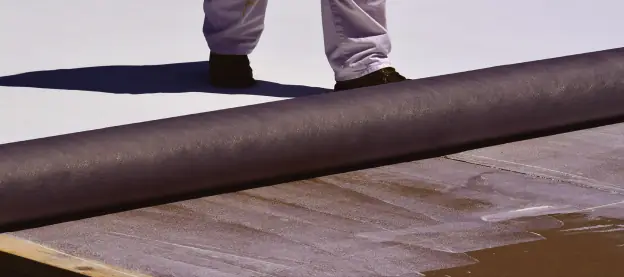
GAF EverGuard® fleece-back TPO and PVC membranes are made for this work. A polyester fleece is bonded to the back of the membrane, which:
- Adds puncture resistance compared with standard membrane of the same type
- Separates the new membrane from an old modified bitumen cap sheet to prevent bleed-through and staining
- Often removes the need for a cover board or slip sheet
- Can be installed with low-odor, low-rise foam adhesive or mechanically attached
Before any recover, we test the existing roof for moisture. Building codes generally don’t allow a recover over wet insulation or over a roof that already has two layers, and trapping moisture under a new roof shortens its life. If moisture scans show wet areas, we remove and replace just those sections.
Hail note: GAF membrane guarantees exclude hail damage unless additional coverage is purchased. In a hail-prone area like Albuquerque, ask us about thicker or fleece-back membranes.
Modified Bitumen
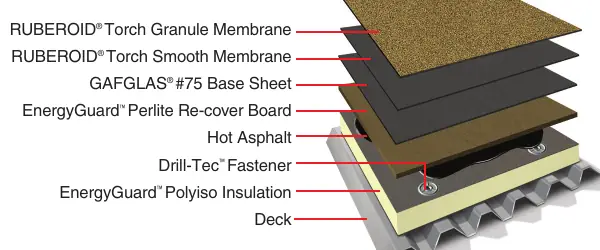
GAF RUBEROID® modified bitumen is an asphalt-based roof reinforced with polymers and installed in two or more layers. Those layers give you built-in redundancy: if the top layer is damaged, the one below it keeps protecting the building.
- SBS modified bitumen uses a rubber-like polymer for flexibility, bending without cracking at temperatures as low as −20°F
- APP modified bitumen uses a plastic polymer for a more rigid, UV-stabilized membrane suited to hot, sunny climates
- Excellent tear and puncture resistance for roofs with foot traffic and rooftop equipment
- Many installation methods: hot-mopped, cold-applied, heat-welded, mechanically fastened, or self-adhered, so we can match the method to an occupied building
- Reflective cap sheet options to cut down on heat gain
Built-Up Roofing (BUR)
GAF GAFGLAS® built-up roofing is the classic multi-layer commercial roof, with more than 100 years of history. A base sheet is installed over the insulation, followed by several ply sheets set in asphalt or cold adhesive, and topped with gravel or a mineral-surfaced cap sheet.
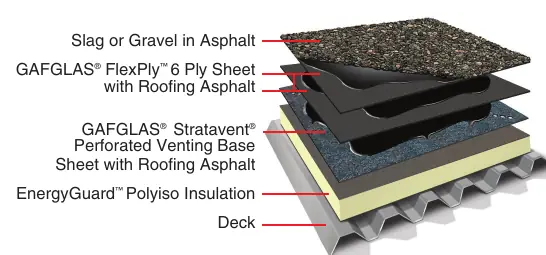
- Multiple layers of redundancy against leaks
- A long, proven track record on demanding commercial roofs
- Cold-applied adhesive options in place of traditional hot asphalt
- Venting base sheets (GAFGLAS® Stratavent®) for reroofs where trapped moisture needs a way out
- White, reflective cap sheets available to reduce heat gain
If your building already has a BUR roof, we can repair it, replace it in kind, or talk through whether a single-ply recover makes more sense.
Commercial Roof Coatings & Restoration
If your roof is aging but still structurally sound, a coating system can seal leaks and extend its life without a tear-off. Your business keeps running, there’s far less waste, and the new surface reflects UV and heat.
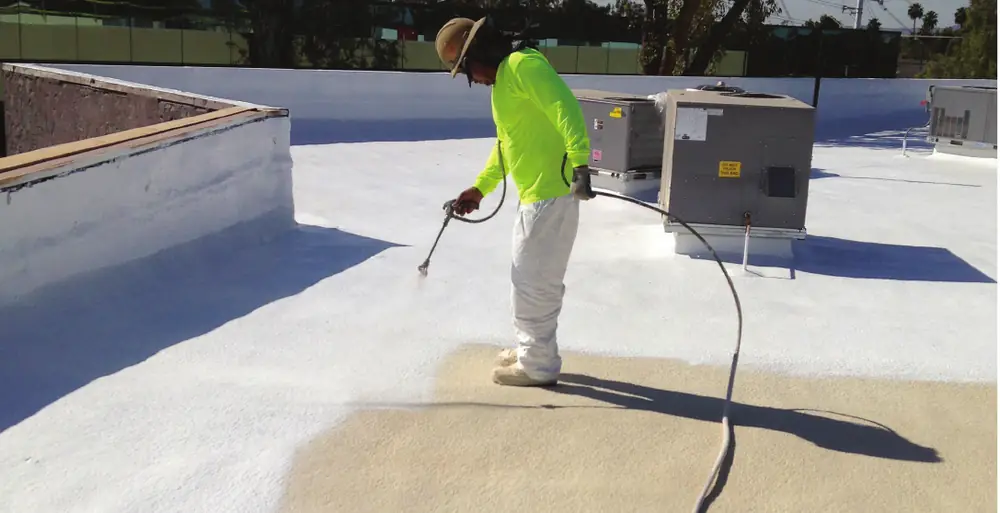
- Silicone coatings dry fast, handle ponding water well, and can take multiple coats in the same day
- Acrylic coatings are easier to apply and more economical, with a cure time between coats
- GAF HydroStop® is a fully fabric-reinforced acrylic system for metal, concrete, single-ply, and asphaltic roofs, and it meets FM 4470
- A seamless, self-flashing, reflective surface with no new seams to fail
Why restoration can cost less: in the right situation there’s no tear-off, no new insulation, no lifting rooftop AC units, and no raising drains, and the work can happen while the building stays occupied.
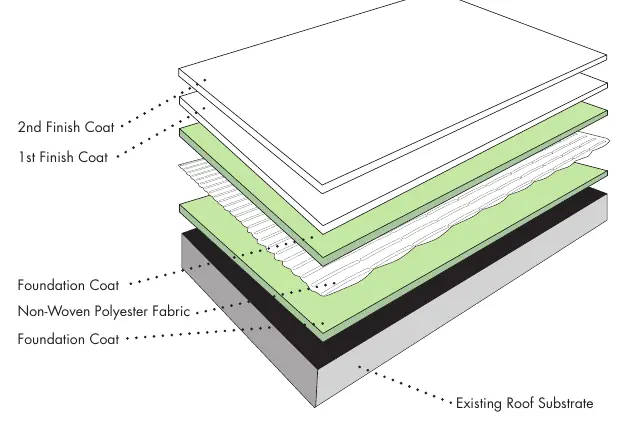
How a HydroStop® System Is Built
HydroStop is built up in layers right on your existing roof: a foundation coat, a non-woven polyester fabric for reinforcement, a second foundation coat, and two finish coats. The fabric is what makes it tougher than a plain coating. In GAF’s accelerated weathering tests, the system kept nearly all of its original stretch and strength after 8,000 hours of simulated sun exposure.
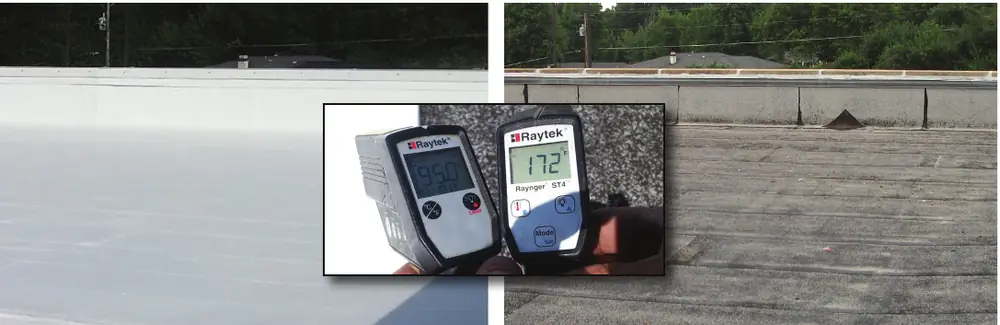
Cooler roof, cooler building. A white, reflective coating reflects most of the sun’s heat, which lowers the temperature of the roof surface and the space below. That can reduce the load on your HVAC equipment. Actual energy savings depend on climate, insulation, and equipment.
Coatings aren’t right for every roof. If the insulation is wet or the membrane has failed across large areas, a coating only covers up the problem. We’ll check first and tell you plainly whether restoration makes sense.
Commercial Roof Insulation & Drainage
“Flat” commercial roofs aren’t supposed to be perfectly flat. Water that sits for days after a monsoon storm, called ponding, speeds up wear on the membrane, adds weight, and finds every weak seam.
We fix drainage problems with GAF EnergyGuard™ tapered polyiso insulation. The boards are cut to build a gentle slope that moves water to your drains and scuppers. GAF says properly designed tapered systems virtually eliminate ponding water. They also add insulating value, and GAF’s Tapered Design Group helps lay out the slope for each project.
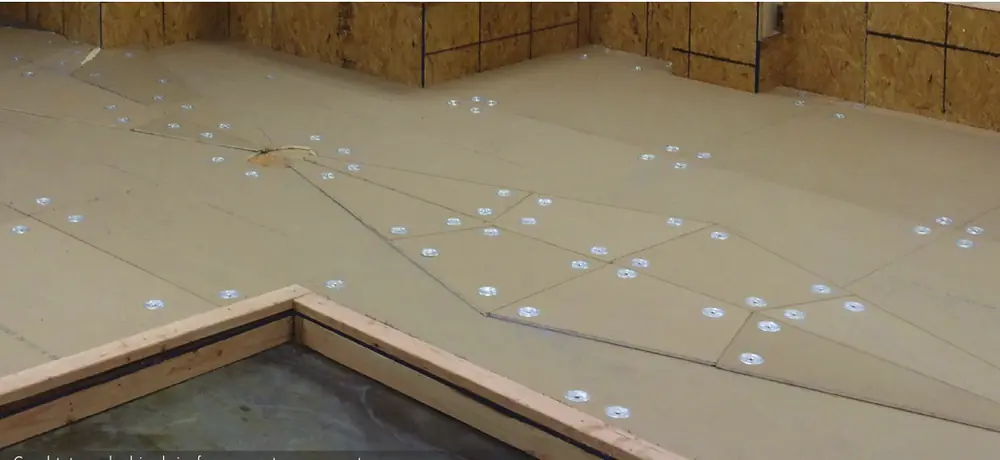
Metal roof retrofits: for older metal buildings, GAF EnergyGuard™ polyiso can be custom-cut to fill the flutes of a standing-seam or lap-seam metal roof. That creates a flat, insulated base for a new single-ply membrane over the existing metal.
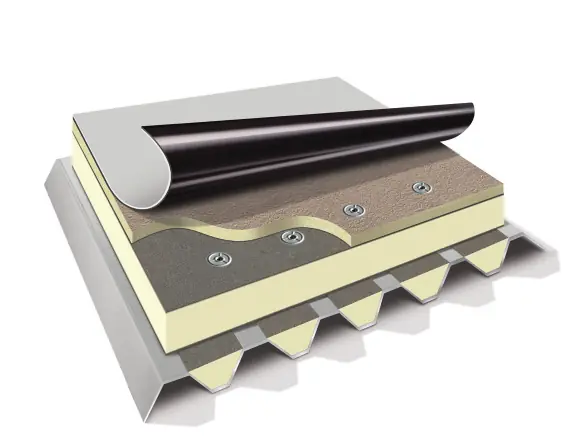
Learn more about flat roof drainage and monsoon drainage on flat roofs.
The Details That Keep a Commercial Roof Dry
Most commercial leaks start at a detail, not in the middle of the membrane. We pay extra attention to:
- Drains, scuppers, gutters, and downspouts
- Pipe boots, vents, and other penetrations
- HVAC curbs and rooftop units
- Parapet walls, coping, and edge metal
- Expansion joints
- Walkway pads along service paths to rooftop equipment
Where they fit, we use GAF’s prefabricated corners, pipe boots, and curb wraps. They’re made in a factory rather than cut and pieced on the roof, so they’re more consistent. At the roof edge, GAF perimeter edge metal (coping, fascia, and drip edge) is tested to ANSI/SPRI ES-1, since the edge is the first line of defense in a windstorm. We also use GAF Metalastic® expansion joint covers, which come in long continuous runs with fewer splices to leak.
Replacing a Roof While the Building Stays Open
Yes, most commercial roofs can be replaced while tenants and the business keep operating. It takes a plan agreed on before the first dumpster shows up, and the key points belong in writing.
Work in sections that get dried in each day. A crew should only tear off what it can cover with new roofing, or a watertight temporary tie-in, before it leaves. During monsoon season that rule matters most.
Pick a system with the tenants in mind. TPO and PVC seams are heat-welded with hot air, so there’s no seam adhesive to smell. Where a membrane is glued down, a low-odor option like GAF’s self-adhered TPO avoids solvent-adhesive odor, and GAF lists it for buildings like schools and hospitals. Hot-mopped asphalt brings a kettle and fumes, and torch-applied modified bitumen brings an open flame, so both need the most planning on an occupied building. Tear-off and fastening make noise whichever system you choose.
Plan around the air intakes. Rooftop units pull in outside air, and fumes near an intake end up inside. New York’s health department recommends locating fresh air intakes first and starting work away from them, with closing intakes as a last resort. Your roofer and HVAC contractor should agree ahead of time on which units get shut down, and when.
A good contract or pre-job plan should also cover:
- Crane and dumpster spots that keep entrances, fire lanes and loading docks open
- Which parking areas get coned off, and for how long
- Barricades and signs on the ground below the work
- Roof-edge fall protection that meets OSHA 1926.501
- Written notice to tenants with dates, work hours and a contact person
Every job we do is scheduled around your operating hours. For tenants who can’t have crews overhead during business hours, like restaurants or medical offices, ask about early-morning, evening or weekend phases, the way we handle commercial repairs. A commercial roof assessment is the place to start mapping out the phases.
Commercial Roof Repair & Maintenance
The cheapest roof is the one that lasts. A scheduled maintenance program catches small problems before they become leaks, keeps drains clear before monsoon season, and gives you a written record of the roof’s condition. Most commercial roof guarantees also expect the owner to keep the roof maintained.
- Scheduled inspections with photo documentation
- Seam, membrane, and flashing checks
- Drain and scupper cleaning
- Checks for ponding water
- Edge metal and penetration checks
- Written repair recommendations and maintenance records
See our commercial maintenance programs and commercial repair services.
GAF Commercial Roof Guarantees
As a GAF Certified Commercial Contractor, Timberwolf can offer GAF commercial guarantees on qualifying systems. Unlike a basic materials warranty, these can cover both materials and labor on the complete GAF roof system.
Which guarantee you can get, and for how long, depends on the roof system, how it’s specified, and the installer’s certification level. Before you sign, we’ll show you exactly which GAF guarantee your project qualifies for, in writing. You can also review GAF’s commercial guarantee comparison.
See the applicable GAF guarantee for complete coverage, requirements, and restrictions. Timberwolf Construction Inc. is an independent business and not an employee or agent of GAF.
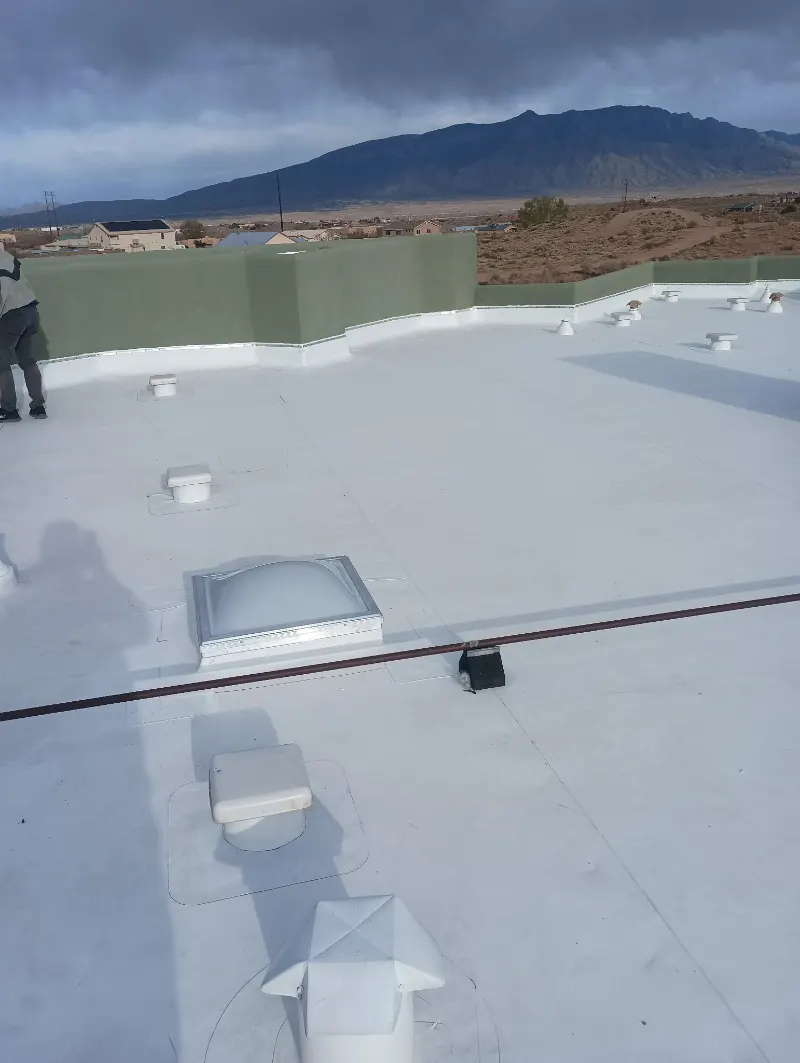
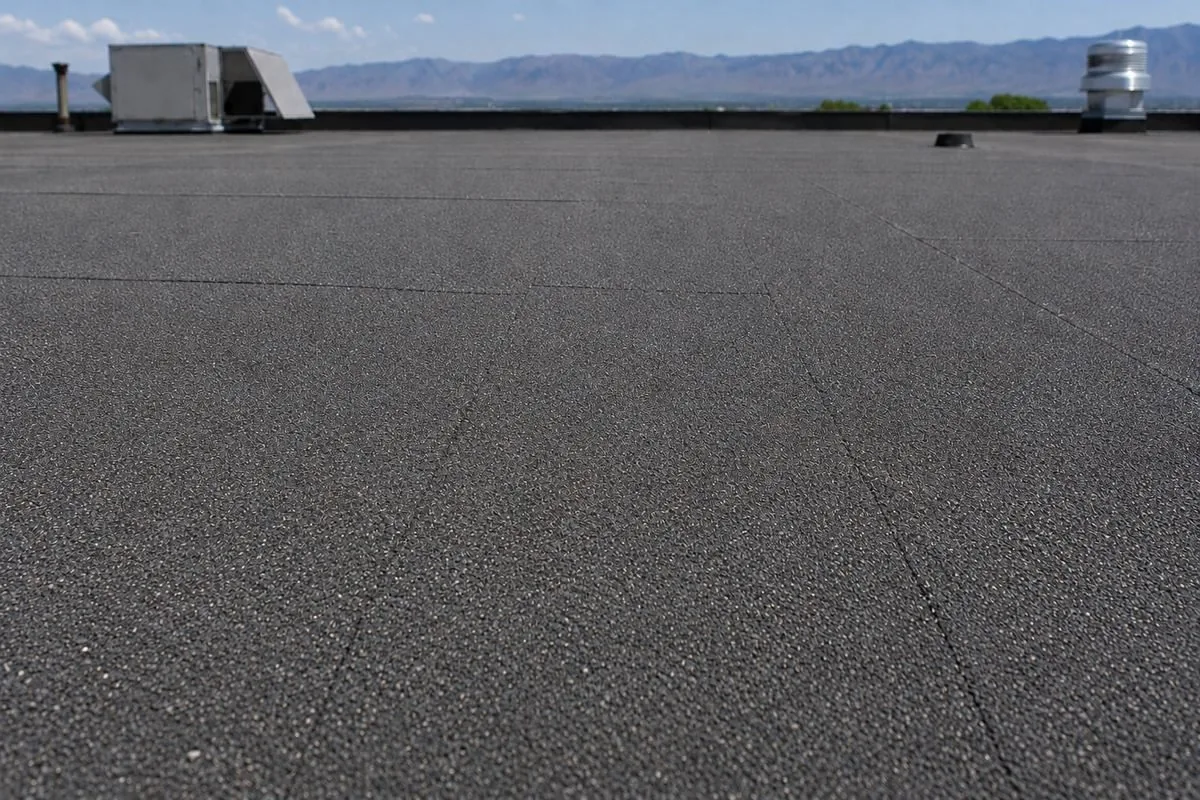
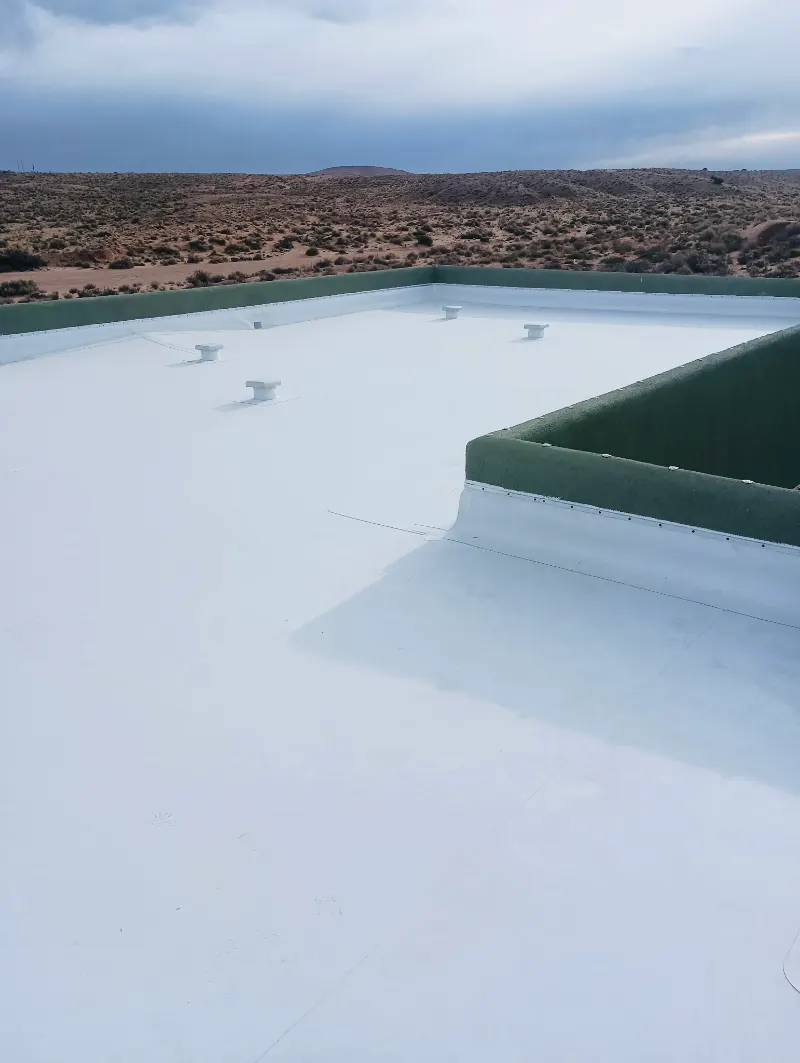
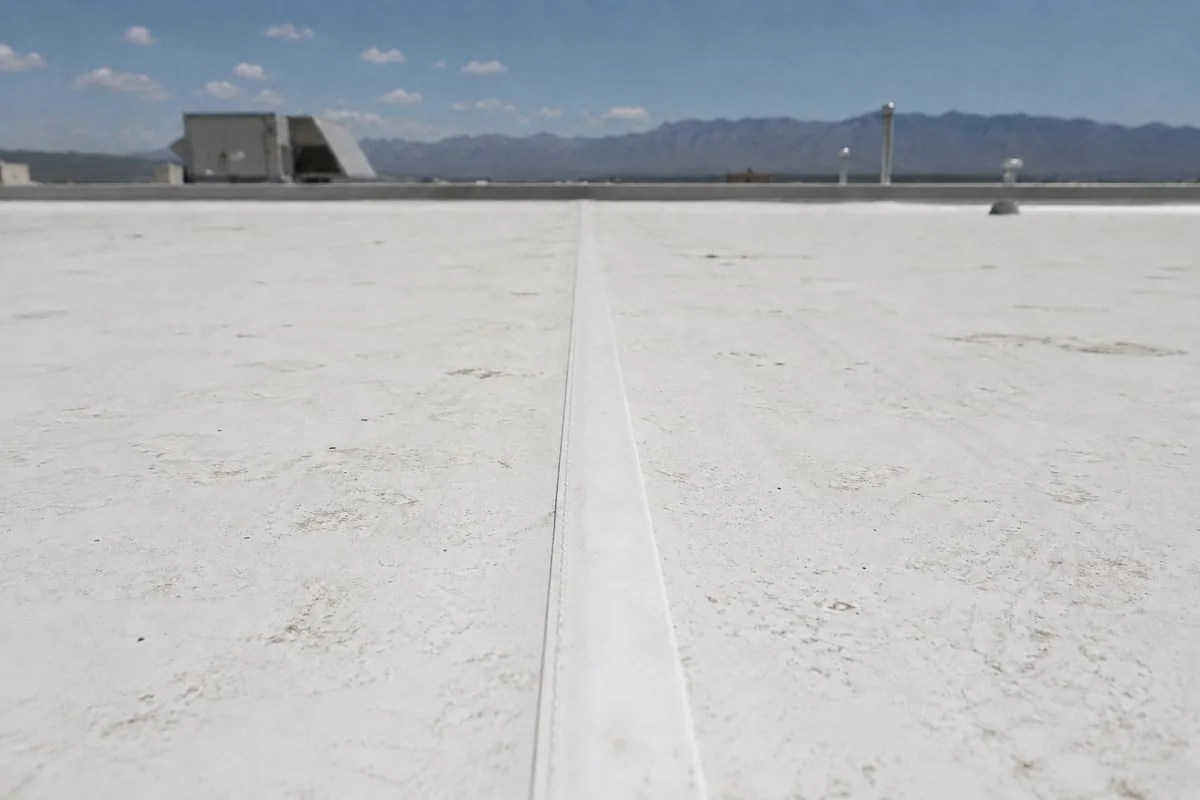
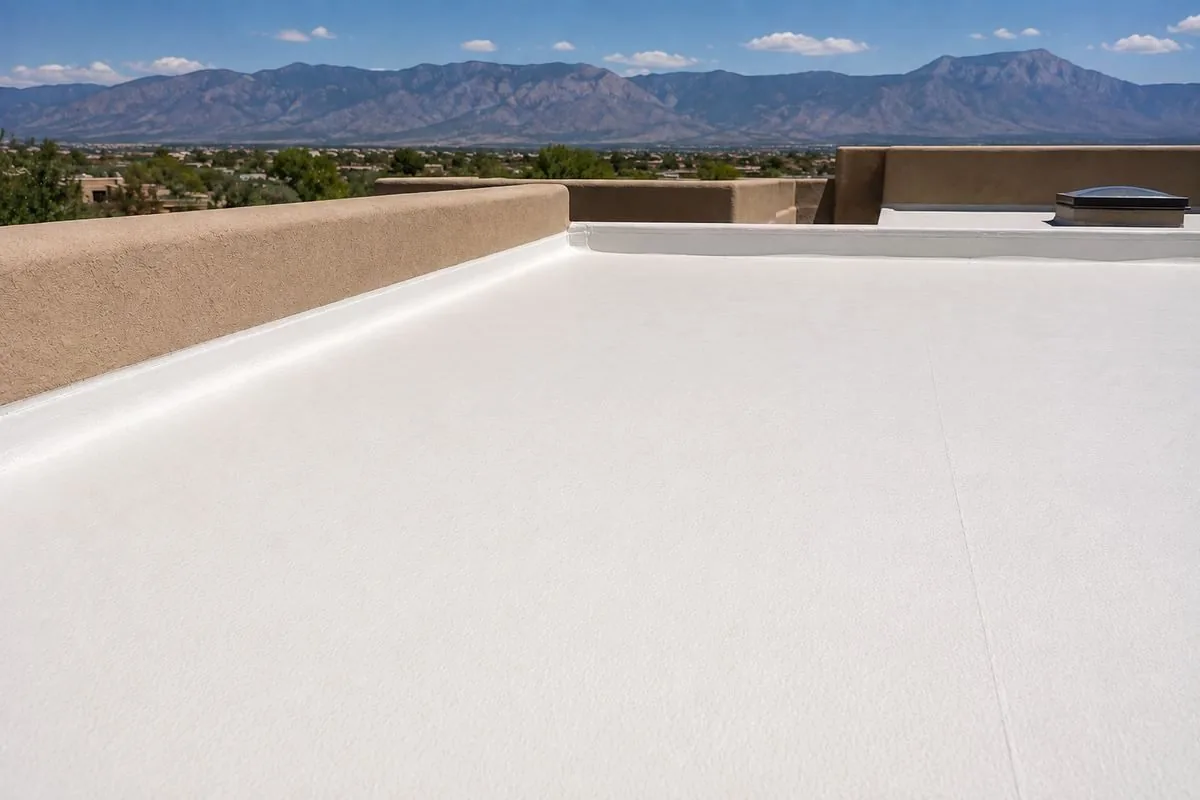
Examples of commercial roof systems
Frequently Asked Questions
Do I need a full roof replacement, or can my commercial roof be repaired?
Often it can be repaired, recovered, or restored instead. We inspect the membrane, seams, flashing, and drains, and check for trapped moisture in the insulation. If the deck and insulation are dry and sound, a repair, recover, or coating is usually far less expensive than a tear-off. Replacement makes sense when moisture is widespread or the roof has reached the end of its life.
What’s the difference between TPO and PVC?
Both are white, heat-welded single-ply membranes. TPO is the most common choice for general commercial buildings and offers strong value. PVC costs more but has greater chemical resistance, which matters on restaurants and some industrial buildings.
What roofing systems do you install?
We install GAF’s full line of low-slope systems: EverGuard® TPO and PVC (including fleece-back membranes for recover projects), RUBEROID® modified bitumen, GAFGLAS® built-up roofing, and GAF roof coatings, including HydroStop® restoration systems.
Can you coat my existing roof instead of replacing it?
If the roof is structurally sound and the insulation underneath is dry, often yes. A silicone or reinforced acrylic coating can seal leaks, add a reflective surface, and extend the roof’s life without a tear-off. We test for moisture first, because coating over wet insulation just traps the problem.
Why does water pond on my flat roof?
Usually the roof doesn’t have enough slope toward the drains, or the drains and scuppers are blocked. Tapered insulation can build in slope during a recover or replacement, and routine drain cleaning prevents a lot of ponding, especially before monsoon season.
Can you work around our business hours?
Yes. We schedule around your operations, and many systems can be installed with low-odor methods while the building stays occupied.
Will our tenants smell the roofing work?
They might, depending on the roof system and where the rooftop air intakes are. Heat-welded TPO and PVC seams and self-adhered membranes avoid most of the odor that comes from solvent-based adhesives, while hot asphalt and torch-applied work bring the most fumes. Starting work away from air intakes and choosing a low-odor attachment method keeps most of the smell outside.
Do rooftop HVAC units have to be shut off during a reroof?
Sometimes, for part of the job. Units near the active work may need their outside air intakes closed or the unit turned off while adhesives, hot asphalt or torch work are close by, and a unit that has to be lifted to redo its curb flashing will be down while that happens. Your roofer and HVAC contractor should set that schedule together so tenants know when to expect it.
Do you handle multi-building properties?
Yes. We work with property managers on whole portfolios, not just single buildings, including scheduled maintenance across multiple roofs.
Are you GAF certified?
Yes. Timberwolf Construction Inc. is a GAF Certified Commercial Contractor, which lets us offer GAF commercial guarantees on qualifying roof systems. We’ll confirm in writing which guarantee your project qualifies for before you sign.
Not Sure Whether You Need a Repair, Recover, Restoration, or Replacement?
We’ll inspect your roof, test for moisture, and walk you through your options, with no obligation.