

- GroundCheck gutters and AC fins first. Don't climb the roof.
- PolicyYour policy sets the deadline to report damage. Check it.
- 3/4"Hail around this size can start to bruise standard shingles
- June–SeptABQ monsoon season, the peak hail risk period
Why Hail Damage Is So Common, and So Tricky, in Albuquerque
Albuquerque's location at 5,312 feet elevation makes it a prime target for convective storm cells that produce hail. During monsoon season (June–September), Gulf moisture streams northward and collides with cooler mountain air, creating supercell thunderstorms capable of producing hailstones 1–2 inches in diameter. These storms are fast and localized. One can hammer a neighborhood and leave the next street untouched.
Hail damage often isn't visible from the ground, and it doesn't always cause a leak right away. It knocks granules off asphalt shingles, cracks tile and dents metal, and that speeds up deterioration over the next several years. Many homeowners only find hail damage when a leak shows up, and by then the damage is much more extensive than it needed to be.
Don't wait to inspect. Every policy sets its own deadline for reporting damage, so check yours. Damage that sits too long can look like wear and tear to an adjuster. Get a professional inspection soon after any significant hail event.
Visual Guide: Hail Damage by Roof Type
Hail leaves different signatures on different roofing materials. This is what to look for on each type:
Asphalt Shingles
Most common roof type in ABQ, and the most visibly damaged by hail
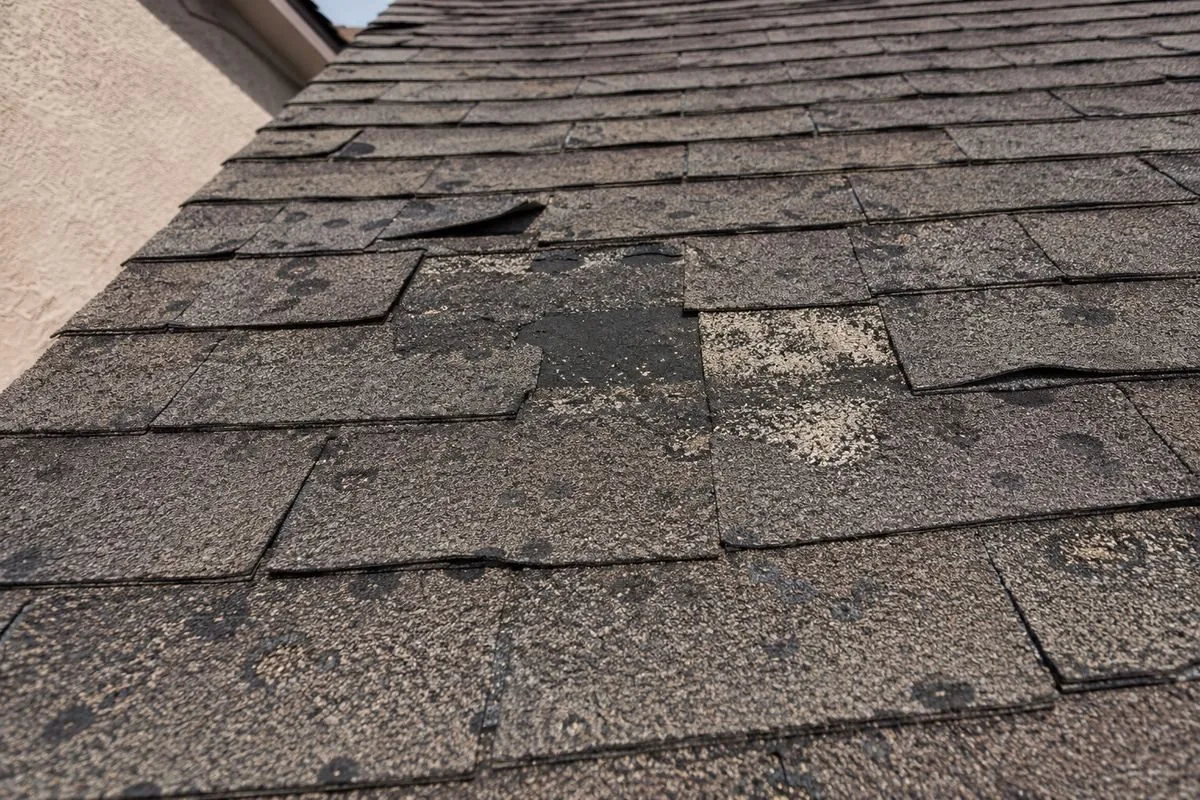
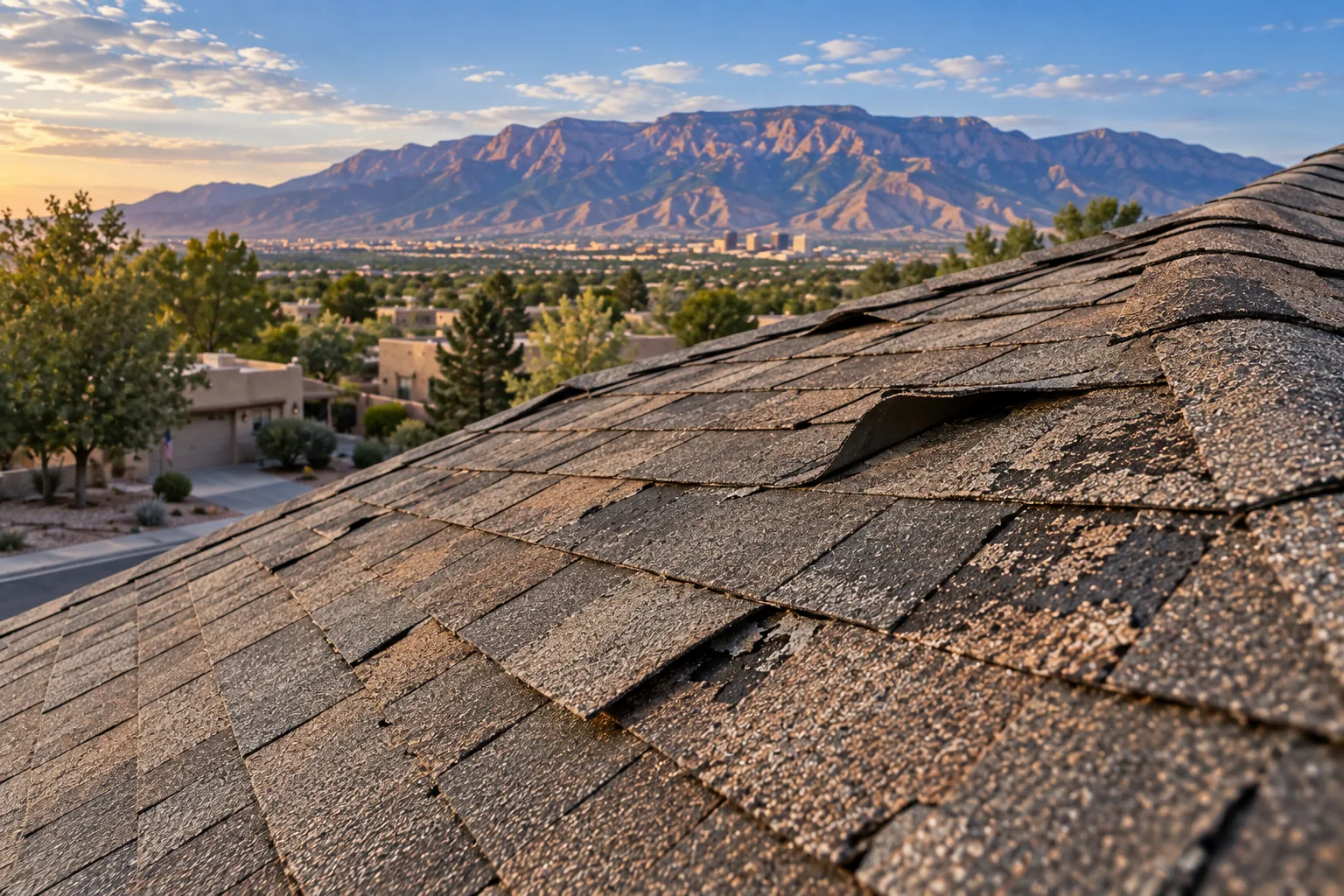
Asphalt shingles show hail damage as granule loss. Hail knocks loose the small mineral granules that protect the asphalt mat. This is sometimes called "bruising." The damaged areas appear darker than surrounding shingles and may show the gray/black asphalt mat beneath.
- Black Impact Marks / Mat Exposure (Serious): Dark spots 1–2" diameter where all granules are gone and bare asphalt mat is visible. Immediate UV exposure begins degrading mat.
- Shingle Cracking or Splitting (Serious): Cracks through the mat from large hailstones or impact on already-aged shingles. Water can reach decking immediately.
- Granule Loss Patterns ("Peppered") (Moderate): Many small areas of granule loss giving a speckled appearance. Uniform across roof surface. Worth documenting even if subtle.
- Edge Chipping (Minor): Chips along shingle tabs. Less serious than mat damage but it documents the hail event. Photograph it and include it in your claim.
Ground-level indicator: Check your gutters. Aluminum gutters will show circular dents from the same hail that hit your roof. Granules washed into gutters after rain is another sign of shingle damage.
Clay & Concrete Tile
More impact-resistant than shingles, but large hail will crack tile
Tile is denser and more impact-resistant than asphalt shingles, especially Class 4-rated concrete tile. Moderate hail (under 1 inch) typically causes little to no damage to tile in good condition. Larger hail (1.5"+) can crack or chip tile, and impacts on aged or already-cracked tile are more severe.
- Full Cracks Through Tile Body (Serious): Hairline to full cracks through the tile. Water infiltration can reach underlayment. Replace affected tiles immediately.
- Surface Chips & Spalling (Moderate): Chipped edges or surface spalling. On glazed or coated tile, exposes raw body to weathering. Document for insurance.
- Mortar Joint Damage (Minor): Hail loosens ridge and hip mortar, allowing wind infiltration. Not an immediate leak risk but should be repaired.
Important: Many tile cracks are not visible from the ground. A professional inspection is especially important after hail events exceeding 1 inch. See our Tile Roofing Albuquerque guide for repair vs. replacement guidance.
Metal Roofing
Structurally durable, but hail dents metal and can compromise coatings
Metal roofing is among the most hail-resistant common roofing materials. It won't crack or lose granules. However, hail does dent metal panels, and significant denting can crack the protective paint/coating, accelerating rust on steel products. Cosmetic denting alone may not affect waterproofing, and many policies exclude cosmetic damage, so check yours.
- Coating Cracking at Dents (Serious): Dents that crack the paint or Kynar coating expose raw steel. Rust can develop within 1–2 seasons in monsoon humidity.
- Panel Denting (Moderate): Cosmetic hail dents. On standing seam, usually doesn't affect waterproofing. Whether it's covered depends on your policy's cosmetic damage terms.
- Fastener Area Damage (Minor): On exposed-fastener panels, hail can compromise neoprene washers at screw locations. That's a future leak risk worth sealing.
Flat & Low-Slope Roofs (TPO, Modified Bitumen, Built-Up)
Hail impact shows differently on membrane systems
Flat roofs on Albuquerque's many pueblo-style and Southwestern homes face hail differently. TPO and EPDM membranes can puncture from large hailstones; modified bitumen (torch-down) surfaces can crack at impact points; gravel-surfaced built-up roofs (tar and gravel) absorb some impact but can lose the gravel ballast that protects the underlying membrane.
- Membrane Punctures (Serious): Large hailstones can punch through TPO or EPDM membranes. Immediate water infiltration risk. Inspect seams around all punctures.
- Mod-Bit Surface Cracking (Serious): Impact cracks in modified bitumen surface allow water to reach the membrane lap seams, the primary leak point on torch-down roofs.
- Gravel Displacement (BUR) (Moderate): Hail can scatter the gravel ballast on built-up roofs, exposing the base cap. Resurface or reballast bare areas promptly.
For more on flat roof maintenance and damage prevention, see our Residential Flat Roof Maintenance guide.
How to Tell If Hail Damaged a TPO or Modified Bitumen Roof
Hail can damage both, and a lot of that damage doesn't show at a glance. On TPO, a hailstone can crush the insulation or cover board under the membrane while the surface still looks fine. In one impact study on single-ply TPO, the membrane stayed intact while the gypsum cover board and polyiso insulation under it cracked. On modified bitumen, look for round spots where granules were knocked off and cracks in the cap sheet at the impact points.
Roofers check a membrane roof by pressing on suspect spots to feel for crushed board, looking for splash marks where hail knocked dirt off the surface, and taking small test cuts to see whether the layers below are damaged. NRCA's Professional Roofing and IIBEC research describe these methods. A test cut is patched right away.
If you're replacing a flat roof, ask about the hail rating of the whole assembly, not just the membrane. Carlisle explains the FM severe and very severe hail ratings and the role of cover boards. See TPO roofing for how we build flat roofs.
The Ground-Level Inspection: What You Can Check Safely
Do NOT get on your roof to inspect it. This is especially important after hail, because damaged tiles or shingles may not support your weight, and steep pitches are particularly dangerous. Check these from the ground and around the home instead:
Post-Hail Ground Inspection Checklist
- Gutters & downspouts: look for circular dents on aluminum gutters; granules in downspout outlets after next rain
- AC condenser fins: look for dents on the aluminum fins; this is a reliable hail-size indicator adjusters use
- Window screens & trim: dents, holes, or torn screen fabric
- Wood fence or deck: fresh wood splinters/marks from impact (shows hail size and intensity)
- Vehicles: hail that dents a car can damage a roof
- Metal flashing visible from ground: look for dents at eave edges, pipe boots, or visible ridge cap
- Interior attic (after rain): daylight through decking, water stains on rafters or sheathing, or wet insulation
After Hail: Your Step-by-Step Action Plan
- Day 1–3: Document the storm event. Note the date and time of the storm. Check local news and weather services (NWS Albuquerque) for official storm reports. Adjusters often use these. Take photos of any obvious ground-level damage.
- Day 1–7: Schedule a free professional roof inspection. Call Timberwolf for a free post-storm inspection. We inspect, photograph, and document all damage, on and off the roof, so you have a complete record before filing. You can ask to have your roofer there when the adjuster inspects.
- Day 7–14: File your insurance claim. File with your carrier with your storm date, documentation, and contractor inspection report in hand. You can ask the adjuster to meet Timberwolf at the property. We walk the roof with them and point out what we documented. We're a roofing contractor, not a public adjuster, so we don't negotiate your claim.
- Day 14–30: Adjuster inspection. Your insurance adjuster will inspect the roof. If Timberwolf's findings differ significantly from the adjuster's scope of damage, you can request a re-inspection, and we can share our documentation to support it.
- After approval: Schedule repair or replacement. Once your claim is approved, Timberwolf works with your insurance timeline and payment schedule. If the adjuster's scope misses damage we documented, we can give you that documentation so you can ask your insurer to review it.
Hail Damage and Your Insurance: Common Questions Answered
Will filing a hail claim raise my rates? It depends on your carrier and your claims history, so ask your agent. Our guide on whether a roof claim will raise your insurance covers what to ask.
If hail means a new roof, ask about Class 4 impact-rated GAF shingles. As a GAF Certified contractor, we install them as a complete GAF system, so the roof qualifies for GAF’s system warranties.
What if my damage is less than my deductible? If the repair cost is less than your deductible, you'll pay out of pocket. However, if you have Class 4 impact-resistant shingles installed, future hail events are less likely to produce claimable damage. See our Impact-Resistant Shingles guide for the long-term math.
What's an ACV vs. RCV policy? ACV (Actual Cash Value) pays your roof's depreciated value, so older roofs get less money. RCV (Replacement Cost Value) pays what it costs to replace your roof with like-kind material at today's prices. If your policy is ACV, ask your agent what RCV coverage would cost at renewal.