

Ponding Water: When It's Normal and When It's Not
True dead-flat roofs don't exist. Minor ponding that drains within 24-48 hours usually isn't a concern. Water still standing days later, in the same spot every time, is a different story.
On this page
What We Check
- Scupper and drain condition, since blocked drains are the most common cause of standing water
- Membrane condition around drainage points specifically
- Whether ponding location is consistent (structural) or variable (often just debris)
How Flat Roofs Drain in Albuquerque
Flat and low-slope roofs are common here, especially on pueblo-style homes with parapet walls. Water leaves these roofs through a few routes:
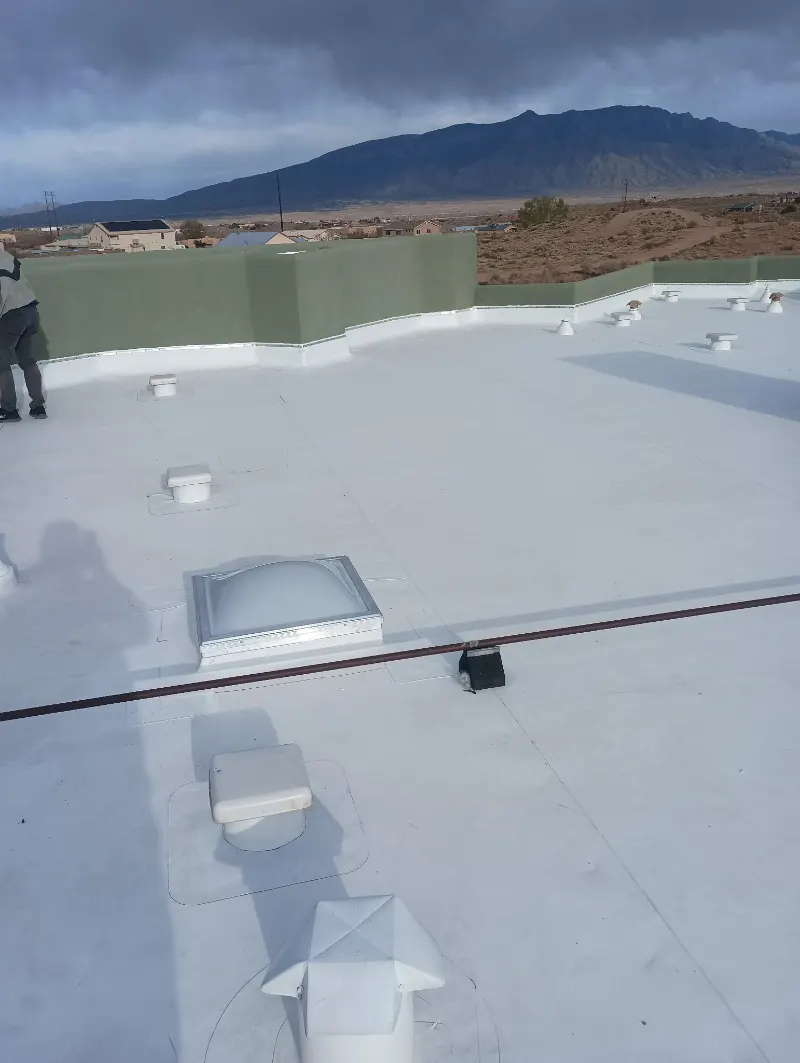
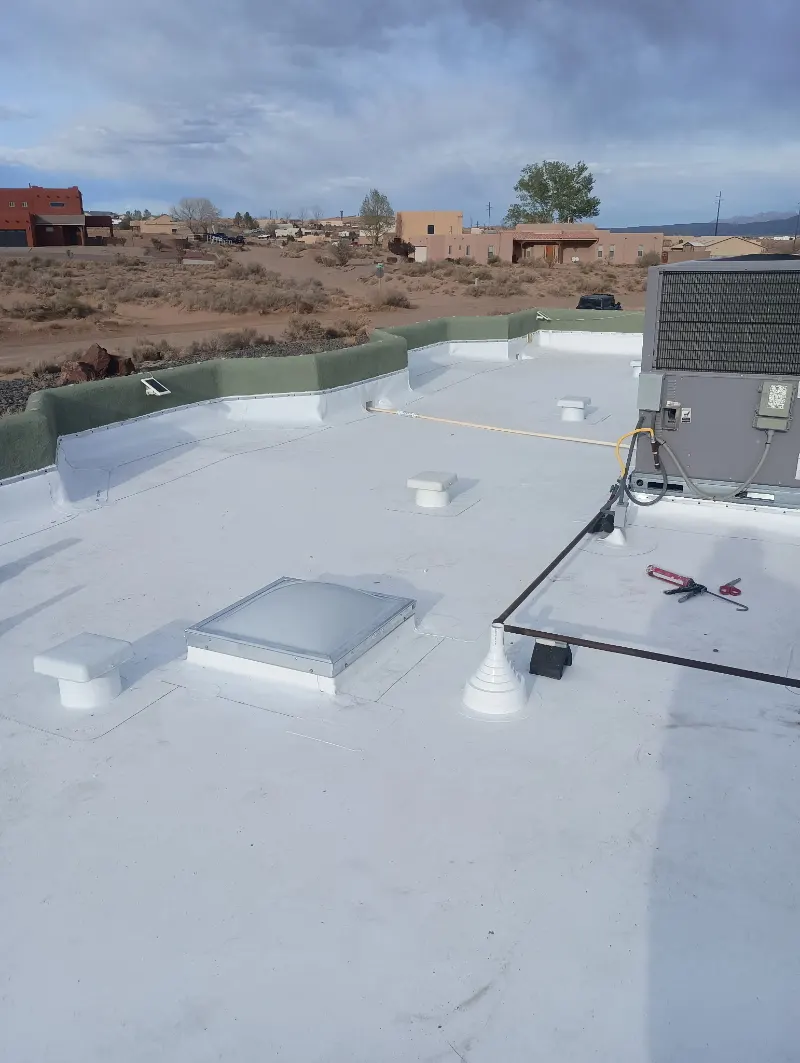
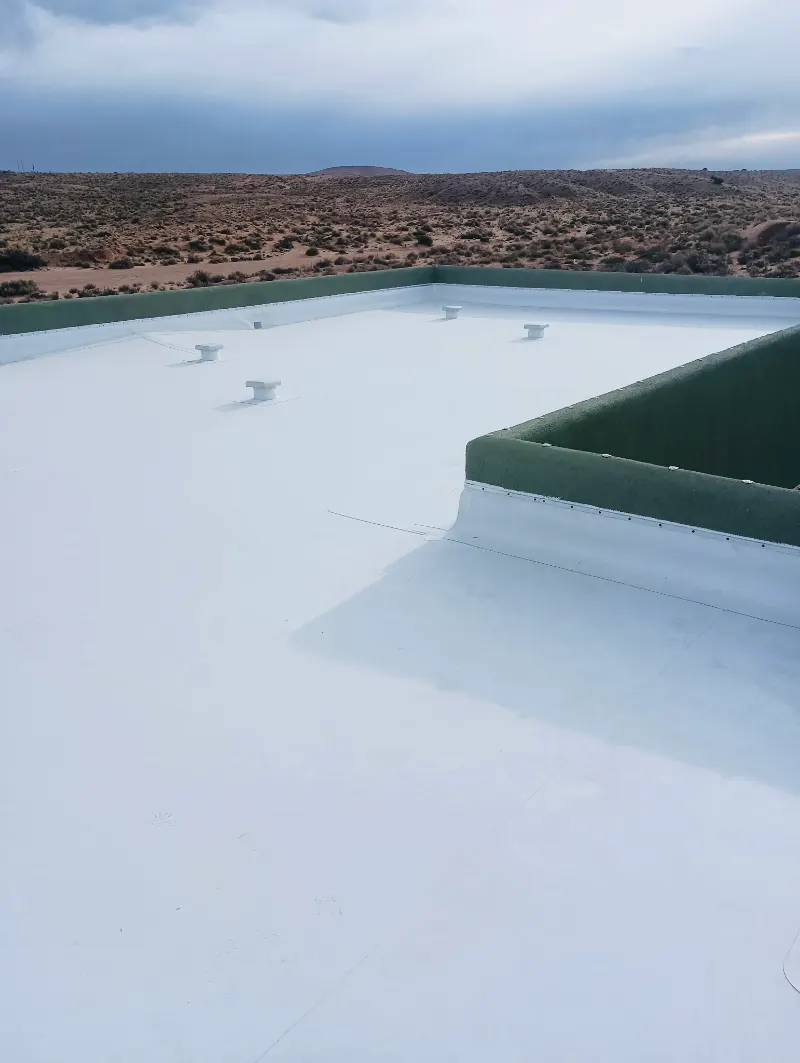
- Scuppers and canales, openings through the parapet wall that spill water off the roof
- Interior roof drains that carry water down through the building
- Crickets and tapered insulation, built-up areas that steer water toward those outlets
When any one of these is blocked, undersized or sloped the wrong way, water sits on the roof.
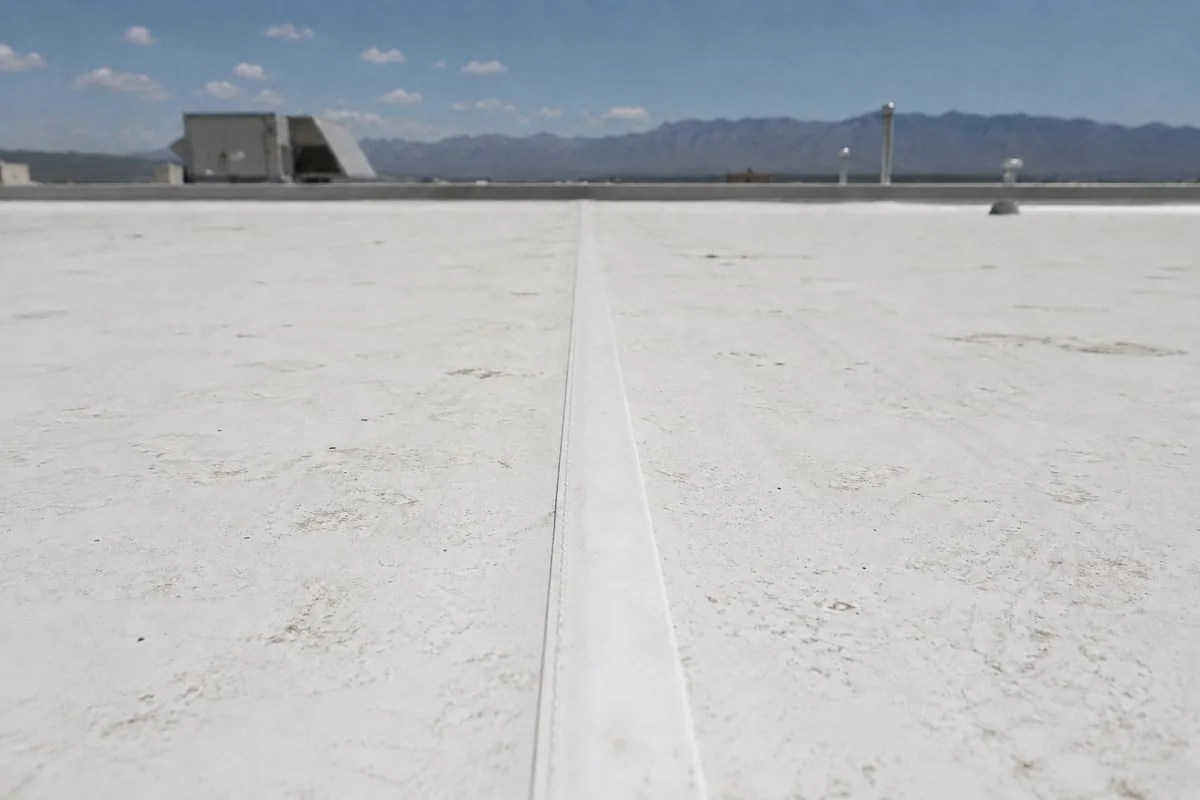
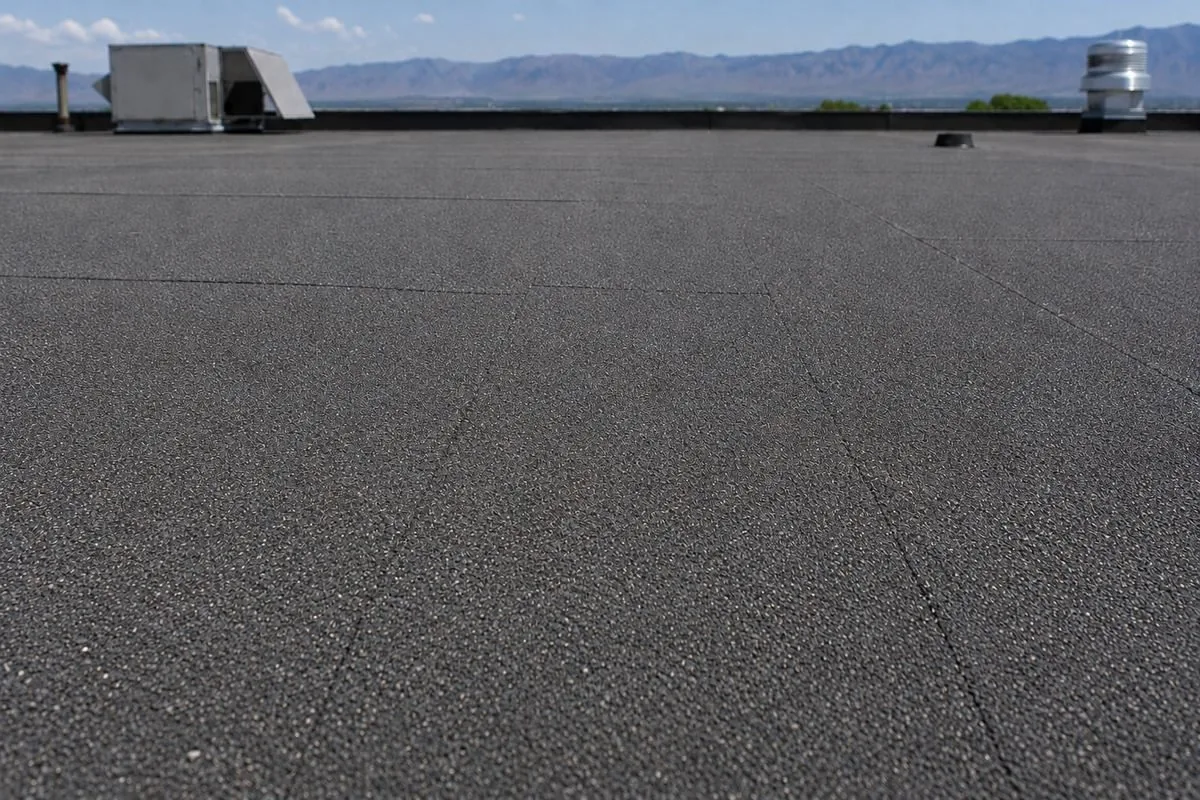
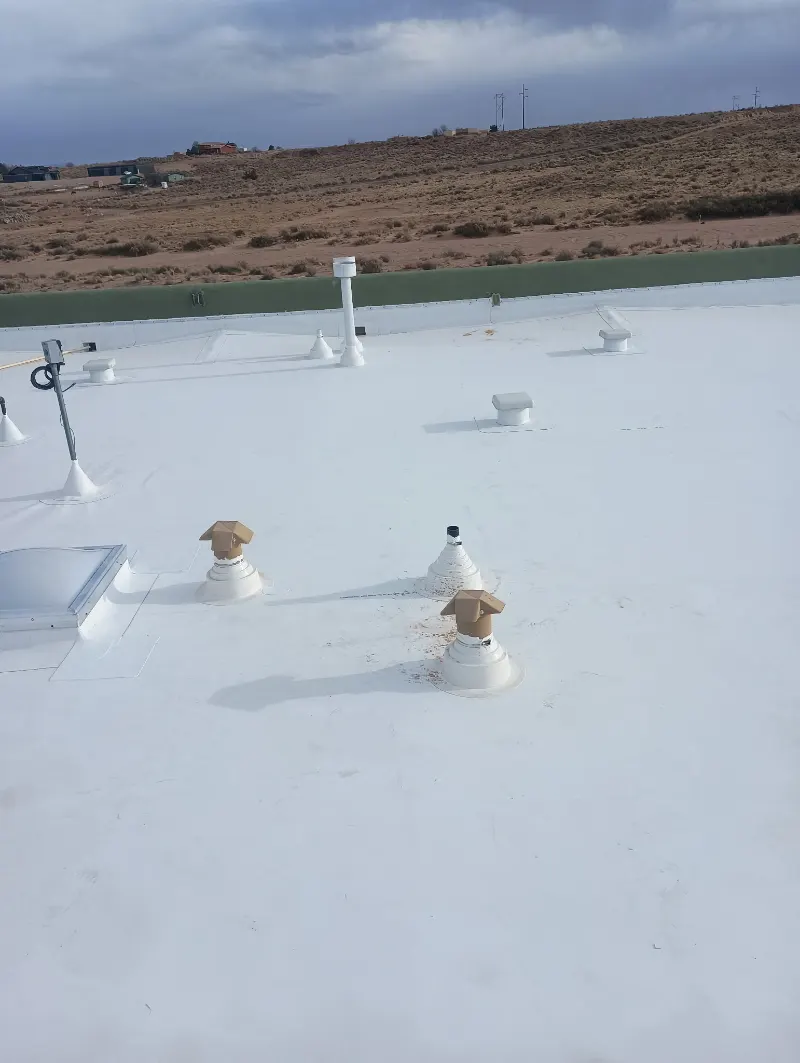
Drainage done right, and done wrong
What Causes Standing Water
- Debris and dust. Leaves, windblown dirt and grit from dust storms collect at drains and scuppers.
- Low spots. Sagging decking or compressed insulation creates dips that never fully drain.
- Missing crickets. Water collects behind chimneys, cooler stands and along parapets without a built-up area to redirect it.
- Old patches. Layers of repairs can build up high spots that block water flow.
Why Ponding Damages More Than the Roof
Standing water speeds up membrane aging and finds any weak seam. When a clogged scupper overflows, water often runs down the face of the parapet and into the stucco, which is why drainage problems on flat roofs often show up as stucco cracks and stains. Our stucco crew can repair that damage once the drainage is fixed.
How We Fix It
- Clear and inspect every drain, scupper and canale.
- Map where water sits after rain, and check whether the spot stays the same (structural) or moves (debris).
- Correct the cause: resize or add scuppers, build crickets, add tapered insulation, or repair the decking.
- If the membrane is near the end of its life, fix drainage as part of a new TPO roof so it's built in from the start.
For routine care between repairs, see our residential flat roof maintenance guide.
When a flat roof needs a new membrane, we install GAF TPO systems as a GAF Certified Commercial contractor, and we build residential flat roofs to that same commercial standard.
Frequently Asked Questions
Is ponding water always bad?
No. Brief ponding after rain is normal on most flat roofs. Persistent, days-long ponding is the concern.
Can this be fixed without replacing the whole roof?
Often, yes. Sometimes it's a drain clearing or a tapered insulation fix instead of a full replacement.
Why does my stucco crack below the scuppers?
Overflowing or poorly flashed scuppers send water down the wall face. Over time that water gets behind the stucco. Fixing the scupper stops the source; the stucco then needs its own repair.
Do I need a new roof to fix ponding?
Not usually. Clearing drains, adding a cricket or correcting a low spot often solves it. A new roof makes sense when the membrane is also worn out.
Ready for a Free Roof Report?
It's free, and you're under no obligation. You'll know exactly where your roof stands.