

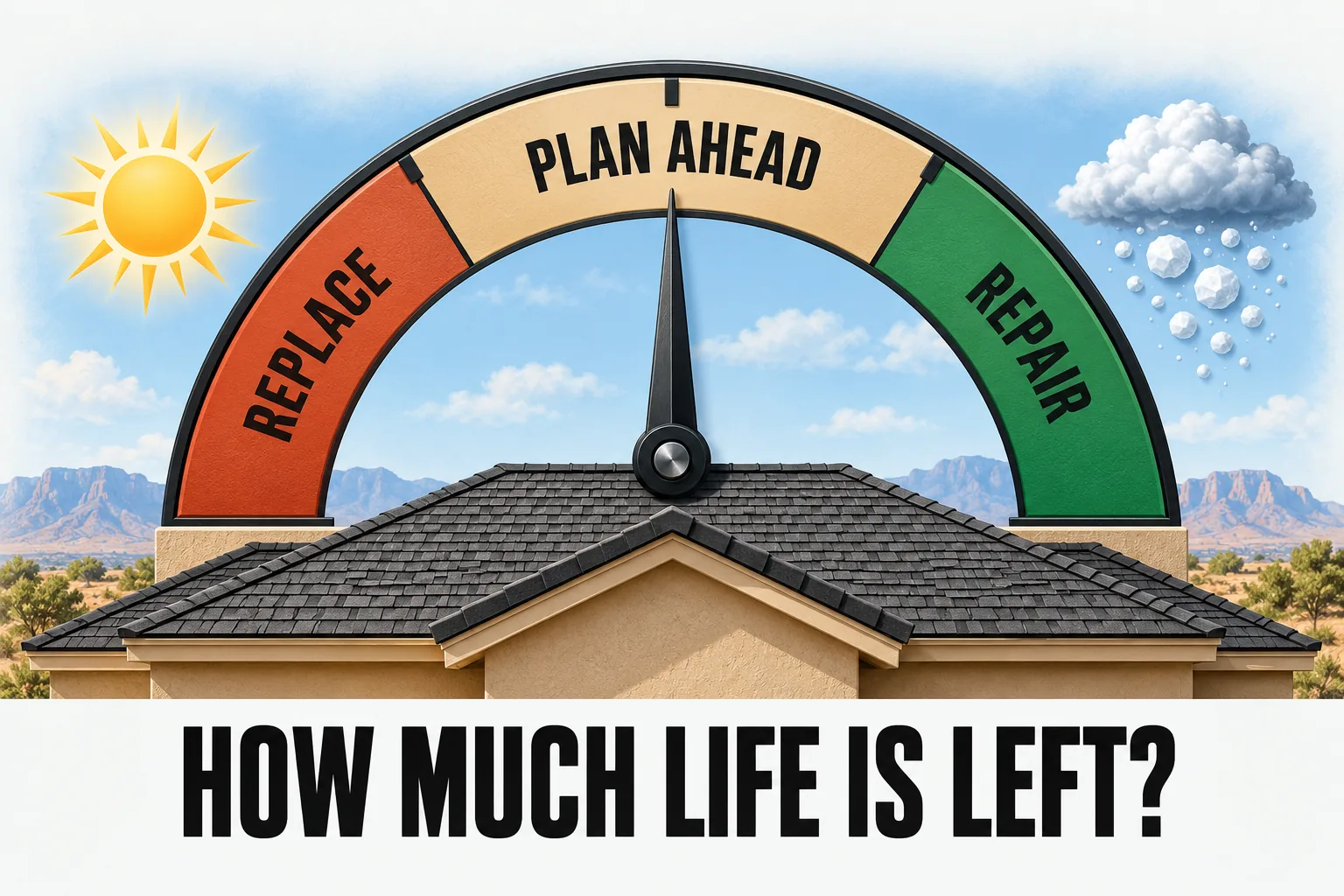
The Real Question: How Much Life Is Left?
The repair-or-replace decision comes down to whether the rest of the roof has enough good years left to be worth protecting. How bad one problem looks matters less. A repair on a roof with plenty of life left is money well spent. The same repair on a roof that's worn out everywhere just buys time until the next leak.
If you're weighing a roof-over instead of a tear-off, New Mexico's code decides first, then the trade-offs.
When replacement is the right call, we install complete GAF roofing systems, which qualify for GAF system warranties that a shingles-only roof does not.
This is how that decision should be made, so you can follow the reasoning behind any recommendation you get.
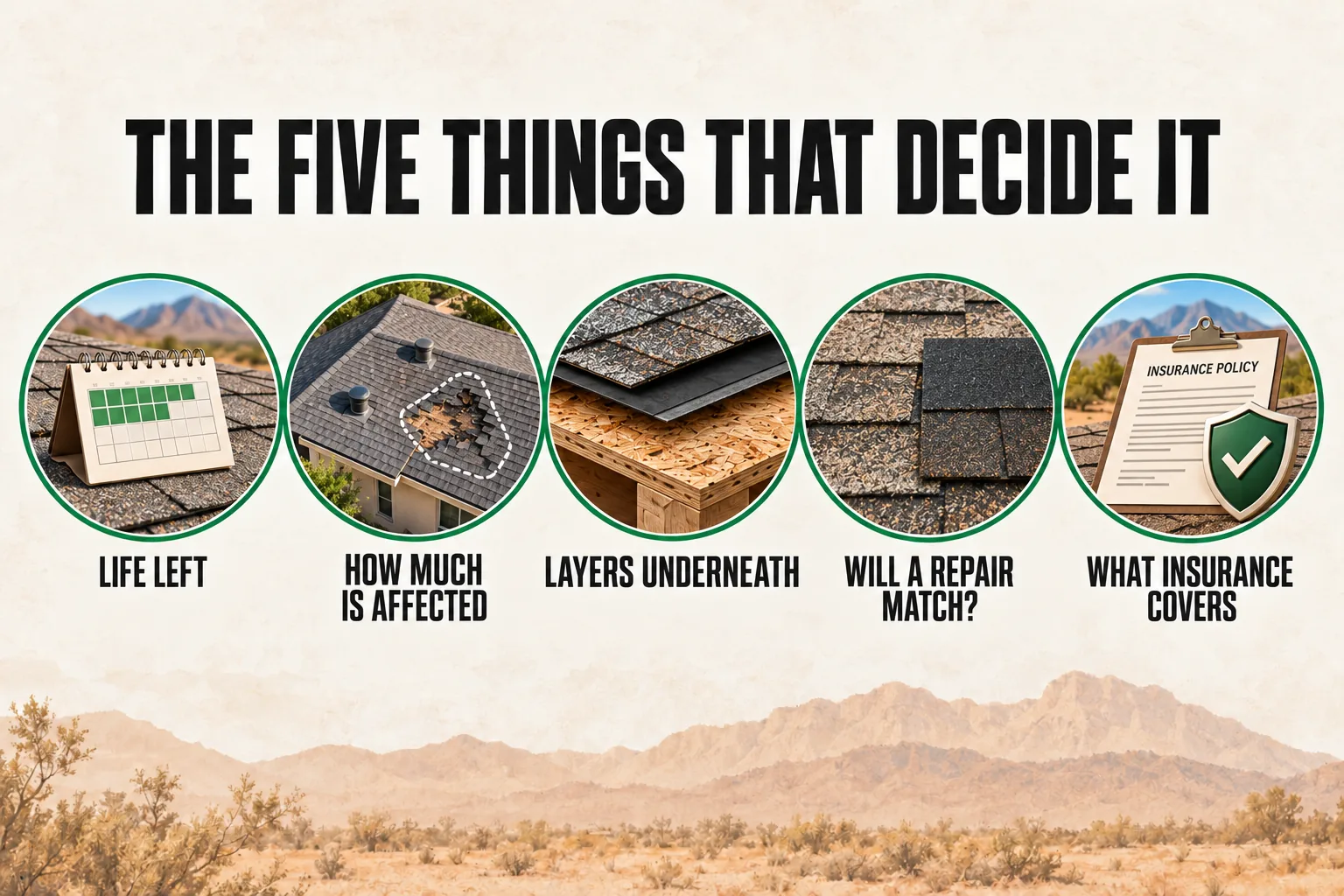
The Five Things That Decide It
1. How much life the roof has left
Age is a starting point, not the answer. A well-installed roof can outlast its expected lifespan. A poorly installed one can fail early. What matters is the condition of the surface: are the shingles still flexible and sealed, or dry, curled, and shedding granules? In Albuquerque, UV exposure at altitude and our climate often shorten the numbers printed on the warranty.
2. How much of the roof is affected
Damage in one area is a repair. The same problem showing up on several slopes usually means the whole roof is aging out together.
3. Whether the layers underneath are sound
Shingles and membranes are only the top layer. If the underlayment has failed or the decking is soft from past leaks, a surface repair won't hold. You won't always know this until the damaged area is opened up, which is why a good estimate explains how hidden damage will be handled.
4. Whether a repair will actually match and hold
Older shingles get brittle and can crack when they're lifted to slide new ones in. Discontinued products may not match. On a roof that's visible from the street, a patch that doesn't match can also affect how the home looks and sells.
5. What insurance will cover
If a covered storm caused widespread damage, your policy may pay for replacement, minus your deductible. That changes the math completely. See how insurance claims work and ACV vs. RCV coverage.
When Repair Is the Right Call
- The problem is in one area, like a single leak, one flashing detail, or a few wind-lifted shingles
- The rest of the roof is still flexible, sealed, and holding its granules
- The decking in the damaged area is solid
- Matching material is available, or the area isn't visible
- You're not dealing with a storm claim that would cover replacement
When Replacement Makes More Sense
- Problems are showing up on several slopes, or you've needed repairs in different places in a short time
- The surface is worn across the roof: widespread granule loss, curling, or shingles that no longer seal
- The decking is soft or rotted in more than isolated spots
- There are already two layers of shingles, so any major work means a full tear-off
- Insurance is covering a replacement after a qualifying storm
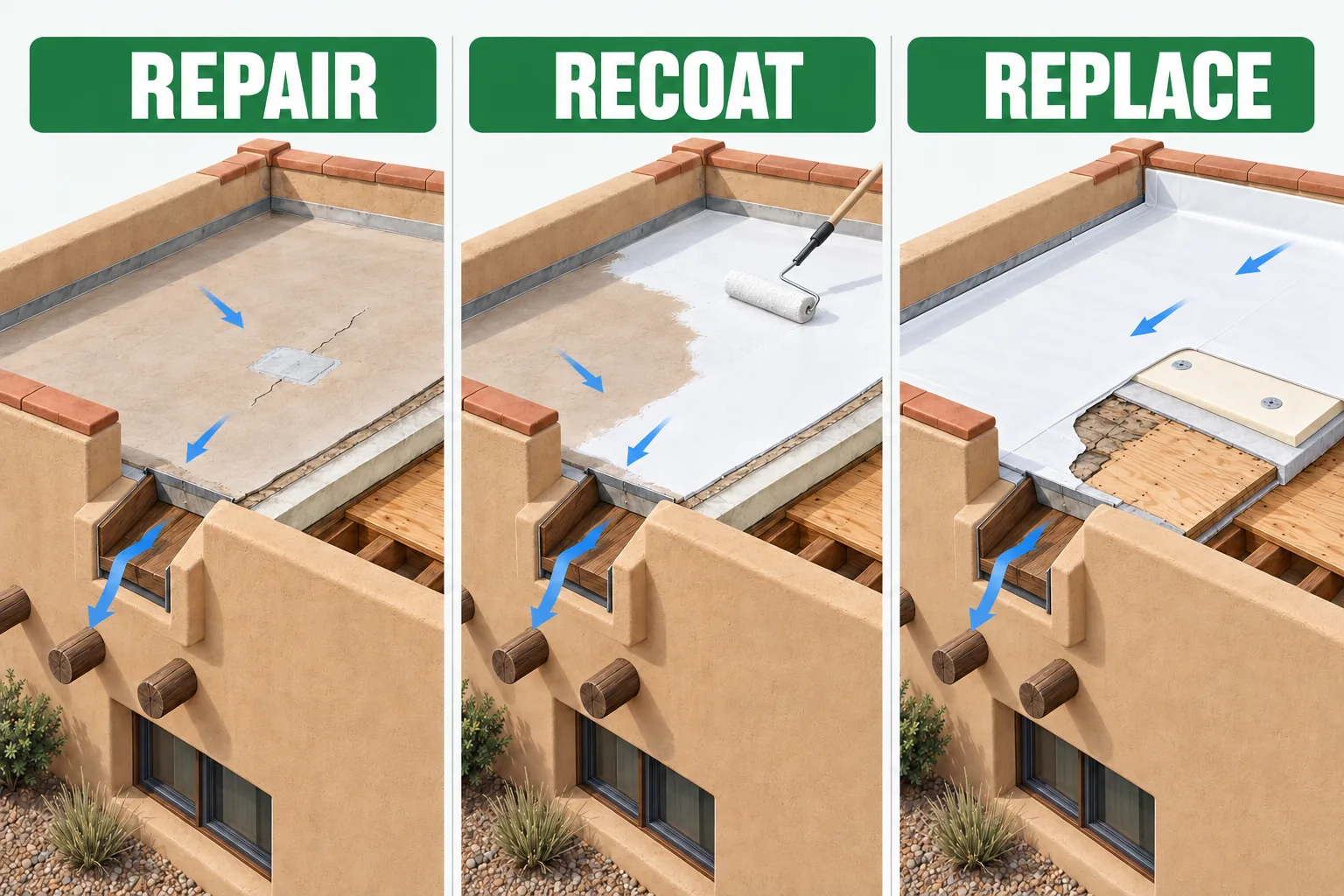
Flat Roofs Have a Third Option: Recoating
For many flat and low-slope roofs, there's a middle path. If the existing roof is still mostly sound and dry underneath, a roof coating can extend its life without a full tear-off. Coating doesn't work over wet insulation, a membrane that's failing across the whole roof, or a surface the coating can't bond to. Older tar-and-gravel roofs usually need to be evaluated case by case. See flat and low-slope roofing for the full picture.
The Numbers You Should See Side by Side
When both options are reasonable, you should get both prices, plus a realistic estimate of how long each one buys you. Comparing repair price to replacement price doesn't tell you much. Compare these instead:
- Repair: the cost now, plus how many more years the rest of the roof realistically has, plus the likely cost of the next repairs
- Replacement: the cost now, spread over the full life of a new roof and its warranty
For what drives those numbers in Albuquerque, see our roof cost guide.
How to Check the Recommendation You're Given
Whether it comes from us or anyone else, a recommendation should hold up to these questions:
- Can you show me photos of each problem and where it is on the roof?
- Which of these are widespread, and which are in one spot?
- What would a repair cost, and how long would it realistically last?
- How will hidden damage, like rotted decking, be handled and priced?
- What happens if I wait six months? A year?
A contractor who's confident in their recommendation won't mind the questions. Start with the signs that point each way, and use our guide to reading a roofing estimate when the quotes come in.