

- 50+Year lifespan for clay tile in ABQ's dry climate
- Impact resistance. Some insurers offer discounts for qualifying impact-rated roofs; eligibility varies by carrier
- 4:12Minimum roof pitch required for tile installation
- 300+Sunny days/year. Tile's thermal mass manages temperature swings
Why Tile Roofing Works So Well in Albuquerque
Albuquerque's climate is tough on roofing materials: intense UV radiation at 5,312 feet elevation, temperature swings of 40°F+ in a single day, monsoon storms June through September, and occasional heavy hail events. Most materials wear faster here than at lower elevations. Tile is different.
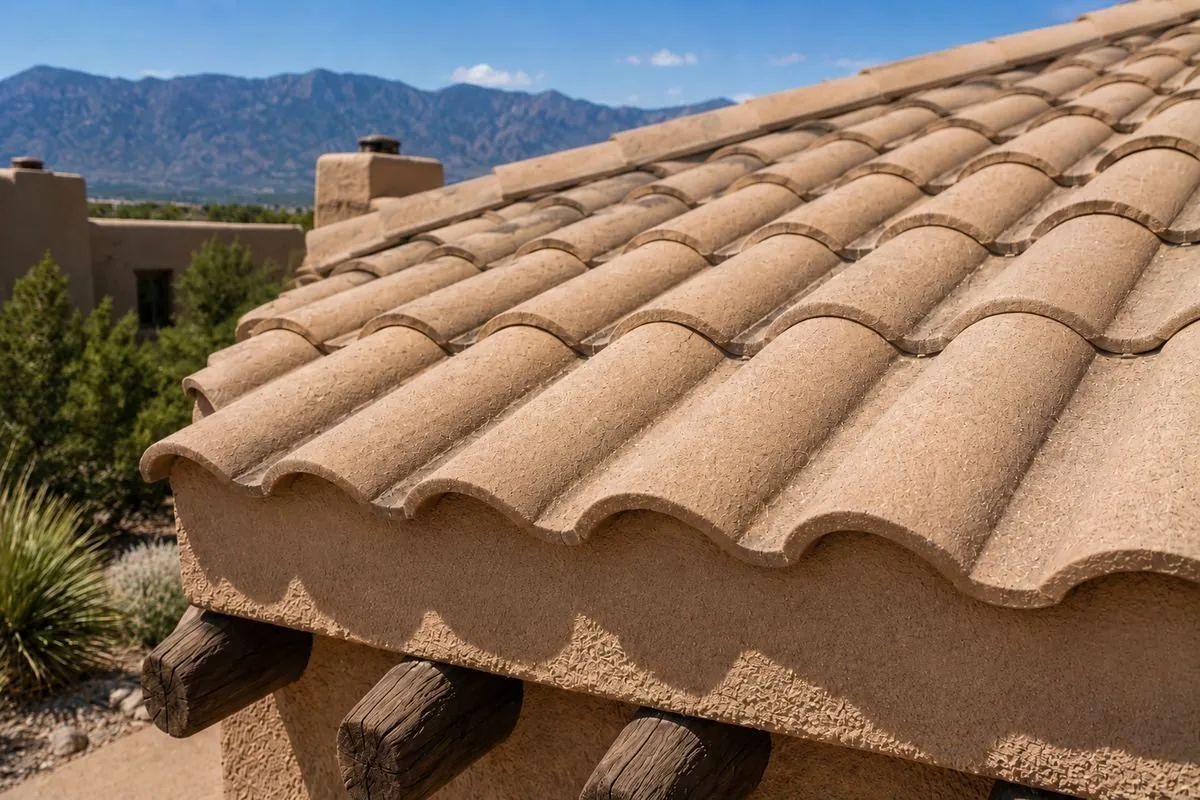
Clay and concrete tile are naturally UV-resistant. They don't degrade, bleach or lose structural integrity in New Mexico's sun the way asphalt shingles do. Tile's thermal mass slows heat transfer into your home, which cuts air conditioning load during Albuquerque's long summers. The barrel-and-channel design of S-tile also lets air move underneath, which lowers deck temperatures further.
Because Albuquerque is dry (annual rainfall averages just 9 inches), tile doesn't face the freeze-thaw moisture cycling that destroys tile roofs in wetter, colder climates. Here, tile lasts.
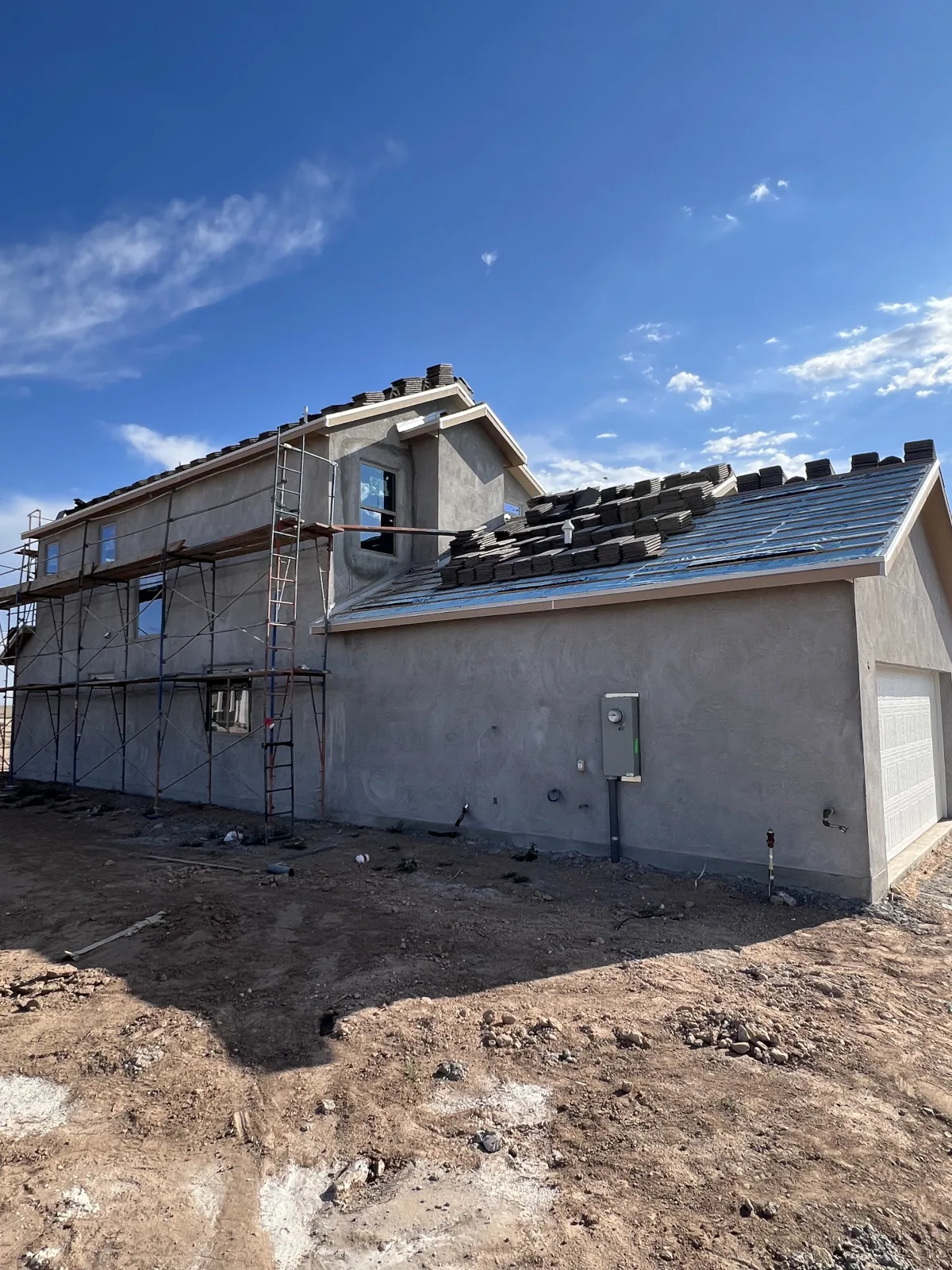
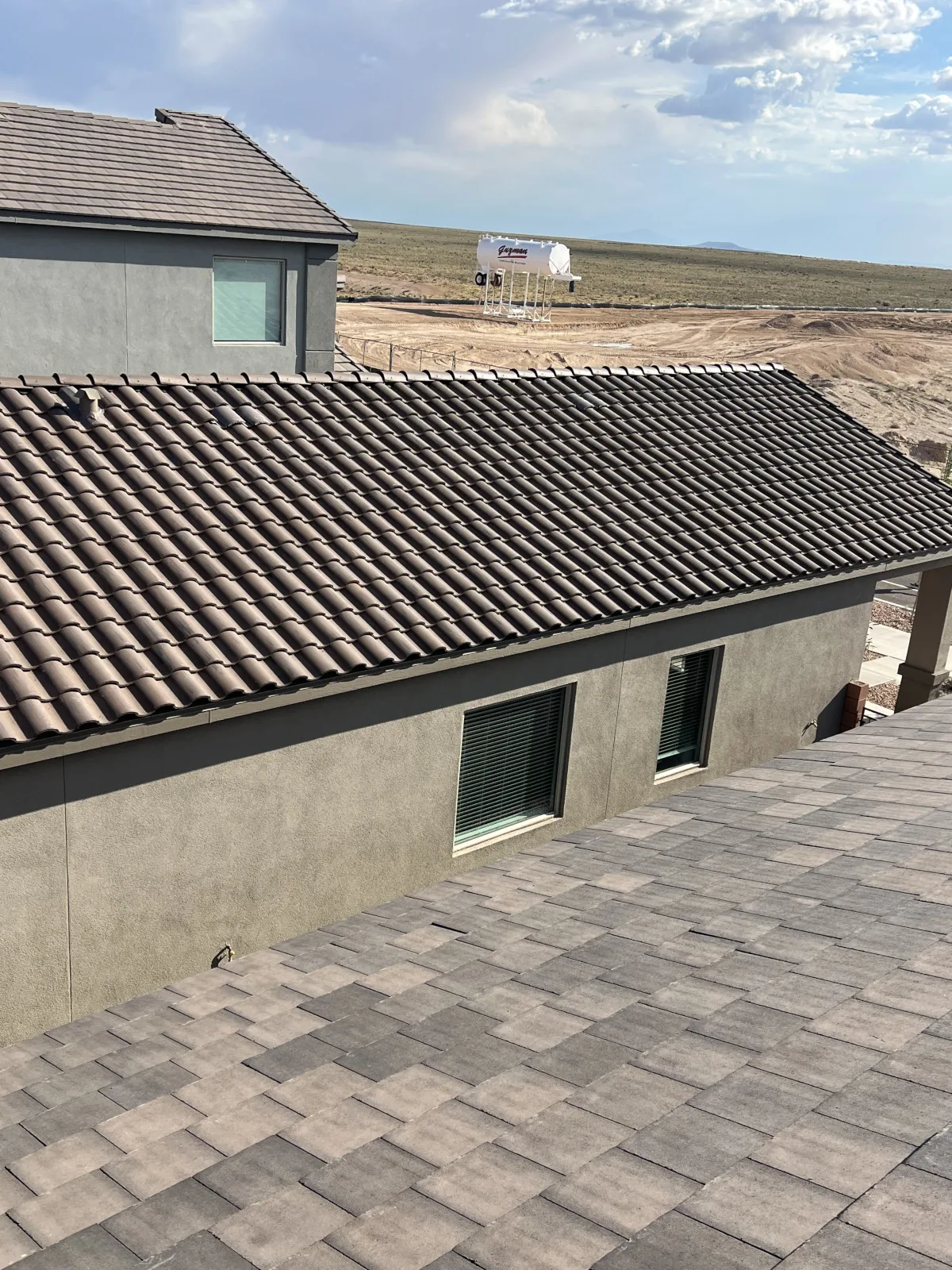
Clay Tile vs. Concrete Tile: Which Is Right for Your Home?
Both clay and concrete tile are excellent roofing materials. The differences come down to weight, cost, aesthetics, and longevity.
| Feature | Clay Tile | Concrete Tile |
|---|---|---|
| Lifespan | 75–100+ years | 40–50 years |
| Weight (per sq ft) | 9–12 lbs | 6–11 lbs |
| Impact resistance | Good (varies by thickness) | Class 4 in most products |
| Color permanence | ✓ Fired-in color, never fades | Some surface fading over decades |
| Style options | S-tile, flat, barrel, French | S-tile, flat, barrel, shake-look |
| Insurance discount potential | Yes (wind + fire Class A) | ✓ Yes (Class 4 impact + fire Class A) |
| NM building code compliant | ✓ | ✓ |
For many Albuquerque homeowners, concrete tile is the better value: it generally costs less than clay and holds up for decades. For historic, high-end or pueblo-revival homes where looks matter most and the house may stay in the family for generations, clay tile's near-permanent lifespan justifies the premium.
What Tile Roofing Cost Depends On
Tile roofing is more expensive than asphalt shingles upfront but typically less expensive per year of service due to its superior lifespan. Concrete tile generally costs less than clay, and larger homes, steeper pitches, premium profiles and imported clay all move the price up.
What drives cost up: steep pitch (increases labor), structural reinforcement (older homes may need rafter sistering), high-end underlayment, custom tile colors/profiles, and valley/hip/ridge complexity.
What can offset cost: possible insurance premium discounts for qualifying Class 4 impact or Class A fire ratings (eligibility varies by carrier), reduced maintenance costs over the roof's life, and increased home resale value. Many lenders also include tile roof upgrades in cash-out refinance or home improvement loan programs.
For more Albuquerque roofing cost data, see our complete Albuquerque Roof Cost Guide.
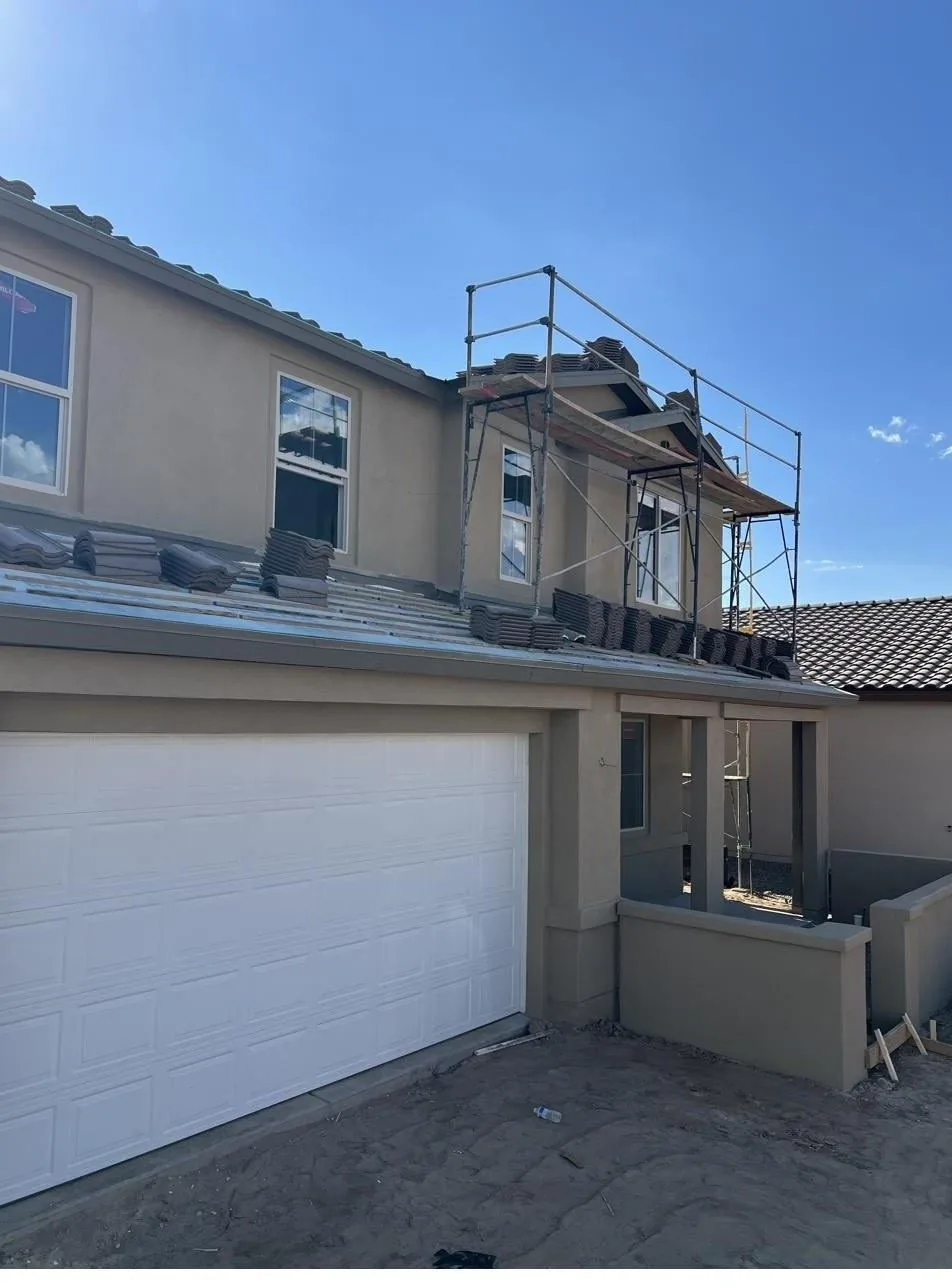
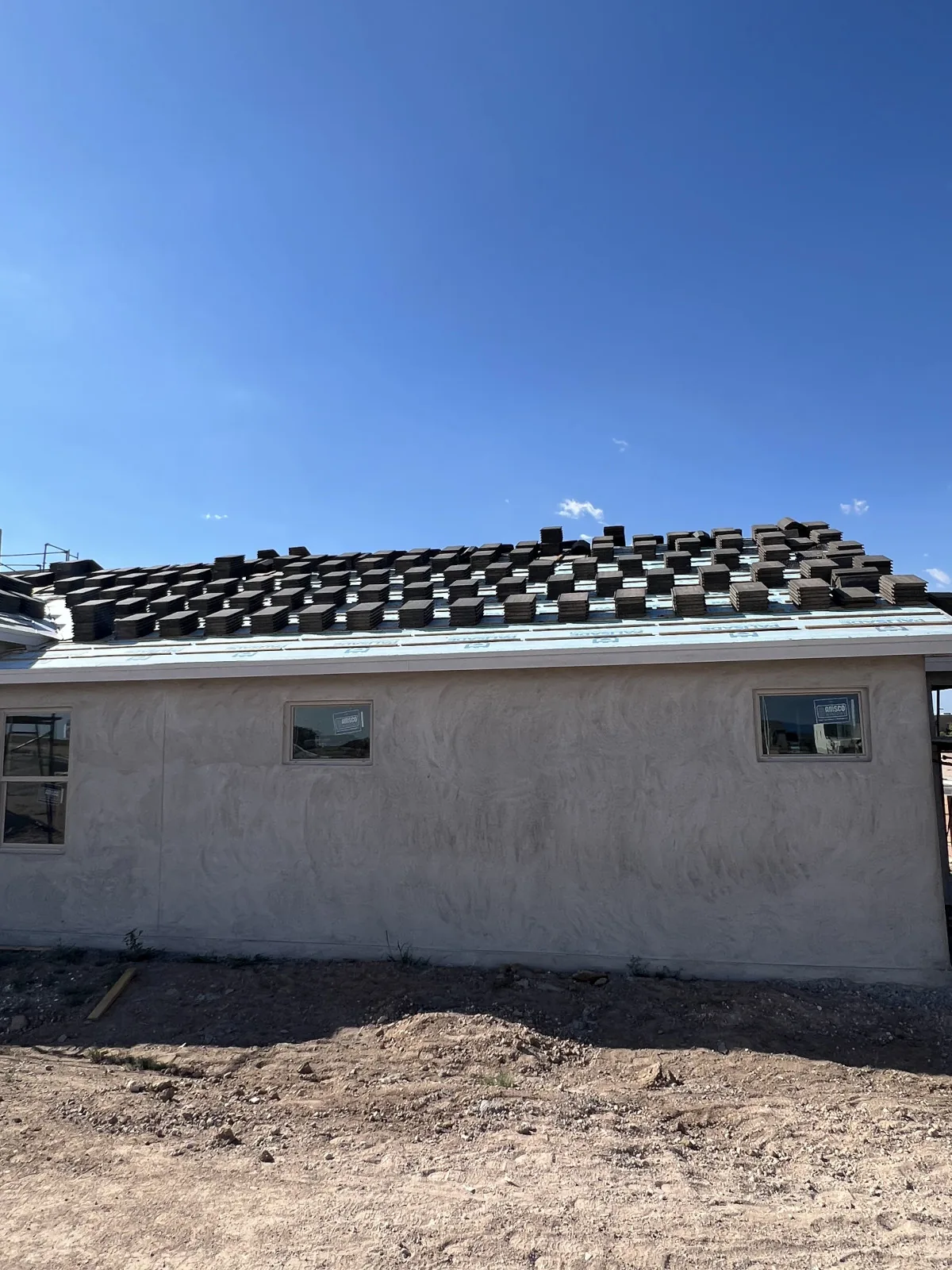
Is Your Home's Structure Ready for Tile?
Before any tile installation, the roof structure gets a load assessment. We don't skip this. Tile weighs 2–4× more than asphalt shingles, and an undersized roof structure will sag or fail over time.
- Rafter Span & Spacing Review. Our tile contractors measure rafter spans and spacing against the tile product's load specs and New Mexico Building Code requirements (based on ASCE 7 wind/snow load zones for Albuquerque).
- Decking Condition Inspection. Existing plywood or OSB decking is inspected for rot, delamination, or inadequate thickness. Tile typically requires 5/8" plywood minimum.
- Reinforcement (If Needed). When rafters need reinforcement, our contractors sister new lumber alongside the existing rafters. It's routine work that adds only a day or two to the project timeline.
- Underlayment Installation. Tile is installed over a high-quality underlayment system. Our contractors use minimum 30 lb felt or synthetic underlayment, with full ice-and-water shield in valleys and at eaves.
- Tile Layout, Installation & Mortar. Tiles are laid in courses from eave to ridge, mechanically fastened per manufacturer specs. Ridge and hip tiles are set in roofing mortar and fastened. All field tiles are staggered for drainage.
- Flashing & Penetrations. Lead or copper step flashing at walls, pipe boots at all penetrations, and custom valley metal are installed. This is where cheap contractors cut corners, and we hold our tile partners to doing it right.
Tile Roof Repair vs. Full Replacement in Albuquerque
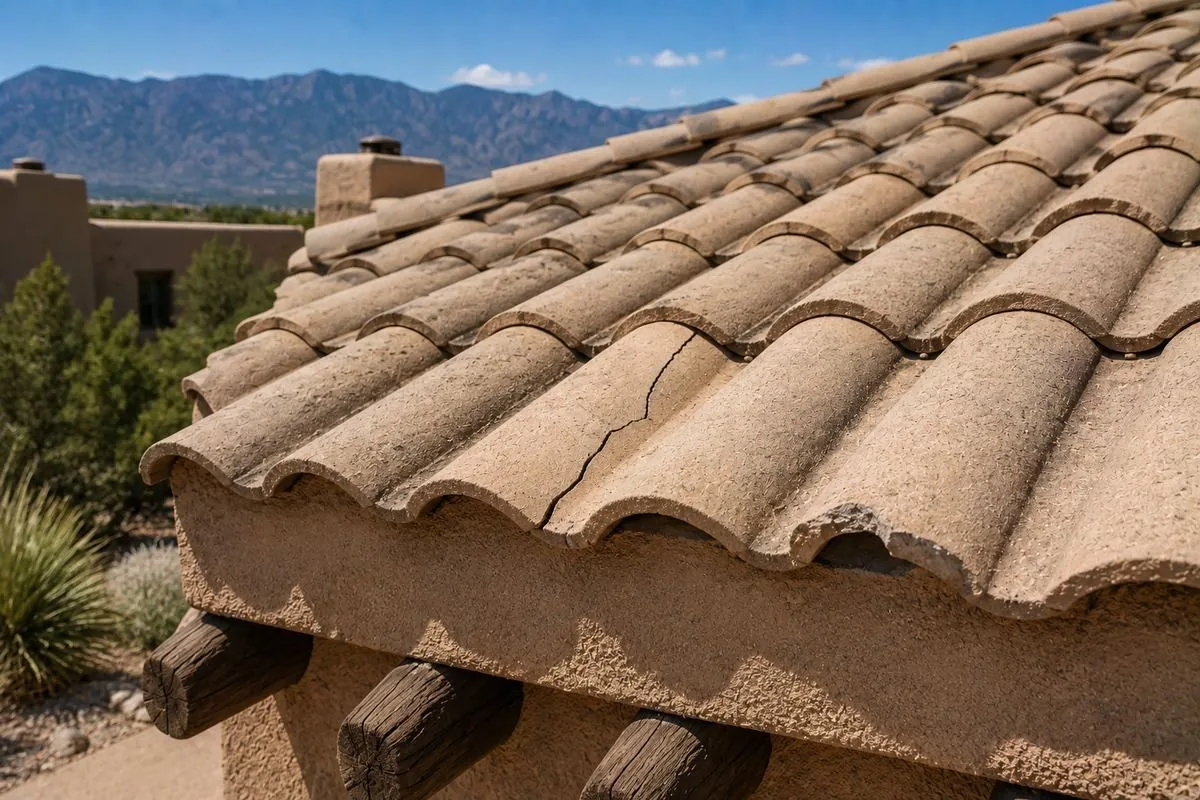
One of tile's biggest advantages is that individual tiles can be replaced without disturbing the rest of the roof. If your tile roof is under 30 years old and the underlayment is still sound, a targeted repair is almost always the right call.
Repair is the right choice when:
- Only a handful of tiles are cracked, chipped, or missing
- The underlayment shows no signs of moisture intrusion
- The roof is less than 25–30 years old
- Damage is concentrated to one area (e.g., after a branch fall or hail event)
Full replacement makes sense when:
- The underlayment is failing or has widespread moisture damage
- More than 25–30% of tiles are cracked, broken, or missing
- The original tile profile is discontinued and matching tiles are unavailable
- The roof structure itself needs significant work
- Insurance is covering a hail or wind loss
We'll tell you what we see. If a repair is the right call, we'll say so, and we won't push you into a replacement you don't need.
If your insurer has flagged your tile roof as too old even though the tiles look fine, an inspection report on the underlayment is usually what it needs to see. See roof insurance non-renewal in New Mexico.
Tile Roofing and New Mexico's Hail Season
Most of Albuquerque's hail falls during the June to September monsoon season. Concrete tile rated Class 4 impact-resistant is among the best materials you can have on your roof during a hail storm. Clay tile, while not always rated Class 4, is dense and durable and handles most hail well.
After significant hail events, Timberwolf recommends a professional inspection to identify cracked tiles before the next rain. Cracked tile left unaddressed lets water reach the underlayment, and once the underlayment is compromised, water can reach the decking and structure below.
For a full guide to what hail damage looks like on different roofing materials, see our Albuquerque Hail Damage Visual Guide. If you have impact-resistant shingles or are considering them, also read our Impact-Resistant Shingles New Mexico guide.
Tile Roofing and Albuquerque's Wind Season
New Mexico is one of the windiest states in the country. Properly installed tile does very well in wind, because the interlocking system and mechanical fastening keep tiles from lifting the way poorly installed asphalt shingles do. Over time, though, age and mortar failure at ridges and hips can let wind in.
Signs of wind damage on tile roofs include displaced or lifted tiles at ridges and hips, cracked mortar joints, and tiles that rattle or shift in high winds. If you've had wind events recently, our Wind Damage Roof Repair guide covers what to look for and when to call.
Why Albuquerque Homeowners Choose Timberwolf for Tile
Tile installation takes specialized skills that not every roofer in Albuquerque has. Cutting tiles, setting mortar, flashing complex hip and valley systems, and working safely on steep pitches all take proper training and experience. That's why Timberwolf brings in trusted tile contractors with that experience for the installation, while we manage your project from estimate to final inspection: permits, scheduling, insurance paperwork, and your warranty.
- Licensed & insured in New Mexico: NM License #426379 · GB-98
- Manufacturer-spec installation: our tile contractors follow the published installation specs for every product
- Permit-pulled work: we pull the permits, with no shortcuts that void your manufacturer warranty
- Straight assessments: if repair makes more sense than replacement, we'll tell you
- Insurance claim assistance: we work with your adjuster and document everything properly