

Stucco Installation & Repair in Albuquerque: Only What Your Walls Need
Not every wall needs the same fix, and not every crack is storm damage. We'll tell you what your stucco needs, whether that's a full installation, a re-coat or a patch, instead of upselling every wall into the most expensive option.

On this page
What We Do
Stucco is the wall system on most Albuquerque homes, whether it's going up new on an addition or holding up on a forty-year-old exterior. We install it and we repair it, and the two jobs call for different judgment. The question is whether a wall needs a full three-coat system from the lath up or just a good patch.
- Full stucco installation: new construction, additions, and garage conversions, from the lath up
- Complete re-stucco: tearing off a failed wall system and rebuilding it when a repair or re-coat isn't enough
- Crack repair: filled, textured, and matched to the surrounding wall
- Re-coating: when a wall has more cracks than it has sound area left
- Storm damage assessment: separating impact damage from ordinary settling
- Roof-to-wall transitions: parapet caps and flashing details where stucco and roofing meet
Before and After: A Stucco Crack Repair
Drag the slider to see an example stucco crack repair: the same wall, before and after.
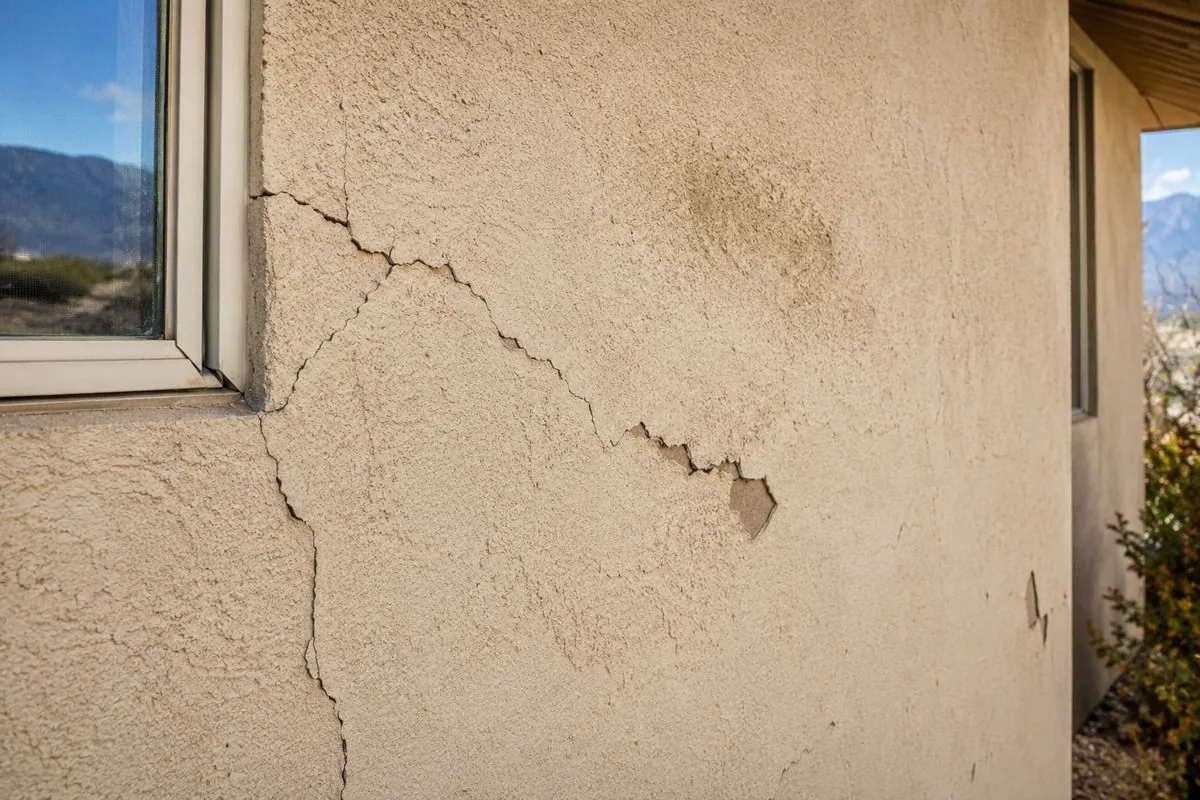
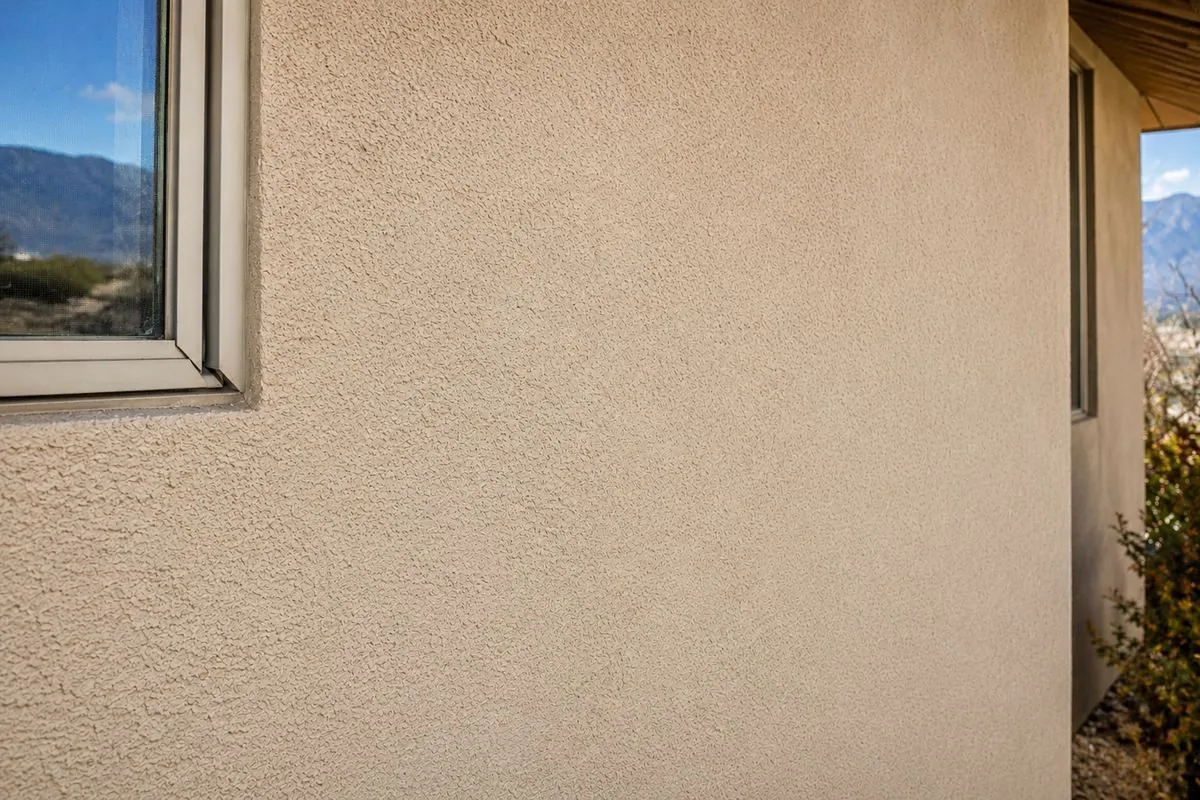
Examples of stucco work
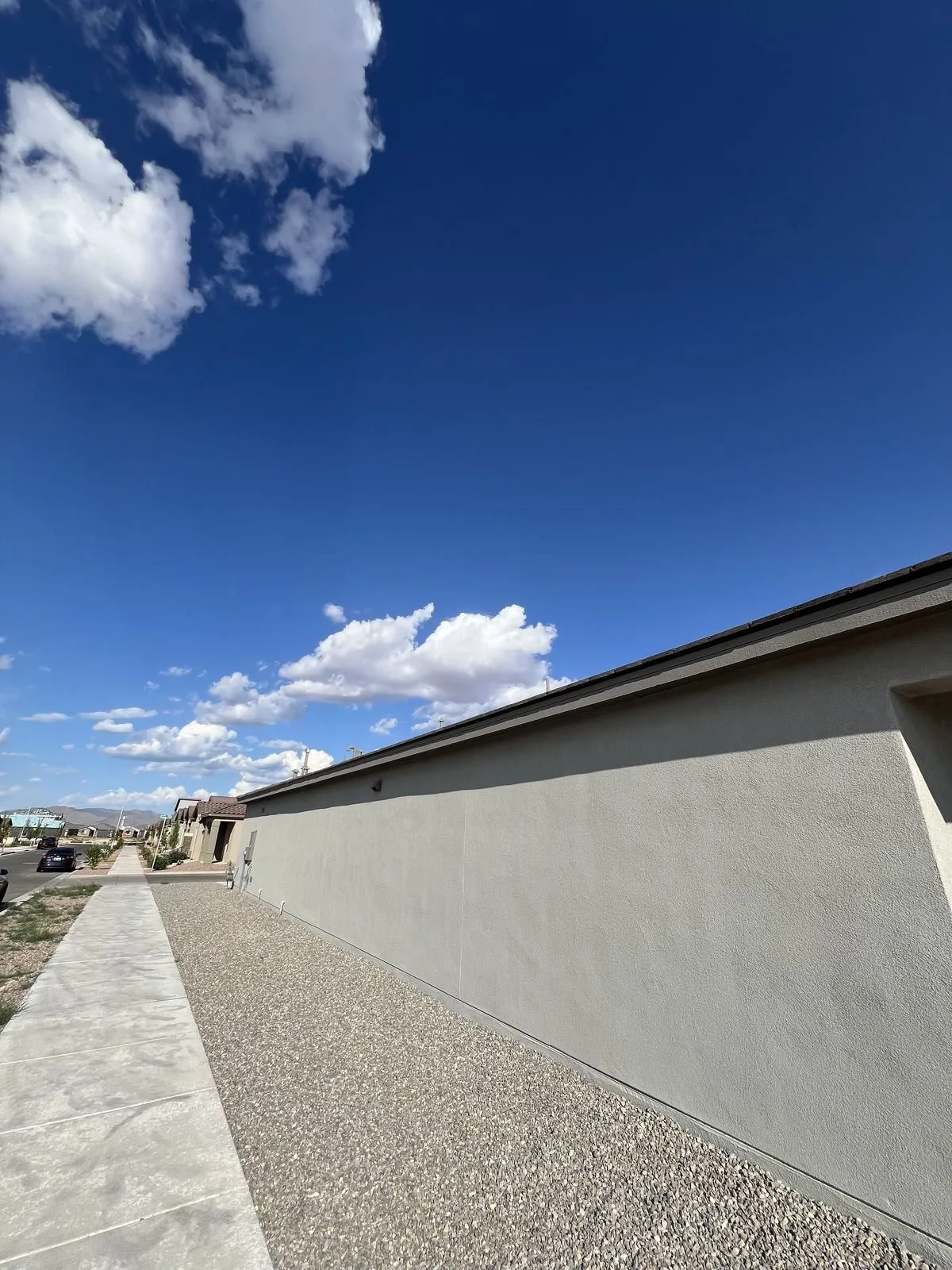
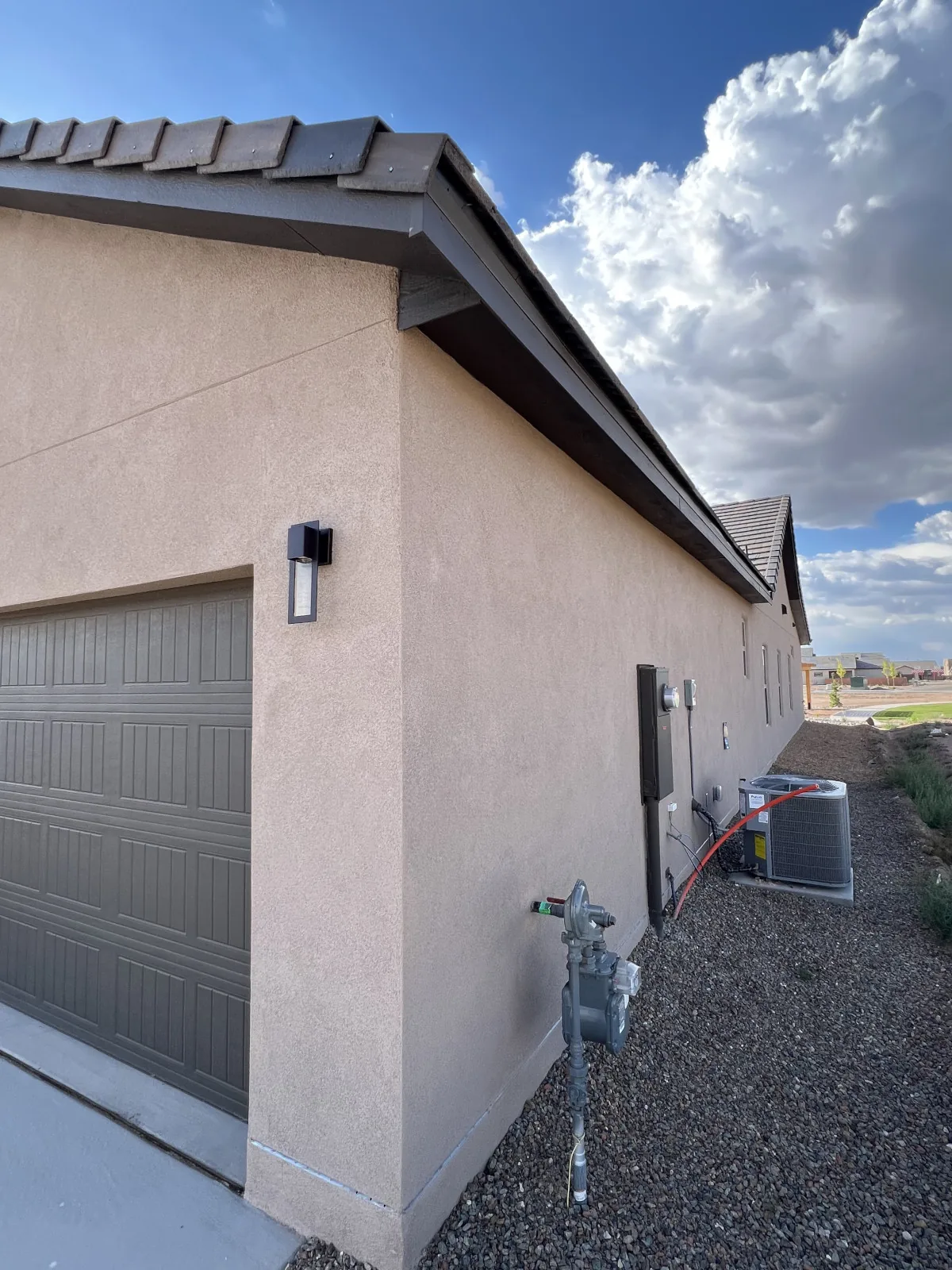
Full Stucco Installation: New Construction, Additions, and Full Exteriors
A full stucco installation is a different job than a repair. You're building the wall system from scratch instead of fixing what's already there. We do this on new construction, room additions, garage conversions, and full exterior remodels, including converting a wall from another siding material over to stucco.
Traditional three-coat stucco starts with a weep screed at the base of the wall and a layer of wire lath fastened over the sheathing, which gives the cement something to grip. From there it's three separate coats: scratch, brown and finish. Each one needs to cure before the next goes on. Skipping that curing time is one of the most common ways a new stucco job cracks early.
Albuquerque's dry heat and sun make that curing schedule more demanding. Stucco that dries too fast doesn't cure properly and is more likely to crack down the road, so timing and moisture management during installation matter as much as the materials. On additions and partial exteriors, matching the existing wall's texture and color is also part of the job; new stucco next to twenty-year-old, sun-faded stucco doesn't blend on its own.
Reading a Crack: Hairline vs. Something That Matters
Most stucco cracks are not an emergency. Portland cement shrinks as it cures, houses settle, and our temperature swings expand and contract the wall every single day. Hairline cracking under about a sixteenth of an inch is the normal result of all three, and on its own it is not a structural concern.
What changes the assessment is any of the following:
- Width beyond roughly an eighth of an inch
- Diagonal or stair-step patterns, particularly running from window and door corners
- Water staining, or the chalky white bloom of efflorescence. Both mean moisture is already moving through
- Visible growth over time. A crack you can measure getting longer is telling you something is still moving.
The bigger risk with stucco is rarely the crack itself. It's water getting behind the wall through it. Once moisture is in there, the damage happens out of sight, and by the time it shows on the inside the repair is considerably larger than filling a crack would have been.
Repair, Re-Coat, or Full Re-Stucco?
The cost depends on how much of the wall is affected more than on how bad any one crack looks.
Individual repair makes sense when the cracking is isolated. Hairline cracks are sealed with a flexible elastomeric coating, which stays elastic and can move with the wall instead of cracking again the first hot week. Anything wider gets a flexible elastomeric caulk worked into the gap first, then coated over.
Re-coating the whole wall becomes the better value once a wall is cracked throughout. Chasing thirty individual cracks costs more in labor than resurfacing the elevation, and it leaves you with a patchwork finish. If we recommend a full re-coat, it's because the math favors it, and we'll show you the wall and explain why.
Full re-stucco is the right call when the problem goes deeper than the finish coat: rusted-through lath, water damage in the wall assembly, or an exterior change big enough that patching isn't realistic, like converting siding to stucco or reworking a wall after a remodel. That means stripping back to the sheathing and studs and rebuilding the whole system (weep screed, lath, scratch coat, brown coat and finish) instead of resurfacing what's already there.
Rigid patching compound is the common shortcut worth avoiding. A hard filler in a wall that moves daily with our temperature swings will re-crack, usually right along the old line, and often within a season.
Stucco Color Chart
- Hatteras
- Asheville
- Coral Gables
- Belle Glade
- El Dorado
- Chablis
- Silver Gray
- Misty
- Aspen
- Santa Fe
- Saddleback
- Mirage
- Suffolk
- Charleston
- Morning Side
- Bay Ridge
- San Simeon
- Dove Grey
- Meadowbrook
- Crystal White
- Pure Ivory
- French Vanilla
- Miami Peach
- Adobe
- Egg Shell
- Oatmeal
- Hacienda
- Sandstone
- Pacific Sand
- Glacier White
- Oat Grain
- Desert Beige
- Caramelo
- Mesa Verde
- Trabuco
- Fallbrook
- Viejo
- Blue Grey
- Agate
- Alamo
- Navajo White
- Sierra Tan
- Southern Moss
- Silverado
- Clay
- Moroccan Sand
- Titanium
- Thunder Sky
Colors shown are digital representations and may vary from finished product. Final color selection should be verified with a physical sample.
Where Stucco and Roofing Meet
This is the part most stucco contractors are not thinking about and most roofers hand off. On the flat and low-slope roofs common across Albuquerque, the parapet wall is stucco, the roof membrane terminates against it, and the transition between them is where a surprising share of leaks originate.
A cracked parapet, a failed cap, or a poor roof-to-wall flashing detail will put water into a building just as reliably as a hole in the field of the roof, and it usually gets blamed on the roof. Because we do both, we look at that junction as one system instead of two trades pointing at each other.
Hail Knocked Stucco Loose Near the Roofline. Is It Part of My Roof Claim?
Usually, yes. Dwelling coverage on a homeowners policy covers the house itself, including the roof and exterior walls, so hail damage to stucco from the same storm is normally reported with the roof under the same date of loss. American Family's hail guide describes dwelling coverage paying for hail damage to the roof and siding.
Document it together: photos of the stucco next to the roof damage, the storm date, and anything else the storm hit, like gutters, screens and cooler covers. Ask your agent how your deductible applies, since policies differ. If you're not sure whether a crack is from the storm or from settling, see storm damage vs. settling cracks, and for the claim itself, the insurance center.
Frequently Asked Questions
How do I know if a crack is storm damage or just settling?
Settling cracks are typically hairline and follow predictable stress points, especially the corners of windows and doors. Storm damage tends to be sudden, irregular, and often accompanied by impact marks elsewhere on the property. An inspection can tell you which you are looking at, and the answer matters because only one of them is an insurance claim.
When is a stucco crack a problem?
Hairline cracking under roughly a sixteenth of an inch is normal and usually not a structural concern. Pay attention when a crack is wider than about an eighth of an inch, runs diagonally or in a stair-step pattern, shows water staining or chalky white efflorescence, or is visibly growing over time. The danger with stucco is water getting behind the wall, where the damage happens out of sight.
Should I repair individual cracks or re-coat the whole wall?
It depends on how much of the wall is affected. Isolated cracks get sealed individually with a flexible elastomeric coating that moves with the wall. Once an elevation is cracked throughout, re-coating is usually the better value. Chasing thirty separate cracks costs more in labor than resurfacing the wall and leaves a patchwork finish behind.
Can a stucco crack cause a roof leak?
Yes, and it is more common than people expect on flat and low-slope roofs. The parapet wall is stucco, the roof membrane terminates against it, and a cracked parapet or failed cap will put water into the building just as reliably as a hole in the roof itself. It usually gets blamed on the roof, which is why we look at that junction as one system rather than two separate trades.
Do you match existing stucco texture and color?
Yes. That's part of a proper repair, not an upgrade. Texture matching is hand work, and an exact color match on sun-faded stucco isn't always achievable on a patch. That's one reason a full re-coat sometimes makes more sense on a badly cracked elevation.
Do you install new stucco, or just repair it?
Both. We install stucco on new construction, additions, garage conversions, and full exterior remodels, and we repair and re-coat existing walls. Same crew, same standards. The only difference is whether we're building the wall system from the lath up or working with what's already there.
How long does a full stucco installation take?
It depends on the size of the wall and the weather, but plan on it taking longer than people expect. Traditional three-coat stucco needs each layer (scratch coat, brown coat and finish coat) to cure before the next goes on, and curing time stretches in cold or fast-drying conditions. We'll give you a realistic schedule once we've seen the project instead of a generic estimate.
What's the difference between re-coating and a full re-stucco?
Re-coating applies a new finish coat over an existing wall system that's still structurally sound underneath. It fixes cosmetic cracking and refreshes the look. A full re-stucco means the wall assembly itself has a problem, usually failed or rusted lath or water damage behind the stucco, and the whole system gets stripped and rebuilt from the sheathing out. One is a finish fix; the other is a structural one.
Is hail damage to stucco covered with my roof claim?
Usually. Stucco and the roof are both part of the house under dwelling coverage, so damage from the same storm is normally reported together under one date of loss. Photograph the stucco and roof damage together and ask your agent how your deductible applies.
Ready for a Free Roof Report?
It's free, and you're under no obligation. You'll know exactly where your roof stands.