

Choosing the Right System Starts With Drainage, Not the Material
Flat and low-slope roofs fail from standing water more often than from worn-out membranes. The system we recommend depends on your roof's slope, traffic, and current condition. There's no one-size-fits-all default.

On this page
What "Flat Roof" Actually Means
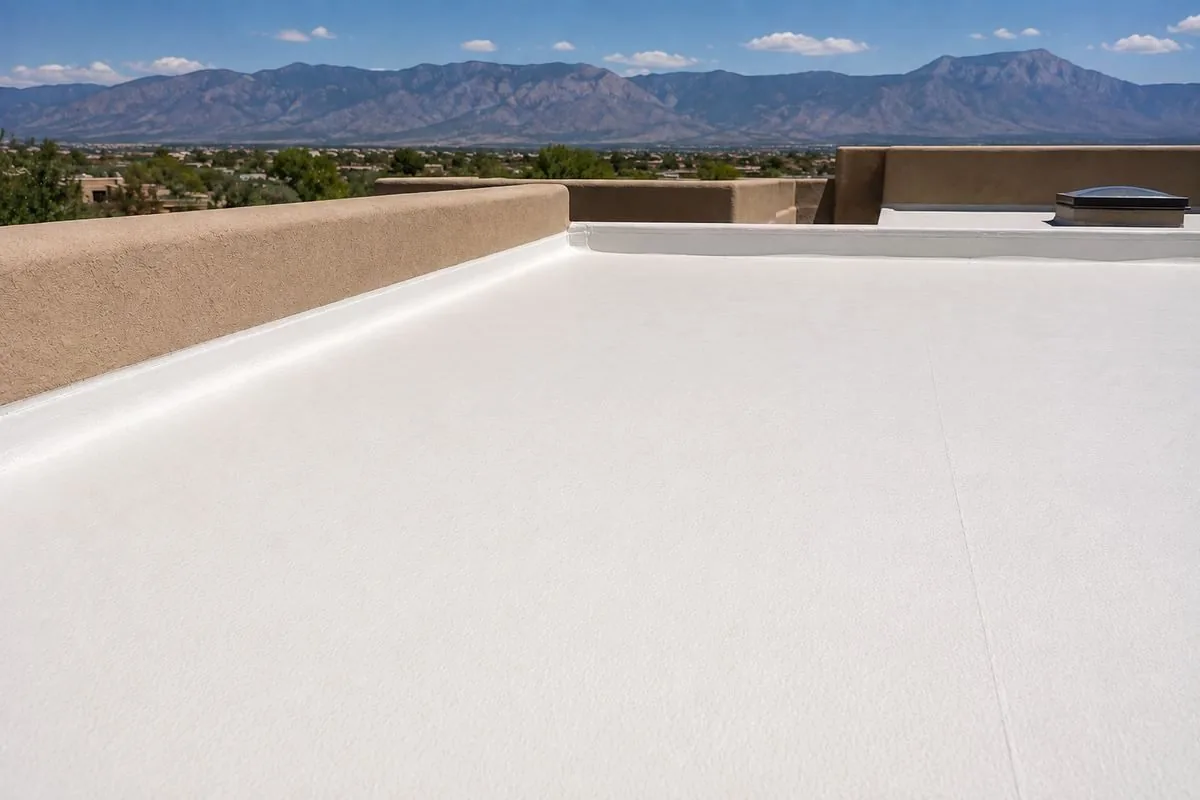
Flat roofs are rarely perfectly flat. Most have a slight built-in slope, typically under 2:12, engineered to move water toward drains or scuppers. That pitch is too low for shingles or standard metal panels, so low-slope roofs use membrane systems instead: TPO, modified bitumen, or a maintenance coating over an existing membrane. The right one depends less on personal preference and more on the roof's traffic, current condition, and drainage layout.
You may also see rolled roofing offered for low-slope roofs. It works as a quick cover for sheds and outbuildings, but it’s a single wide sheet that’s vulnerable to shrinkage and tearing in big temperature swings. On homes we install GAF TPO built to commercial standards. See how our materials compare.
Why Drainage Matters More Than the Membrane in Albuquerque
Albuquerque's monsoon season, roughly mid-June through late September, brings short, intense rainfall that a flat roof has to shed quickly. Ponding water, meaning water that sits for more than 48 hours after rain, is one of the most common causes of flat roof failure here. It's almost always a drainage design problem rather than a membrane defect. That's why every flat roof inspection starts with slope and drain placement instead of a sales pitch for one material over another.
If you're thinking about a pitched roof to get away from flat-roof problems, read what a flat-to-pitched conversion involves first. On most homes, fixing the drainage is the simpler answer.
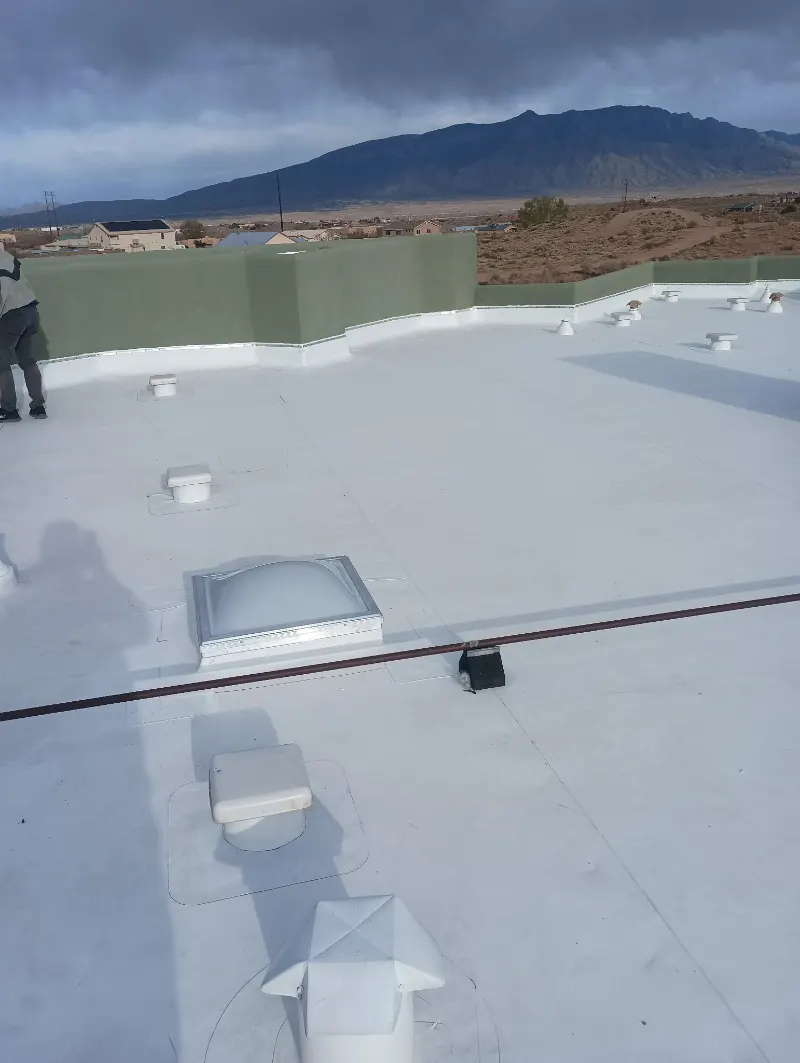
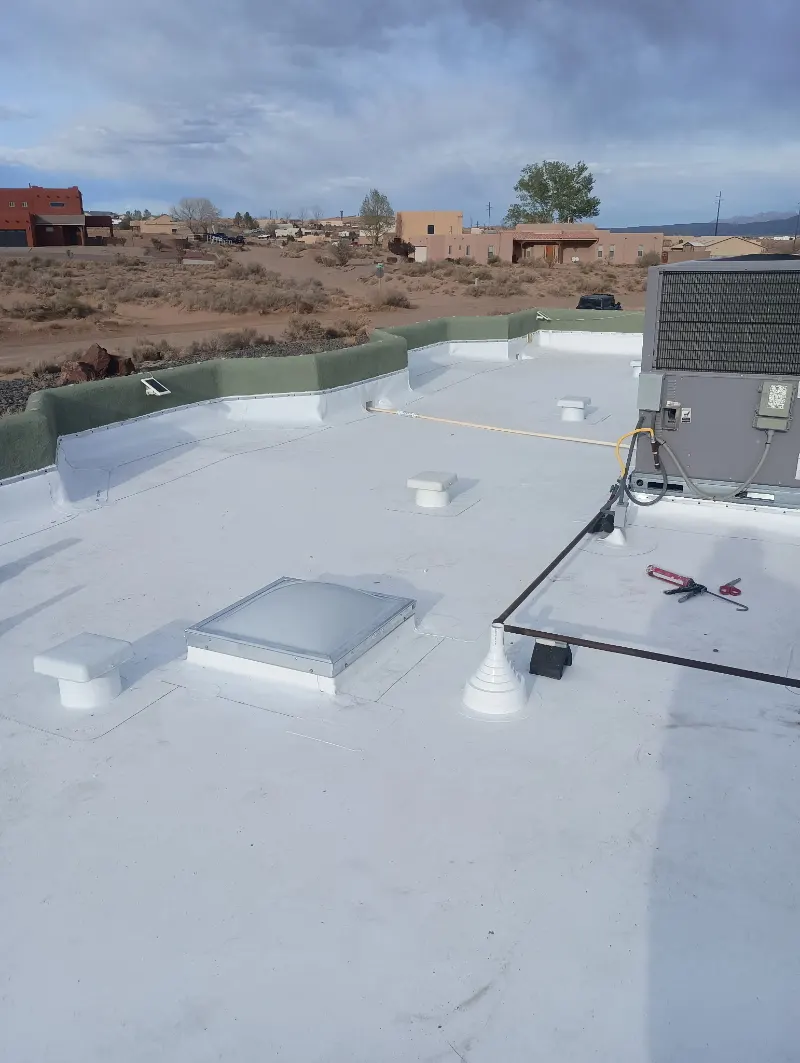
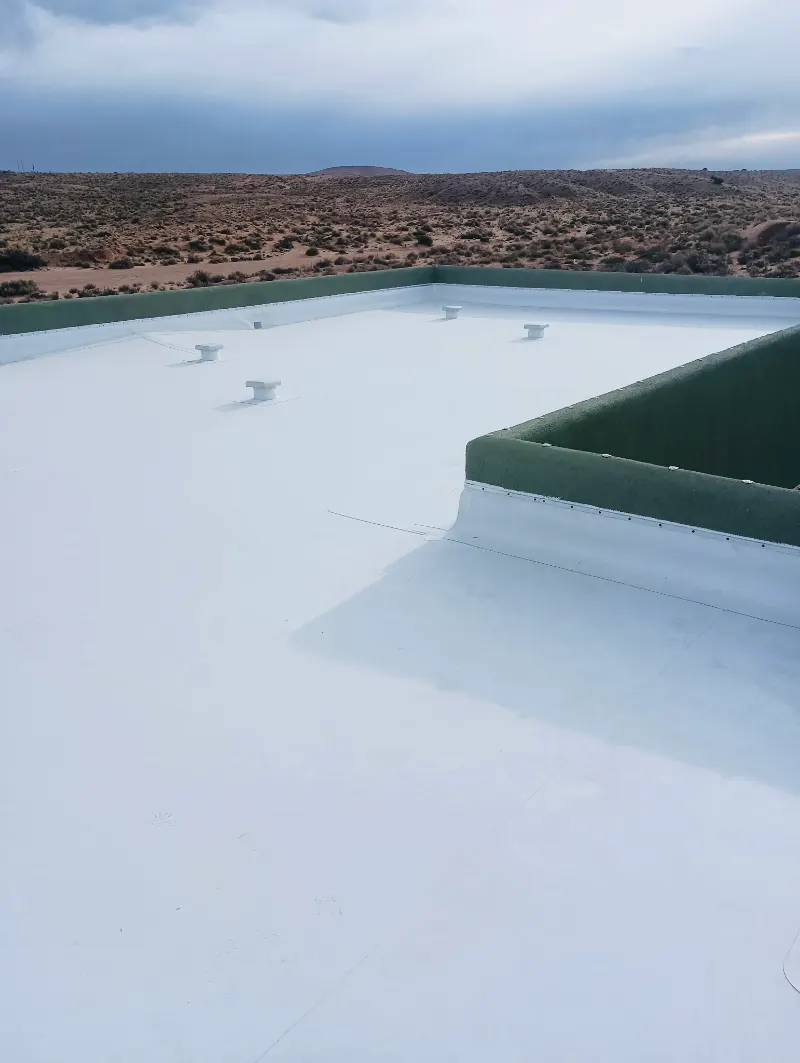
Examples of flat and low-slope systems
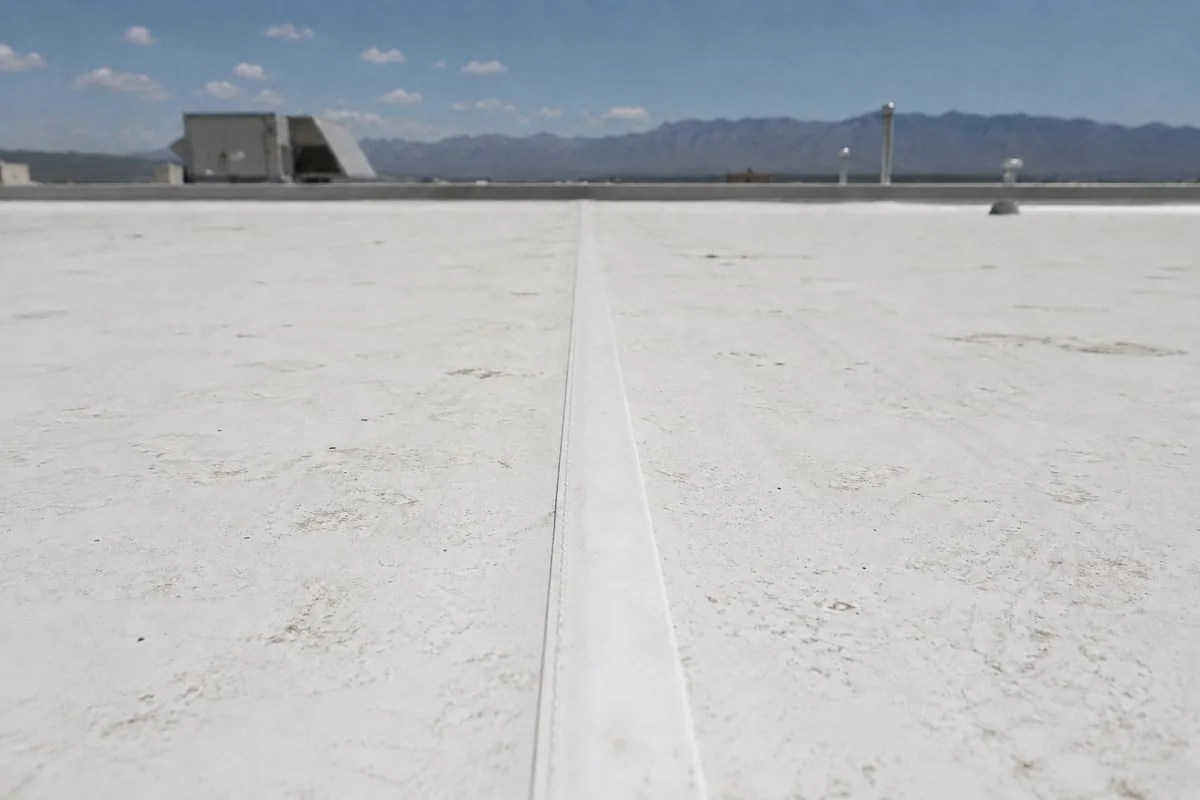
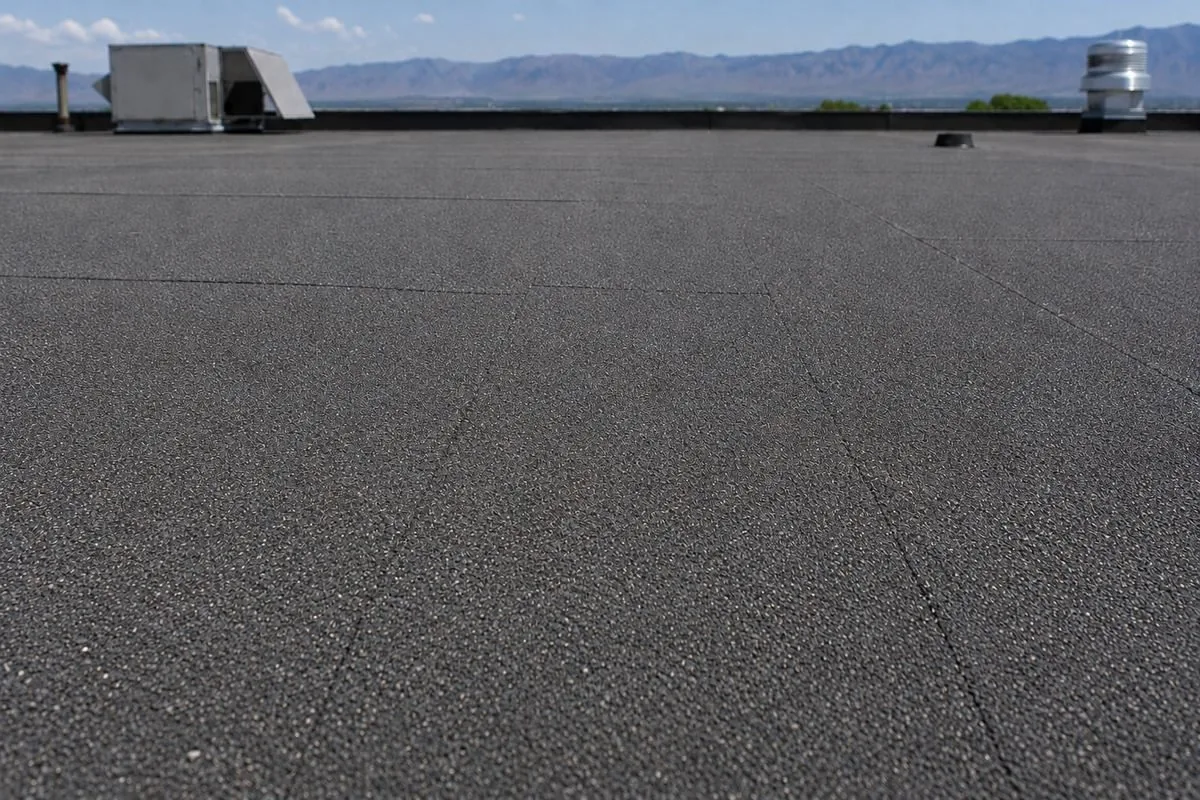
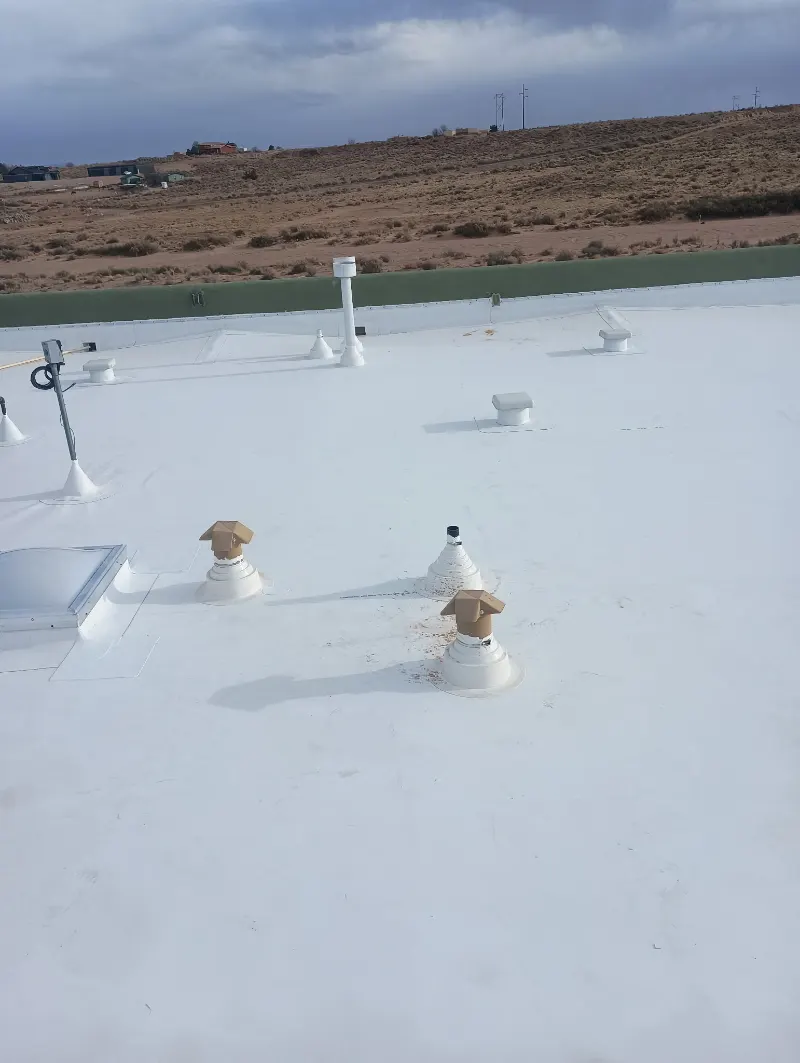
How We Choose the System
| Standard flat roof, moderate traffic | TPO: GAF EverGuard® TPO, heat-welded seams, cost-effective, wide manufacturer support |
|---|---|
| Heavy foot traffic or equipment access | Modified bitumen: GAF RUBEROID®, multi-layer construction resists punctures and wear |
| Existing membrane still structurally sound | Roof coating: GAF HydroStop® PremiumCoat®, extends life without a full tear-off |
| Poor or unclear drainage | Drainage correction first, regardless of which membrane is chosen |
| Deciding factor | Confirmed at inspection by slope, ponding history, and traffic |
Good Fit / Not a Good Fit
- Good starting point if you're not sure which flat roof material is right for your building
- Good fit if you've had recurring leaks and suspect drainage rather than the membrane itself
- Not a substitute for the individual TPO or modified bitumen pages if you already know which system you want
Frequently Asked Questions
What counts as a low-slope roof?
Generally any roof with a pitch under 2:12. That's low enough that standard shingle systems aren't rated for it, so a membrane or coating system is required instead.
How do you decide between TPO, modified bitumen, and coatings?
It comes down to the roof's traffic, existing condition, and budget. TPO suits most standard flat roofs, modified bitumen suits roofs with heavy foot traffic, and coatings can extend the life of an existing membrane that's still structurally sound rather than requiring a full tear-off.
Why do flat roofs leak more often than pitched roofs?
Flat roofs rely entirely on drainage design rather than gravity to shed water, so ponding water from poor slope or undersized drains is one of the most common causes of flat roof leaks. It happens more often than membrane failure itself.
Ready for a Free Roof Report?
It's free, and you're under no obligation. You'll know exactly where your roof stands.