

Canales: Flat-Roof Drain Spouts for New Mexico Homes
A canale is the clay or metal spout that carries water off a flat or low-slope roof and past the wall. When it clogs, cracks, or pulls away from the parapet, the water has nowhere to go, and it finds its way inside instead.
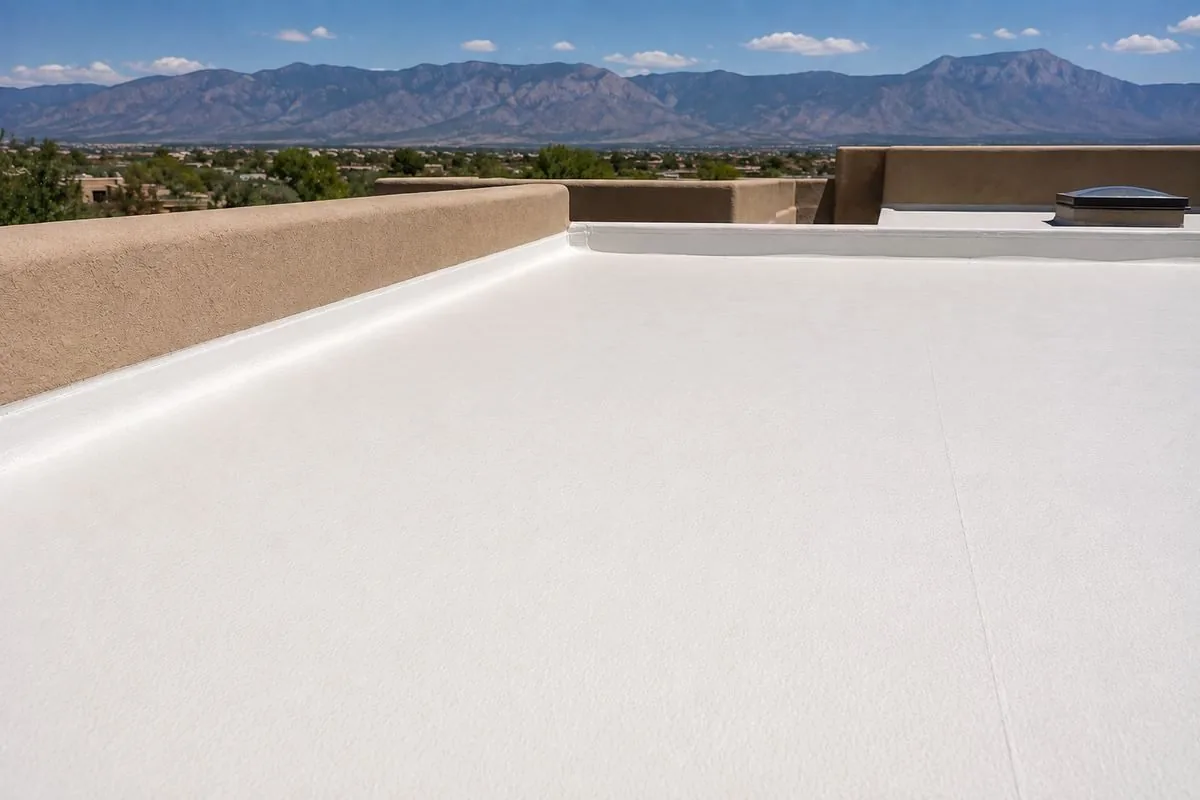
What Is a Canale?
Canales (pronounced cah-NAH-les) are a defining feature of Southwestern adobe and pueblo-style construction. Unlike asphalt-shingle roofs that shed water on all four sides via slope and gutters, flat and low-slope roofs in New Mexico drain through spouts built into the parapet wall. Traditional canales were hand-formed clay or wood. Modern canales are typically formed metal, galvanized steel, or copper, sized and pitched to match the roof's drainage load.
Canales go back to Pueblo and Spanish Colonial building. Our guide to the history of New Mexico's flat roofs covers where they came from.
Most single-family homes in Albuquerque, the East Mountains, and the Rio Grande Valley have anywhere from two to a dozen canales depending on roof size and how the parapet sections break up. Each canale is responsible for draining a specific area of roof, and a single blocked or failing spout can be enough to flood a ceiling.
Why Canales Fail
- Clogged with debris. Cottonwood seeds, pine needles, and blown dirt pack into the canale mouth, dam water on the roof, and eventually force it under the waterproof membrane at the base of the wall.
- Negative slope. A canale should pitch slightly downward and out. Settlement, thermal cycling, and poor original installation can make the back lip higher than the spout, trapping water inside the wall rather than expelling it.
- Cracked or corroded metal. Galvanized steel canales rust from the inside out over 15–20 years in New Mexico's UV-intense, low-humidity environment. Pin holes look minor but allow constant wicking into the surrounding adobe or wood nailer.
- Failed flashing at the wall penetration. The joint where the canale meets the parapet is the highest-risk point. If the flashing isn't properly sealed with compatible materials, water enters the wall at every rain event.
- Undersized for the roof area. Older canales were often sized by appearance rather than engineering. A single 3-inch-diameter canale draining 400 square feet of roof is badly undersized for a monsoon event. Even a short cloudburst will overtop the parapet before it can drain.
Overwhelmed canales are a common reason a roof only leaks in big storms.
Vigas that pass through the same parapet fail in a similar way, at the joint where wood meets the wall. See why vigas leak at the parapet.
A canale is one of several places water gets into a parapet. See our guide to parapet leaks.
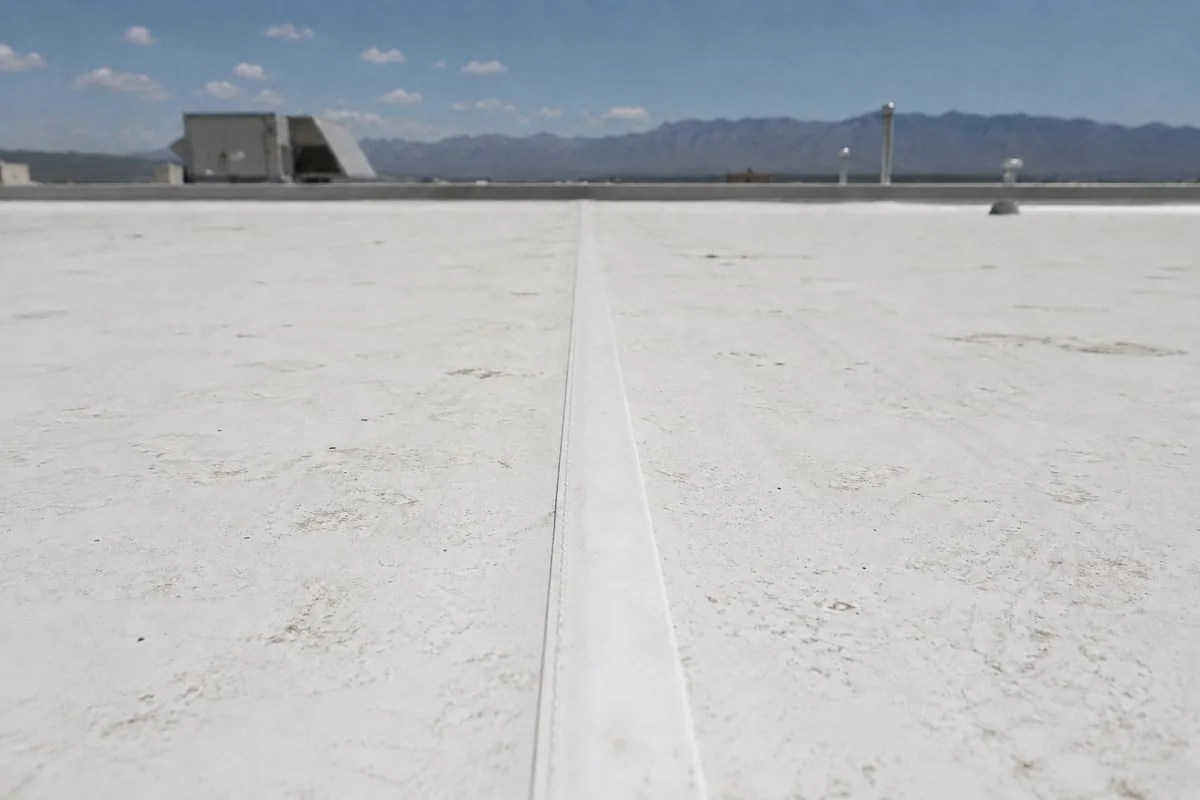
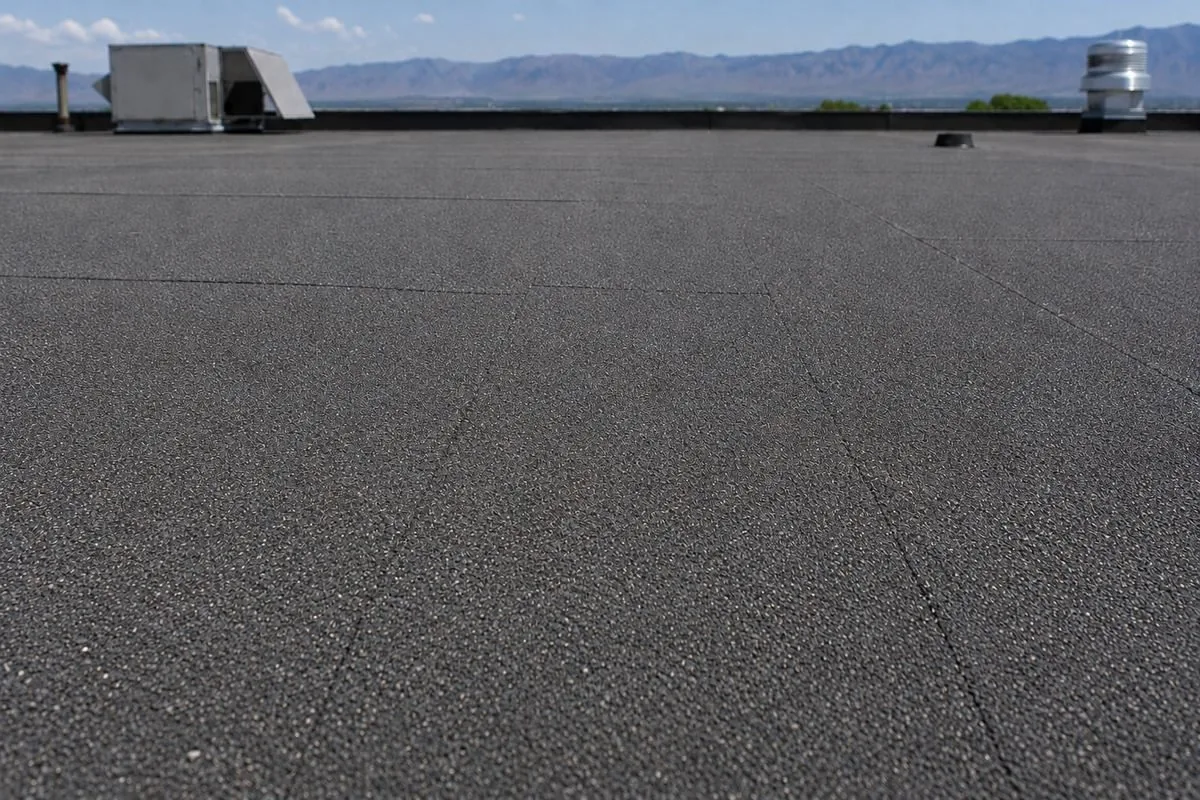
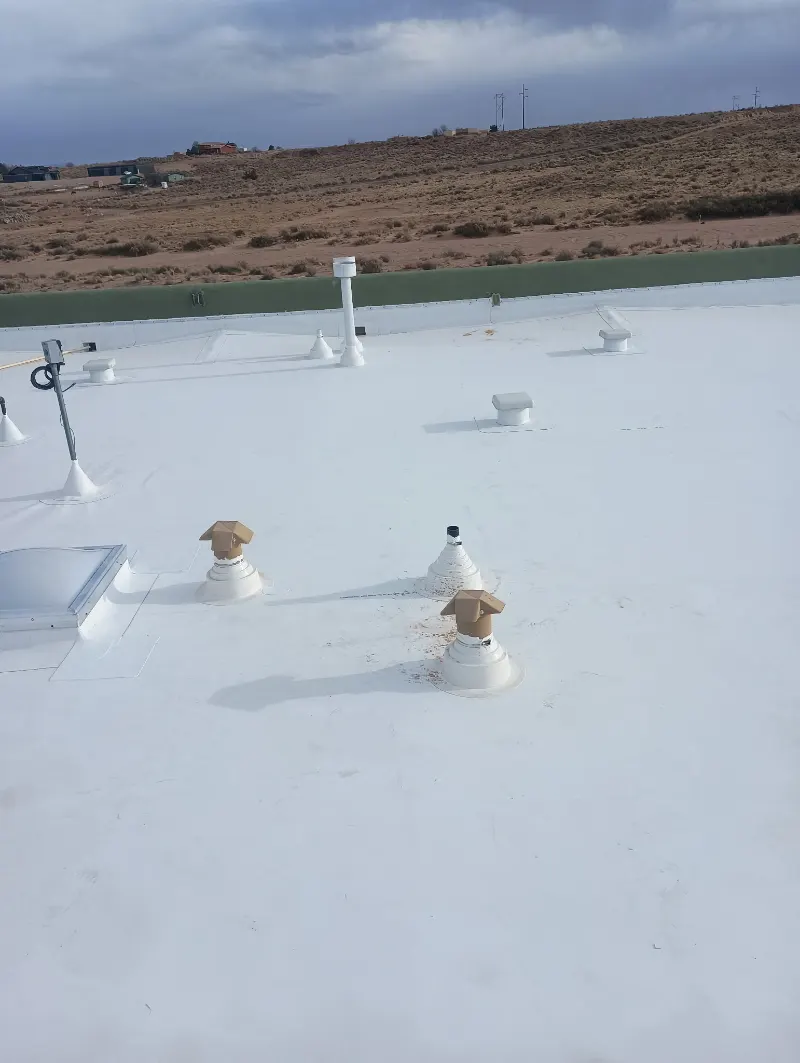
Examples of flat roof drainage details
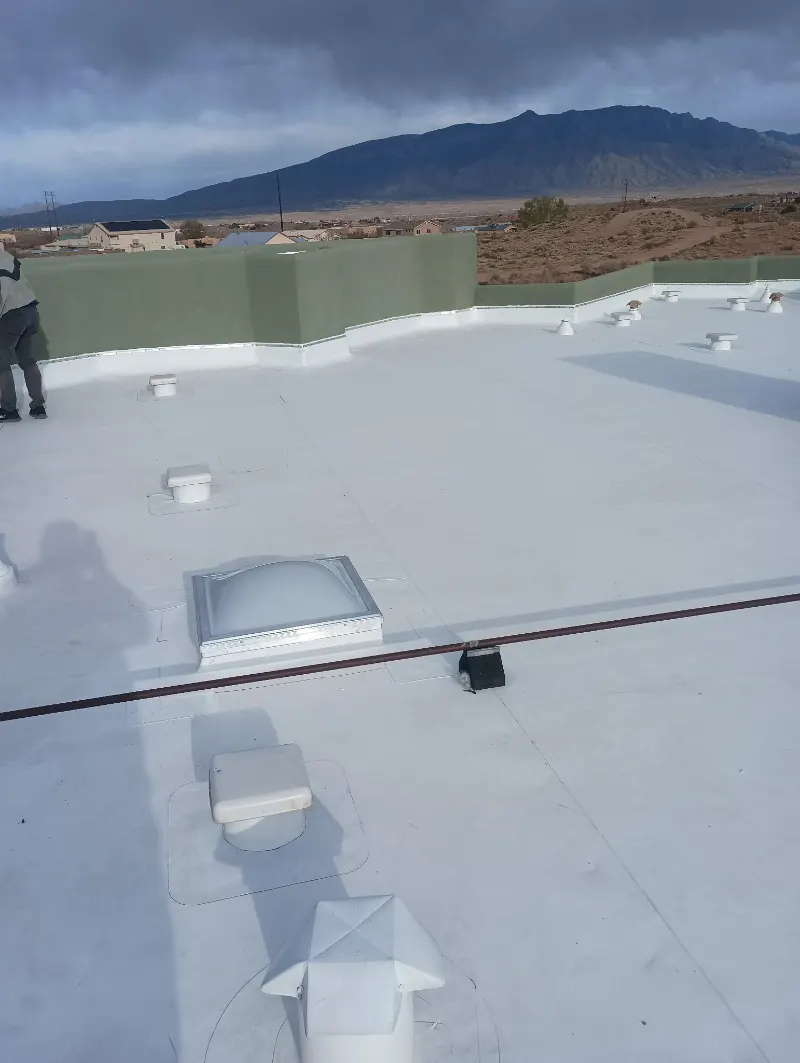
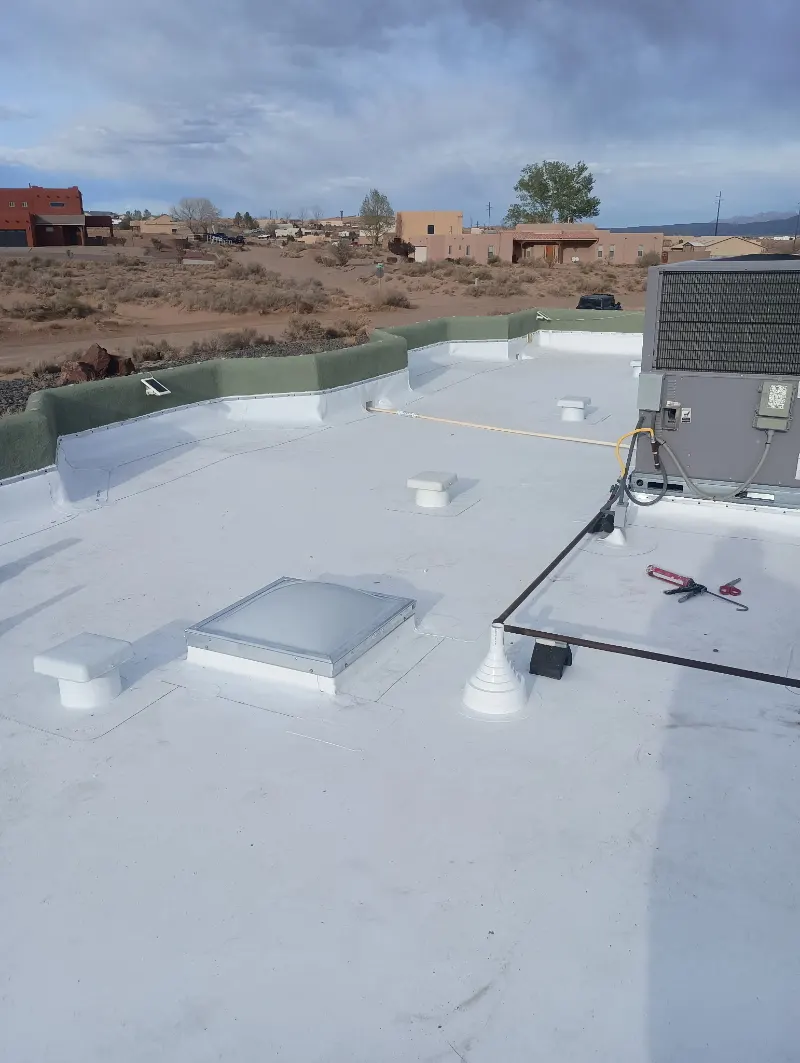
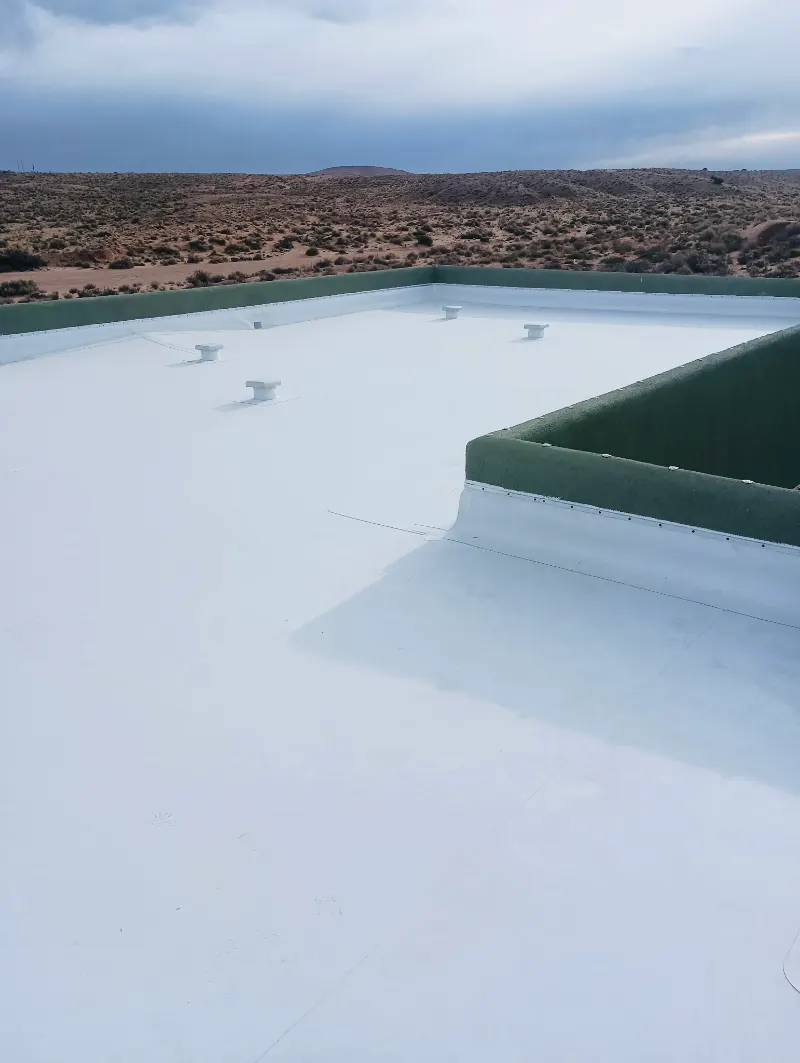
Canale Repair vs. Full Replacement
Not every canale needs to be replaced. If the metal is sound and the slope and flashing are intact, cleaning the canale and resealing the wall penetration is often enough. We recommend replacement when:
- Rust-through or pin holes are visible on the canale body
- The canale slope cannot be corrected without rebuilding the surrounding parapet
- The existing size is inadequate for the drainage area
- The surrounding stucco or adobe shows active moisture damage
Replacement canales are typically formed on-site or fabricated from galvanized steel, Kynar-coated aluminum, or copper. The correct size is calculated from the roof area and local rainfall intensity. For sizing, we use the ABQ monsoon peak of roughly 3.5 inches per hour.
Canale Catchers and Splash Blocks
A canale spout dumps water at the base of the wall. Without protection there, that water erodes the stucco, saturates the foundation, or pools against the slab. Canale catchers are short metal troughs or formed concrete splash blocks positioned below the spout to direct water away from the building. On homes with landscaping tight to the wall, we sometimes tie canales into a short downspout extension to carry water a full 3–4 feet away from the foundation.
Maintenance: Keeping Canales Clear
The most common canale call we get after a monsoon is a clogged spout. Preventing it takes a few simple habits:
- Clear before monsoon season (June). Clear the canale mouth from the roof side before the July–September monsoon pattern sets in.
- Check after each major storm. Walk your perimeter and look for water staining on the parapet above or below the canale. Staining under the spout is normal; staining on the wall beside or above it means water is overtopping or bypassing the canale.
- Don't let cottonwood fluff accumulate. In May and June, cottonwood seed can mat so densely it blocks a canale in a single afternoon. Check weekly during bloom season.
Frequently Asked Questions
How much does canale replacement cost in Albuquerque?
Canale replacement cost depends on the size of each canale, the material (standard galvanized steel is most common) and the condition of the surrounding wall. Copper runs higher. Most homes that need canale work benefit from addressing the roof membrane flashing at the same time, so we typically quote canale work as part of a broader flat-roof inspection.
Can I seal a leaking canale myself?
A temporary bead of roof sealant at the wall joint can slow an active leak, but it's a short-term fix. Lap sealants degrade quickly at the temperature extremes New Mexico sees, and they trap moisture behind them if not applied to a fully dry surface. A proper repair means removing the old canale, inspecting the nailer and surrounding substrate, and reseating with correctly lapped flashing.
How do I know if my canale is the right size?
During your free roof report, we measure the canale cross-section and the area of roof it drains, then check that against the IPC/IMC sizing tables for New Mexico rainfall intensity. If a canale is undersized, we note it and show you what the correct size would be. You're never obligated to replace something that's marginal rather than failed.
My stucco is staining below the canale. Is that a problem?
Staining directly below the spout mouth is normal, since water drains through the spout and runs down the wall face. Staining beside the canale, above it on the parapet, or spreading across the wall face means water is getting out of the canale laterally, which points to a failed wall-joint seal or a canale that's overtopping during heavy rain.
Get a Free Canale Inspection
We check canale condition, slope, and flashing as part of every free roof report, at no extra charge.
Request Your Free Roof Report