

Swamp Cooler Roof Leaks: What Causes Them and How to Fix Them
After a monsoon, the most common call we get is about a swamp cooler that's been leaking quietly for months, or one whose curb mount finally gave way. Storm-damaged shingles come up less often. This page covers how to tell the difference and when a repair is enough.
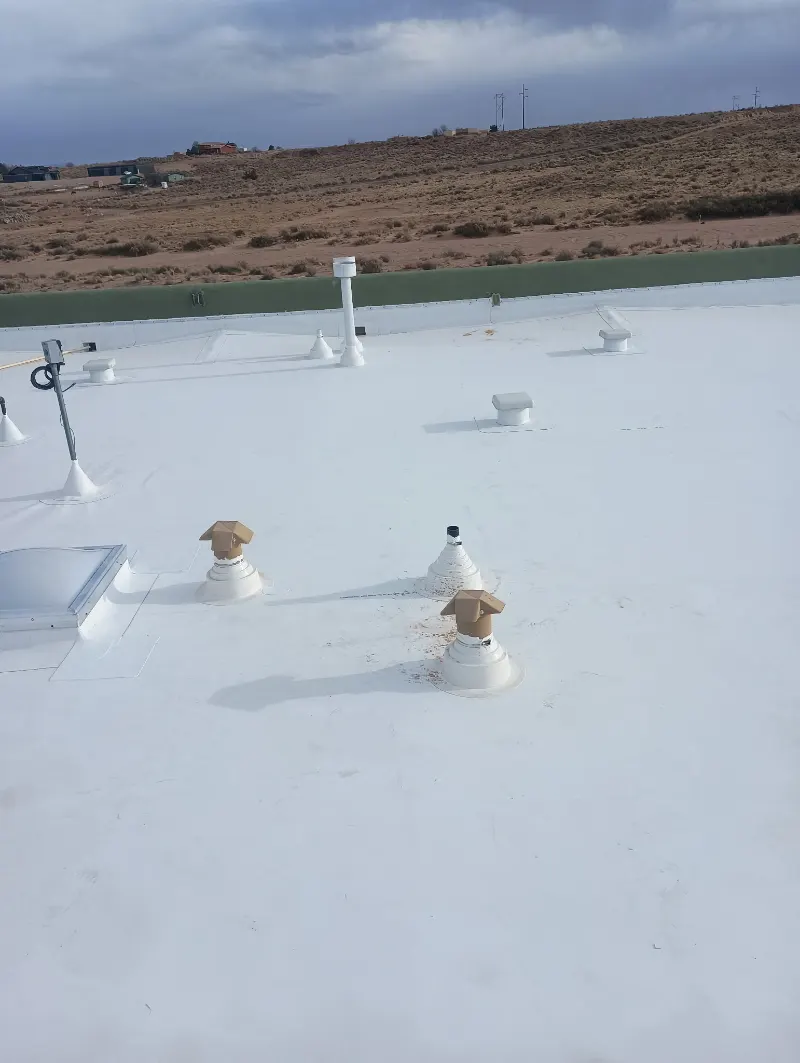
Why Swamp Coolers Leak
Evaporative coolers (swamp coolers) are mounted on a curb penetration through the roof, and that penetration is one of the most leak-prone points on any low-slope or flat roof in New Mexico. Several things can go wrong:
- Curb flashing failure. The sheet-metal curb that the cooler sits on should be integrated into the roof membrane. Over time, the flashing pulls away from the curb or the surrounding membrane delaminates, leaving a gap that channels monsoon rain directly into the ceiling below.
- Water overflow from the cooler pan. A swamp cooler's float valve controls the water level in the reservoir pan. When the float sticks, the pan overfills, and water runs down the curb and under the roof membrane. This leak looks exactly like a roof leak from inside. It shows up at the ceiling seam nearest the unit.
- Condensation and pooling on the roof deck. Swamp coolers discharge water through pads during operation. Some of that water mists onto the surrounding roof surface. On a flat roof with poor drainage or a membrane that's already failing, that constant moisture load accelerates deterioration around the unit.
- Drain line blockage or missed winterization. Swamp coolers require seasonal draining. A blocked drain line or a missed fall winterization leaves water in the pan through the freeze-thaw cycle, and that cracks the pan, the supply line, or both.
- Cooler moved or removed without re-flashing. When a swamp cooler is replaced or relocated, the old curb penetration must be properly closed. A simple cover plate without membrane integration will leak in the first good rain.
Is It the Cooler or the Roof?
The fastest way to tell is to run water from a hose directly onto the roof around the curb, not into the cooler's water supply line. If water appears inside within a minute or two, the curb flashing is the issue. If the interior stays dry during that test but leaks when the cooler runs, the problem is in the cooler's pan, float or drain line.
The repair paths are different. A curb-flashing leak is a roofing repair. A pan overflow is an HVAC/cooler repair. We handle the roofing side, and we'll tell you plainly if the issue is your float valve and not something we need to fix.
Repair Options for Swamp Cooler Curb Leaks
- Reflash the curb. This is the correct long-term fix. The curb flashing is cut back, any failed membrane around the penetration is removed and replaced, and new flashing is properly integrated into the roof system with compatible materials.
- Apply elastomeric sealant at the curb joint. A temporary fix for minor separation at the curb-to-roof joint. Works on a clean, dry surface but degrades in 2–4 years under New Mexico's UV and thermal cycling.
- Install a new curb with full membrane integration. When replacing the cooler or when the existing curb is corroded, installing a properly sized and flashed curb from scratch is more cost-effective than repeatedly repairing a failing original.
Rust Stains From a Cooler Stand on a Metal Roof
If a steel cooler stand is streaking rust down your new metal roof, separate the stand from the panels or replace it, clean the stains soon, and read your panel warranty before assuming staining is covered. The stain comes from bare or scratched steel on the stand rusting, and every rain or cooler drip carries it down the roof. Galvalume and painted panels rely on a thin metallic coating, and U.S. Steel's technical bulletin on Galvalume warns against iron debris left on the coated surface and against water draining from copper, such as copper cooler or AC lines, because those can corrode the coating.
- Isolate or replace the stand. Set the stand on non-metallic isolation pads so steel isn't sitting on the panels, or swap a rusting stand for one made of a material that won't corrode. Route bleed-off and overflow water so it doesn't run across the roof.
- Clean the stains gently. Sherwin-Williams cleaning guidance for its coil coatings calls for a mild detergent solution with soft cloths or brushes and warns against wire brushes and abrasives. For rust stains it describes a diluted acid cleaner with a short contact time, tested on a hidden spot first. On bare Galvalume, ask the panel supplier what's safe to use.
- Check the warranty terms. Zia's limited panel warranty excludes damage from corrosive chemicals and airborne contaminants, steel shavings or iron particles, and installations that let water stand on the panels. A stand rusting on the roof isn't a panel defect, so deal with the source quickly and keep photos.
If the stand went on with your new roof, call the roofer who installed it first. See manufacturer vs. workmanship warranties and our metal roofing page.
When You Remove a Swamp Cooler
Central air conditioning conversions are common in Albuquerque, and many homeowners remove their swamp cooler when making the switch. The curb opening has to be properly patched, not just covered. The right repair depends on the existing roof system:
- On a built-up (tar-and-gravel) roof: remove the curb, fill and level the opening with compatible substrate, apply new ply sheets and gravel surfacing that match the field membrane.
- On a TPO or modified bitumen roof: weld or torch a patch into the membrane field so the patch is continuous with the existing membrane, with no exposed seams or lap joints that can lift.
- On a foam-coated roof: cut back the foam, fill the void, re-apply foam and top coat matched to the existing coating.
For more on how foam roofs age and are recoated, see our guide to foam roofs. For the full process, from the curb and duct opening to the water and power lines, see removing a roof-mounted swamp cooler.
Frequently Asked Questions
My ceiling is stained right below the swamp cooler. Is that always a roof issue?
Not always. A stain directly below the unit is equally likely to be a pan overflow (float valve or drain) as a curb-flashing leak. We test both during the inspection, and it takes less than 15 minutes to know which you're dealing with.
How much does it cost to re-flash a swamp cooler curb?
The cost of a standard curb reflash on a flat roof in Albuquerque depends on the size of the curb, the condition of the surrounding membrane, and whether any substrate repair is needed. We price it after the free inspection so there are no surprises.
Can I just seal the gap myself with Geocel or roof caulk?
A lap sealant will slow a curb leak temporarily, but with most flat-roof membranes it isn't a compatible long-term solution. It also traps any moisture that gets past it, which can accelerate decking damage. We'll tell you whether a sealant top-up is a reasonable short-term bridge or a proper reflash is needed now.
Will a rusty swamp cooler stand damage my metal roof?
It can. Rust washing off bare steel stains the finish, and steel debris or copper runoff sitting on Galvalume can attack its protective coating. Isolate or replace the stand, clean the stains early, and check your panel warranty.
How do I clean rust stains off a painted metal roof?
Start with a mild detergent solution, water and a soft brush, and never use wire brushes or abrasive pads. For stubborn rust, Sherwin-Williams coating guidance describes a diluted acid cleaner with a short contact time. Test it on a hidden spot first and rinse well.
Swamp Cooler Leak? We'll Find the Source.
Free inspection. We test both the roof and the cooler so you know exactly what needs fixing.
Request Your Free Roof Report