

Built for Albuquerque's Sun, Not Just Rated for It
Asphalt shingles are the most common roofing material in Albuquerque for a reason: they're affordable and proven. But the underlayment and ventilation behind them matter more here than the shingle brand alone.

On this page
What Asphalt Shingle Roofing Is (and Isn't)
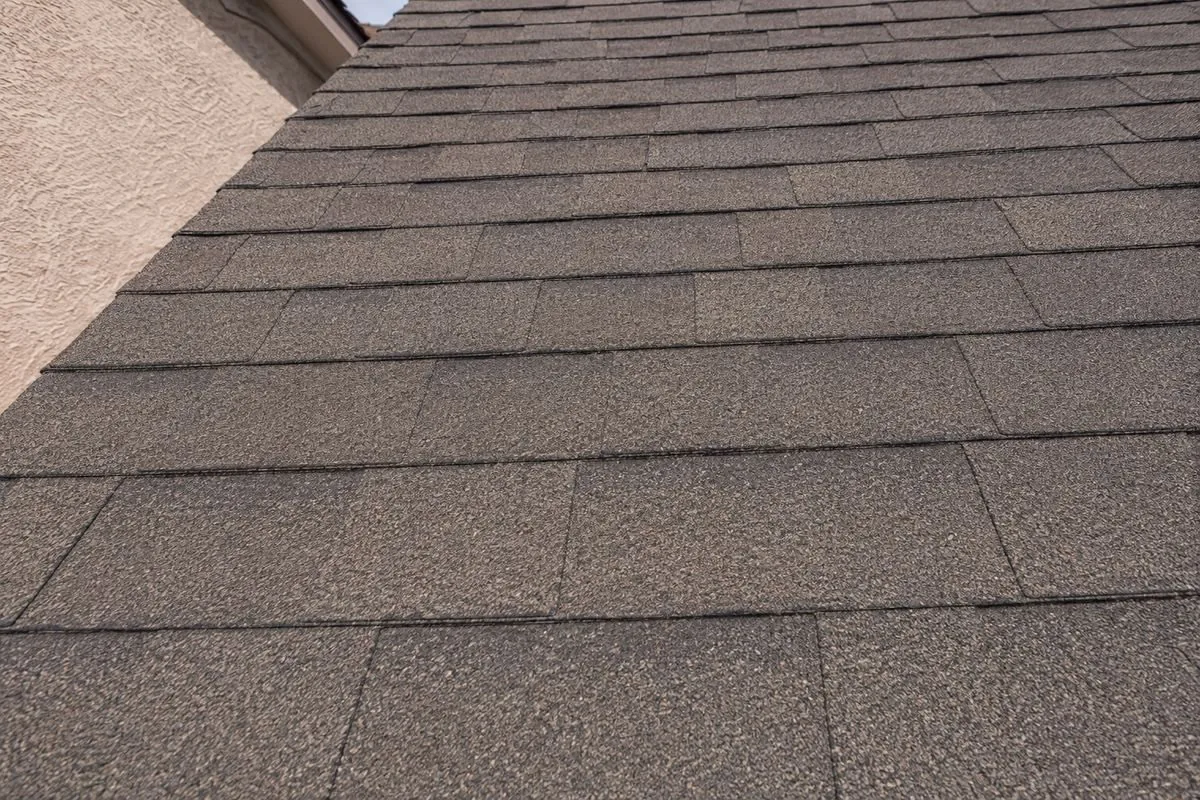
Asphalt shingles are overlapping panels made of a fiberglass mat coated in asphalt and mineral granules. They come in two main types: 3-tab shingles, which are flat and uniform, and architectural (dimensional) shingles, which are thicker, layered, and rated for higher wind speeds. Architectural shingles cost more upfront but hold up better under Albuquerque's UV exposure and temperature swings, which is why we install them on nearly every asphalt roof we do.
Why It Holds Up in Albuquerque's Climate
At roughly 5,300 feet of elevation, Albuquerque gets more direct UV exposure than roofs at sea level, which accelerates the breakdown of asphalt's oils over time. The bigger factor, though, is thermal cycling. The large swing between hot days and cool nights causes shingles to expand and contract repeatedly, which stresses the fasteners and seals faster than a milder, more stable climate would. A synthetic underlayment with a high heat tolerance and a properly ventilated attic both slow this process down; a bargain underlayment and poor ventilation speed it up, regardless of which shingle brand sits on top.
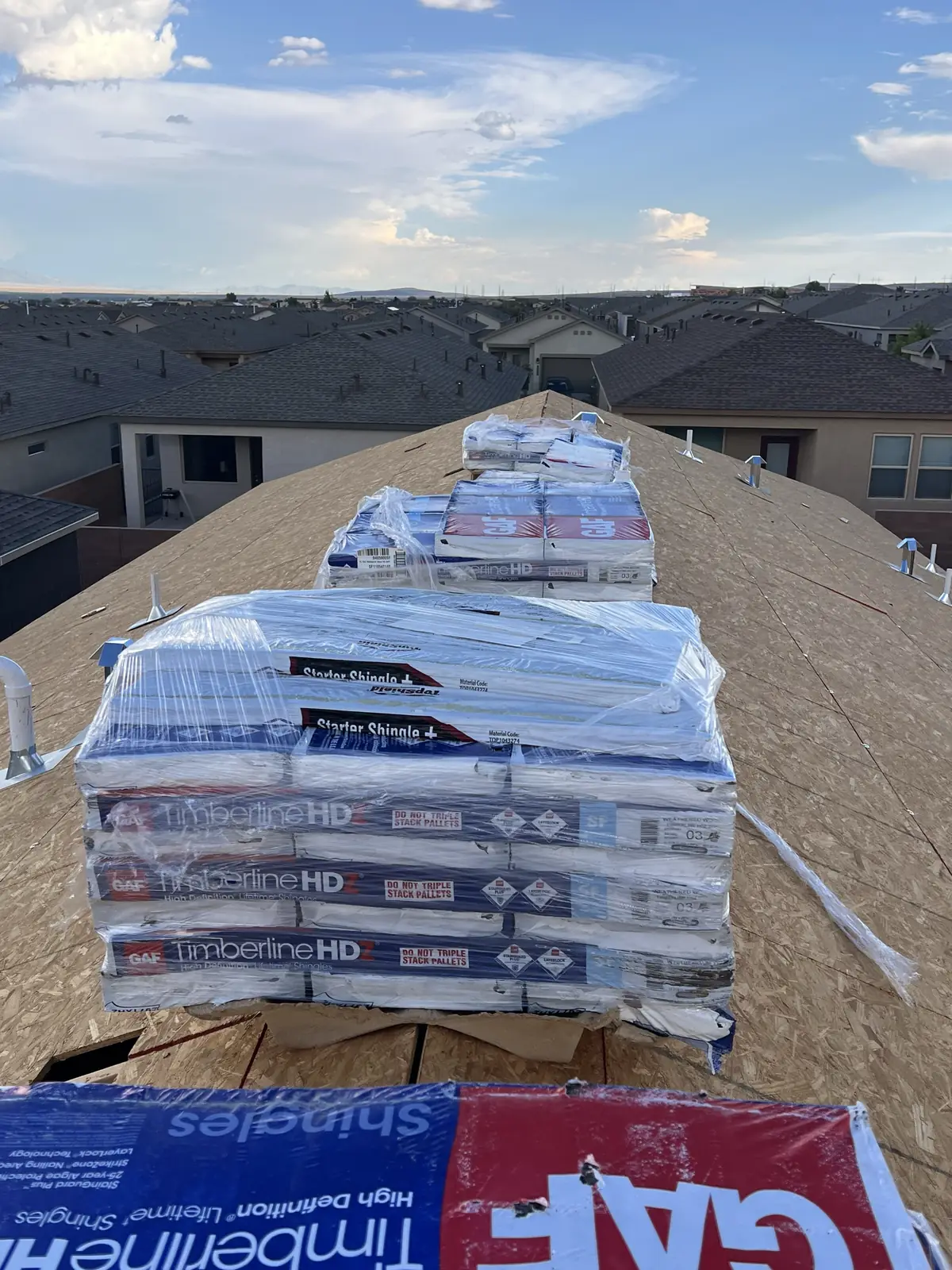
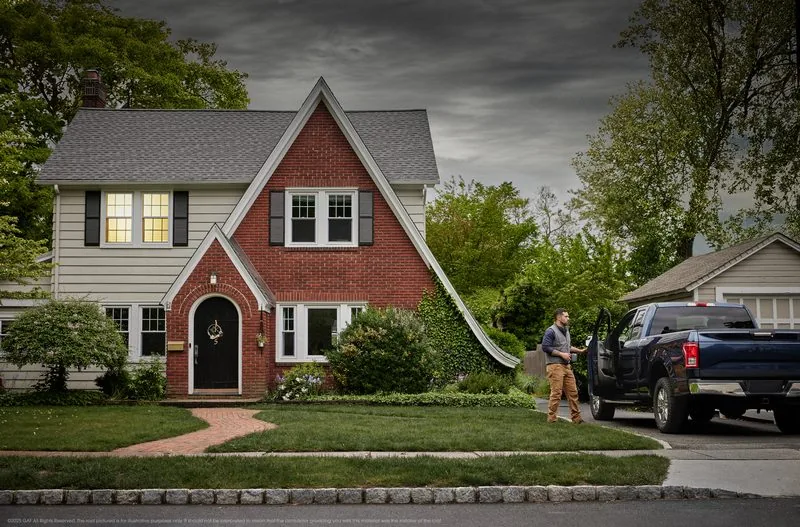
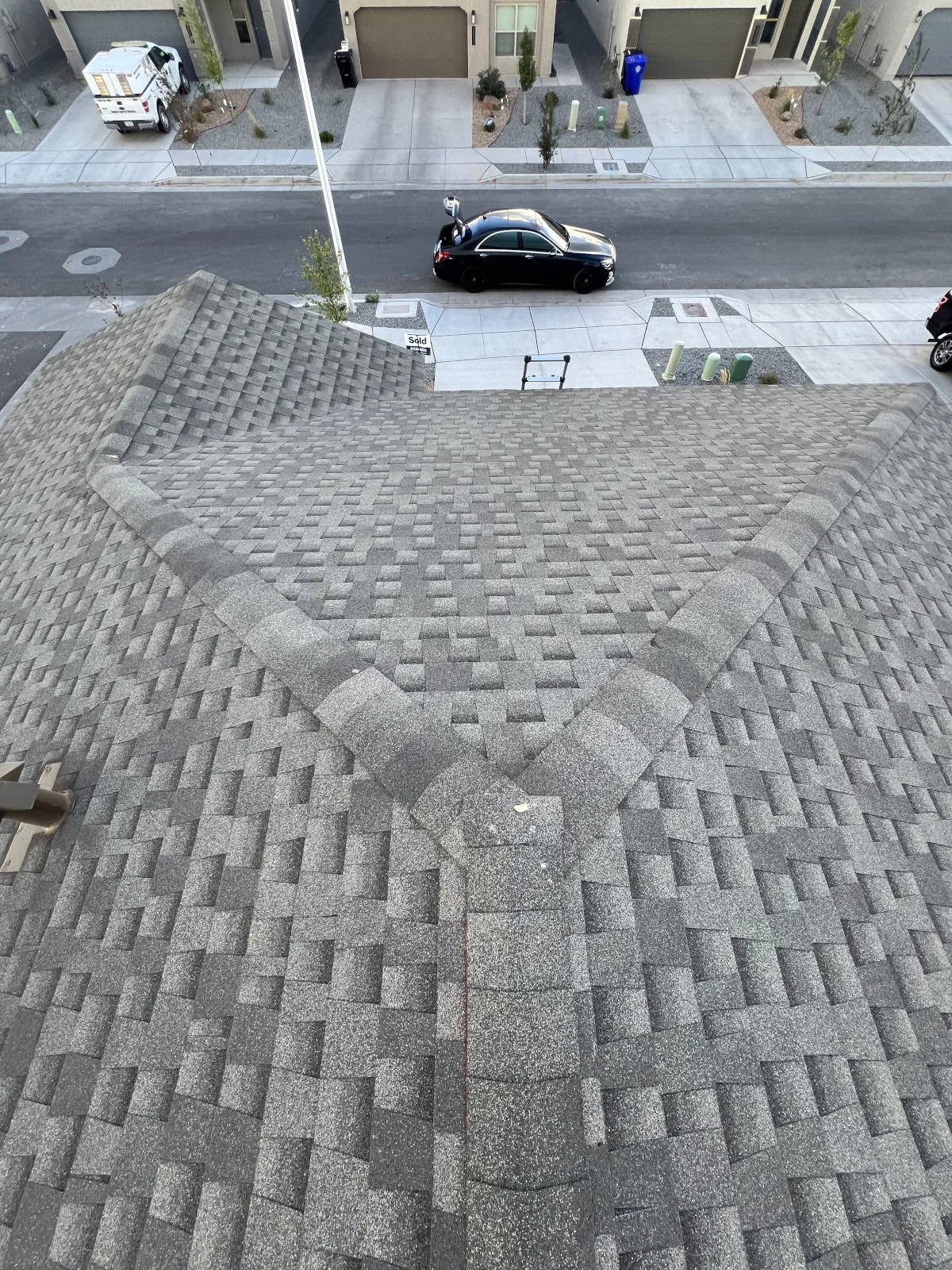
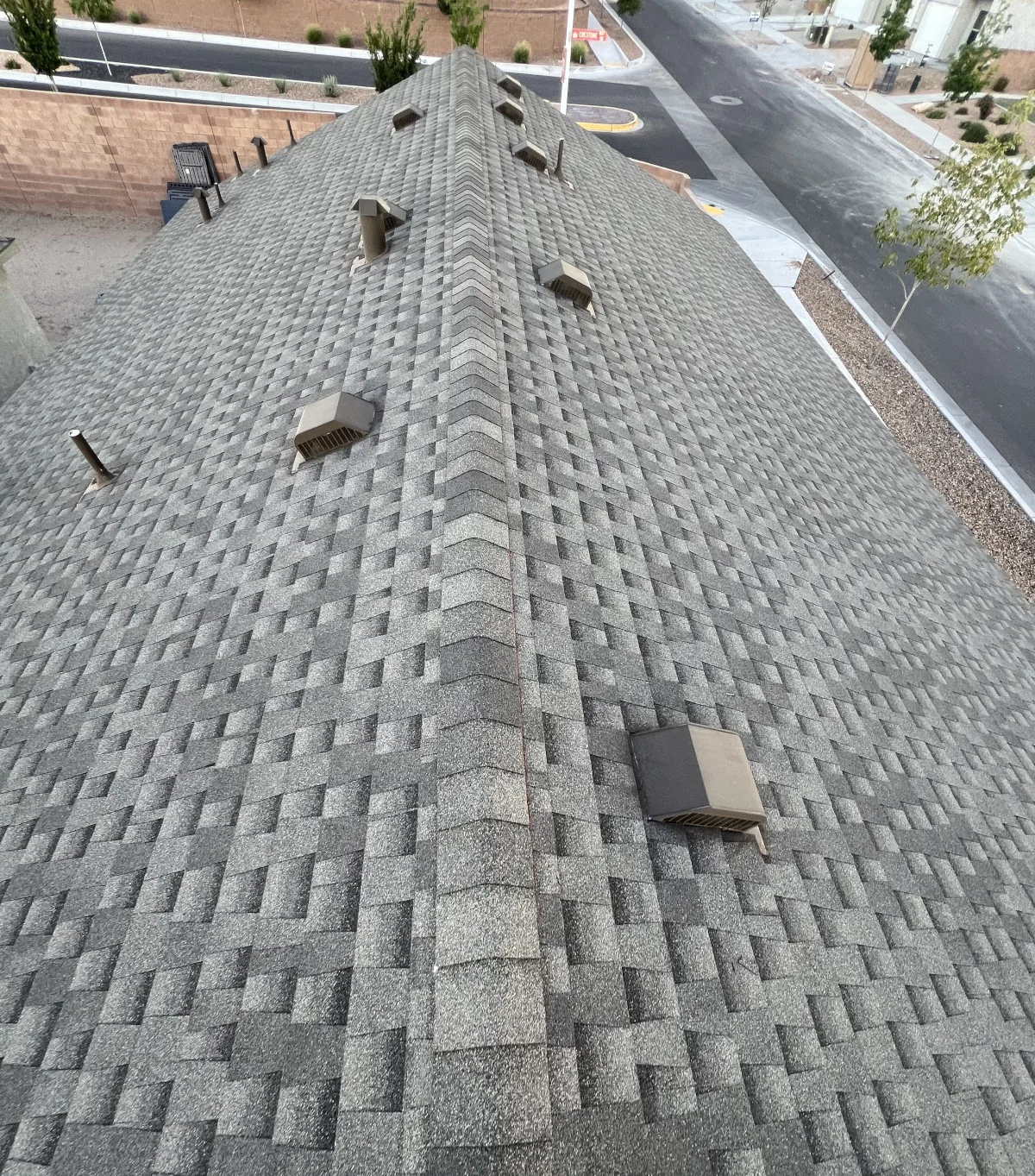
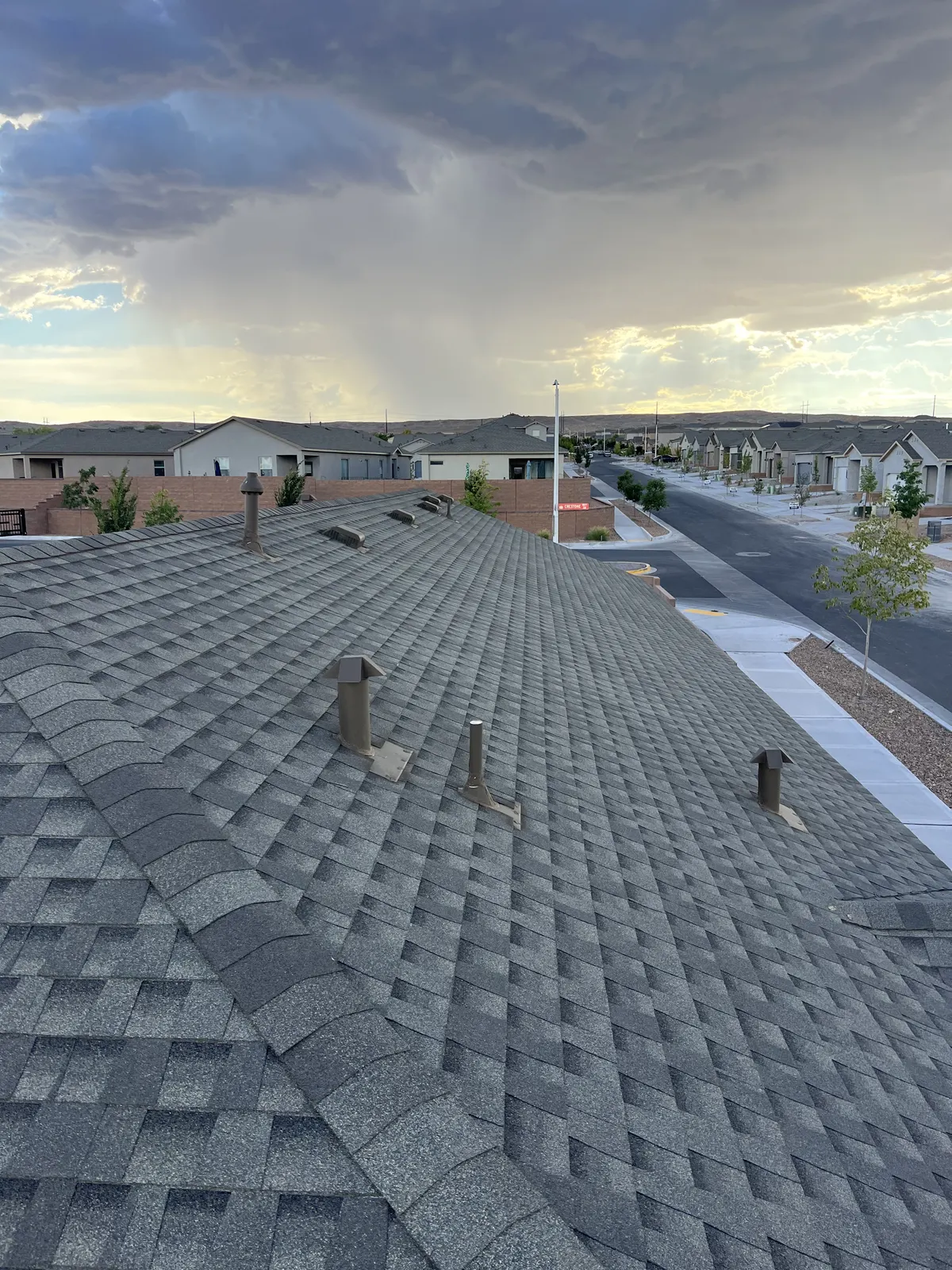
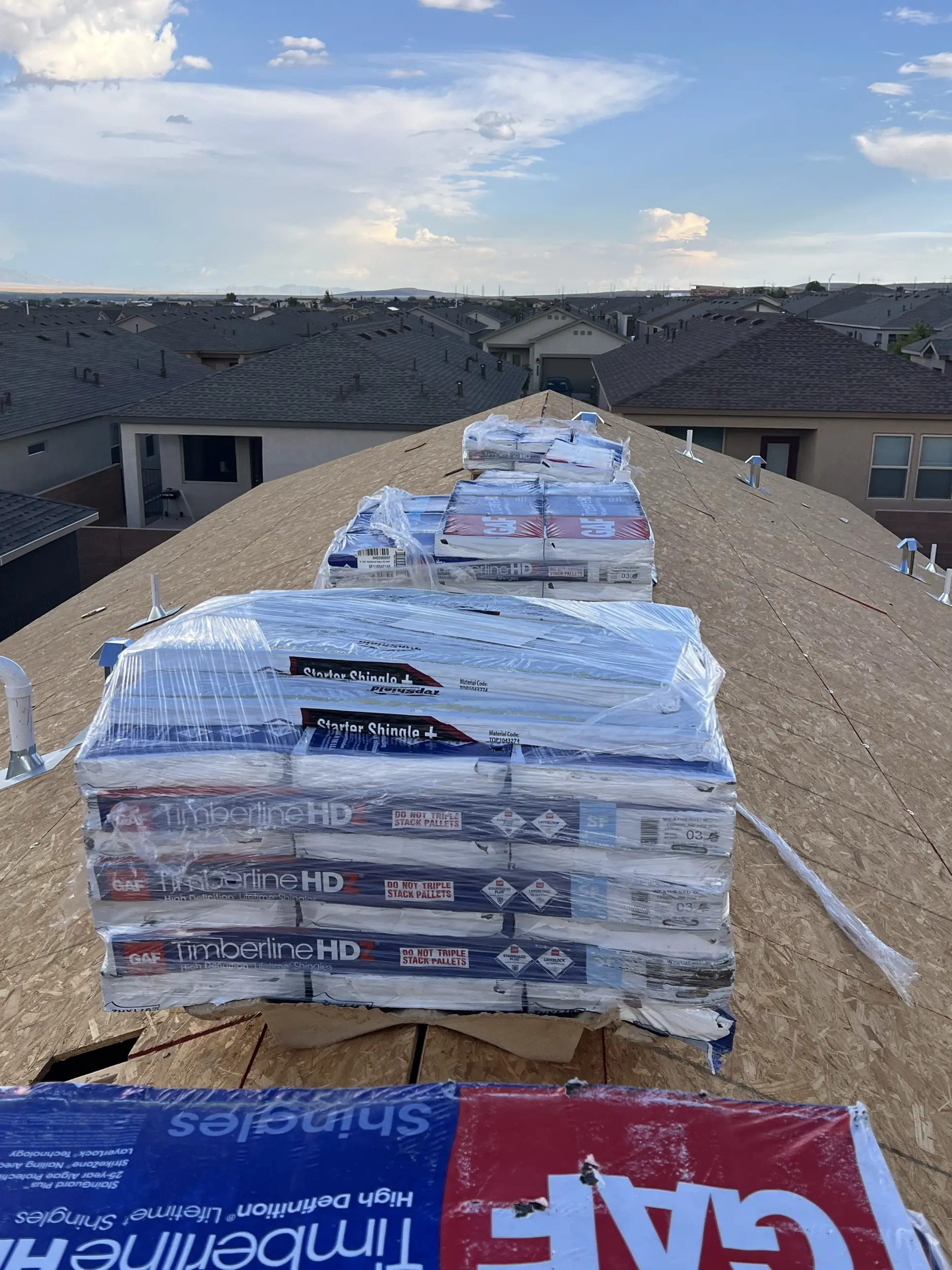
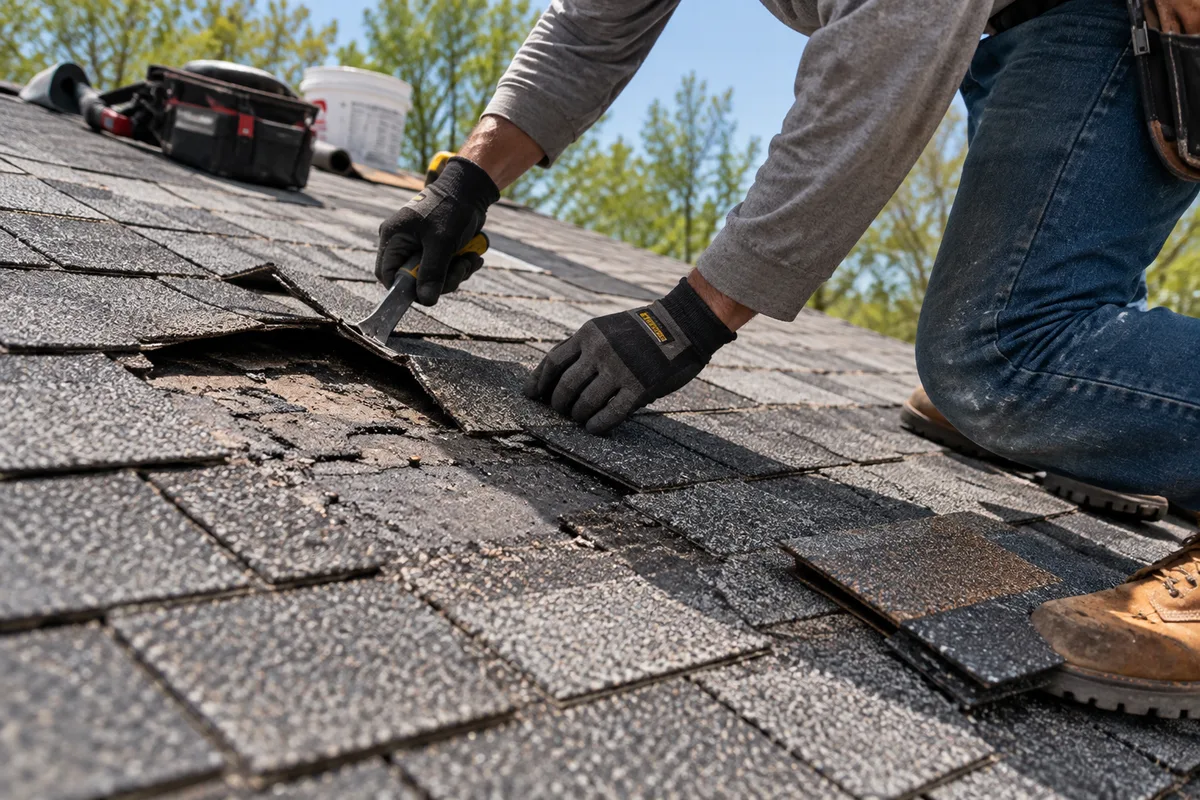
Examples of GAF shingle installations
The Technical Specs
| Typical lifespan | 20-30 years for architectural shingles under normal conditions; expect the lower-to-middle end of that range in Albuquerque's climate rather than the upper end |
|---|---|
| Underlayment | Synthetic underlayment, not felt, for better heat and moisture resistance under UV exposure and thermal cycling |
| Fastening pattern | Six nails per shingle in the manufacturer's specified zone, not four. Required for the region's wind-rated installation standard |
| Manufacturer / product line | We install GAF architectural shingles: Timberline HDZ, Timberline UHDZ, and Grand Sequoia, depending on the look and budget |
| Impact resistance | Timberline UHDZ is available in a Class 4 impact-resistant version (Timberline UHDZ with UltraMat™), the highest UL 2218 rating available. Some insurers offer discounts for qualifying Class 4 roofs in hail-prone areas like Albuquerque; eligibility varies by carrier and policy. Standard UHDZ is not Class 4 rated. |
| Best suited for | Most residential pitched roofs; not intended for flat or very low-slope sections, which need a membrane system instead |
Color & Line Options
We install three GAF architectural lines. Timberline HDZ is our standard install, with 14 colors, GAF Time-Release Algae-Fighting Technology, LayerLock Technology, and a Lifetime Limited Warranty, plus a 15-year WindProven™ wind warranty with no maximum wind speed when installed with qualifying GAF accessories. Timberline UHDZ steps up to a Dual Shadow Line profile for deeper, more dimensional shadows, with a 30-year StainGuard Plus PRO warranty against algae discoloration. Grand Sequoia is a designer line built for a rugged, wood-shake look, available in Weathered Wood, Autumn Brown, and Charcoal, at a fraction of true cedar shake's cost and upkeep.
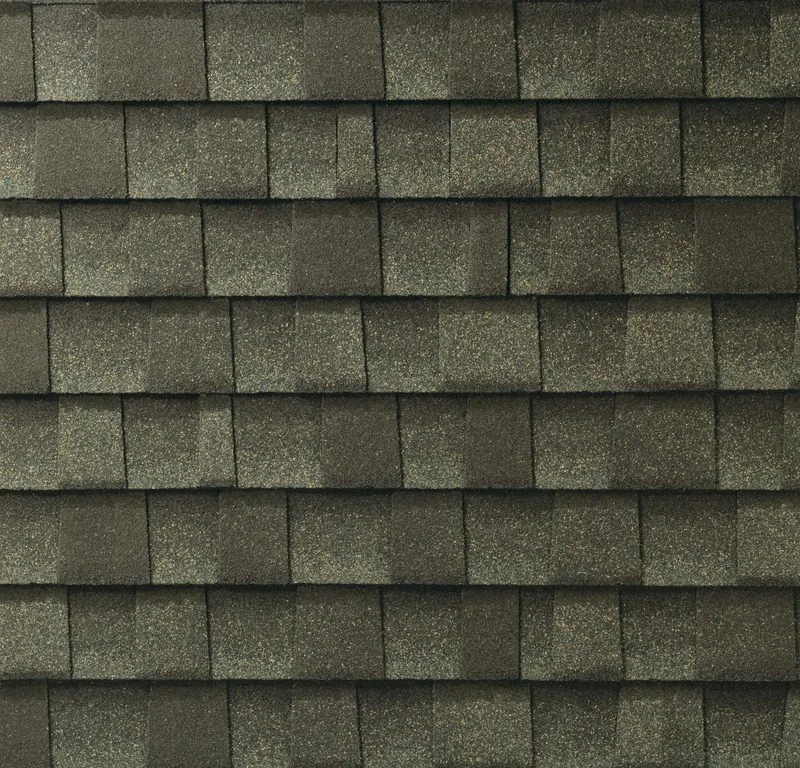
Weathered Wood
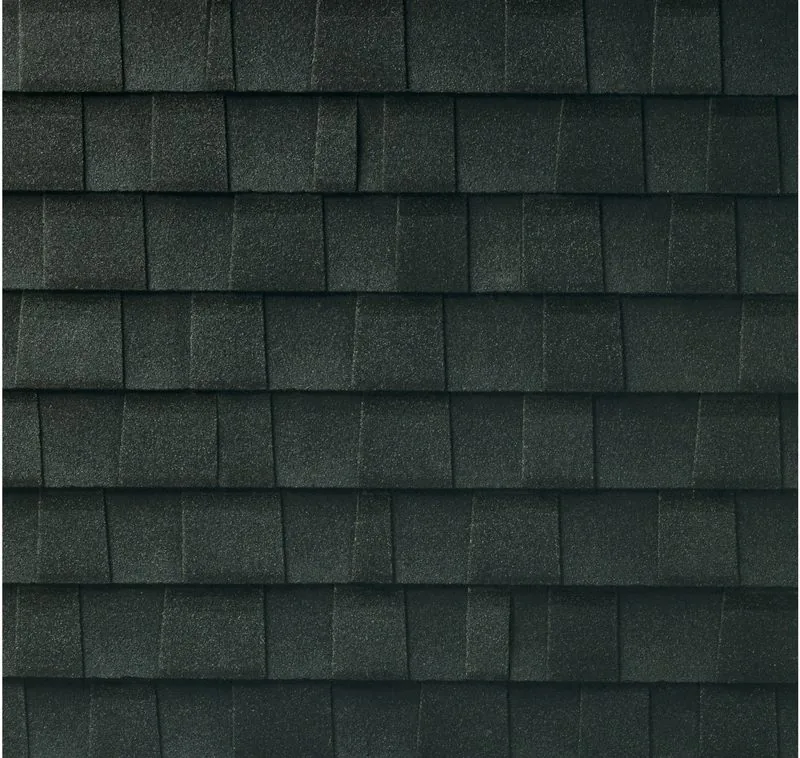
Charcoal
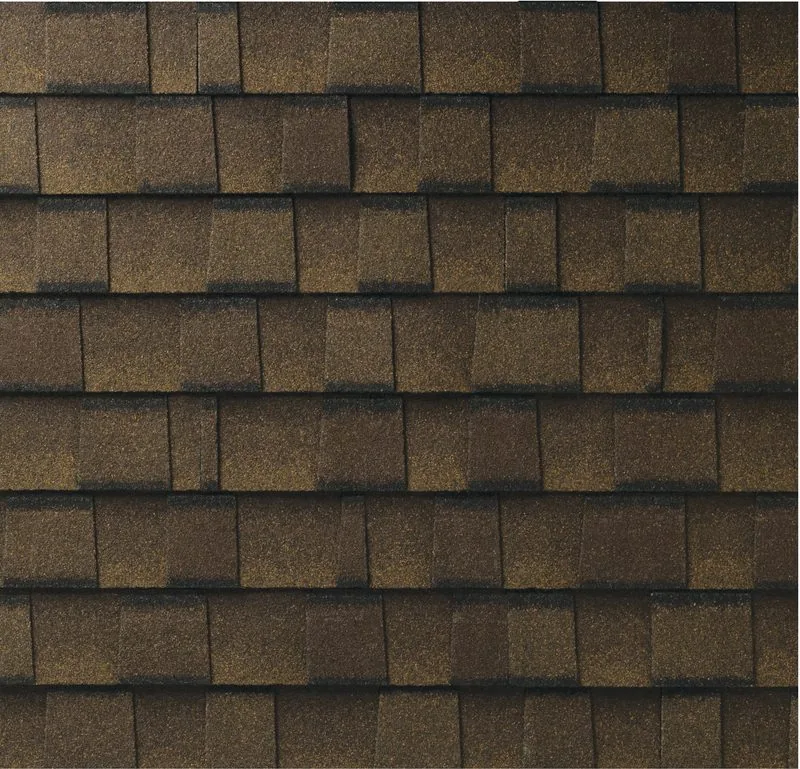
Barkwood
Installed Example
GAF Shingle Lines We Install
Timberwolf Construction is a GAF Certified™ Contractor. Two of the premium GAF lines homeowners ask us about most are below. Details are from GAF’s product sheets.
Timberline UHDZ™: Ultra High Definition® lifetime shingles with a Dual Shadow Line for deeper, more dimensional shadows. Colors: Pewter Gray, Shakewood, Slate, Barkwood, Charcoal, and Weathered Wood.
Grand Sequoia®: Lifetime Designer shingles with a rugged, wood-shake look. Colors: Weathered Wood, Autumn Brown, and Charcoal.
Printed and on-screen colors can differ from the real product. Ask us to show you several full-size shingles before you choose.
30-year StainGuard Plus PRO™ algae protection limited warranty is available only on products in packages bearing the StainGuard Plus PRO logo. See the GAF Shingle & Accessory Limited Warranty for complete coverage and restrictions, and qualifying products. Timberwolf Construction Inc. is an independent business and not an employee or agent of GAF.
Compare GAF Shingles Side by Side
The three GAF shingle lines we install compare like this on look, wind coverage, impact rating, and warranty. Ask us to bring full-size samples of the ones you like.
Compare GAF Shingles We Install
View all GAF ShinglesSwipe to see all three shingles →
| Feature |  Timberline HDZ®$$ Timberline HDZ®$$ |
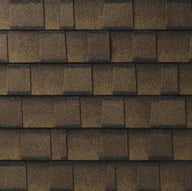 Timberline® UHDZ™$$$ Timberline® UHDZ™$$$ |
 Grand Sequoia®$$$$ Grand Sequoia®$$$$ |
|---|---|---|---|
| Shingle Type | Architectural | Architectural | Designer |
| Made in the USA With Domestic and Imported Materials | |||
| Lifetime Limited Warranty† (Manufacturing Defects) | |||
| WindProven™ Limited Wind Warranty1 (with purchase of 4 qualifying accessories) | Not eligible. 15-year wind coverage up to 130 mph with special installation3 | ||
| LayerLock® Technology | — | ||
| Algae Protection | 25-year StainGuard Plus™ Algae Protection Limited Warranty2 | 30-year StainGuard Plus PRO™ Algae Protection Limited Warranty2 | 25-year StainGuard Plus™ Algae Protection Limited Warranty2 |
| Impact Resistance | UL 2218 Class 3 | Class 4 available4 (UltraMat™ version) | Class 4 available4 |
| Fire Rating | UL Class A | UL Class A | UL Class A |
† Lifetime refers to the length of warranty coverage provided and means as long as the original individual owner(s) of a single-family detached residence [or eligible second owner(s)] owns the property where the qualifying GAF products are installed. For other owners/structures, Lifetime coverage is not applicable. Lifetime coverage on shingles requires the use of GAF Lifetime Shingles only. See the GAF Shingle & Accessory Limited Warranty for complete coverage and restrictions. Visit gaf.com/LRS for qualifying GAF products. Lifetime coverage on shingles and accessories requires the use of any GAF Lifetime Shingle and at least 3 qualifying GAF Accessories. See the GAF Roofing System Limited Warranty for complete coverage and restrictions. For installations not eligible for the GAF Roofing System Limited Warranty, see the GAF Shingle & Accessory Limited Warranty. Visit gaf.com/LRS for qualifying GAF products.
115-year WindProven™ limited wind warranty on GAF Shingles with LayerLock® Technology requires the use of GAF Starter Strips, Roof Deck Protection, Ridge Cap Shingles, and Leak Barrier or Attic Ventilation. See GAF Roofing System Limited Warranty for complete coverage and restrictions. Visit gaf.com/LRS for qualifying GAF products. For installations not eligible for the GAF Roofing System Limited Warranty, see the GAF Shingle & Accessory Limited Warranty.
225-year StainGuard Plus™ Algae Protection Limited Warranty and 30-year StainGuard Plus PRO™ Algae Protection Limited Warranty against blue-green algae discoloration is available only on products sold in packages bearing the StainGuard Plus™ and StainGuard Plus PRO™ logos, respectively. See GAF Shingle & Accessory Limited Warranty for complete coverage and restrictions, and qualifying products.
3Grand Sequoia® is not eligible for the WindProven™ Limited Wind Warranty. 130 mph wind coverage requires special installation (6 nails per shingle and GAF Starter Strip products at eaves and rakes); otherwise coverage is 110 mph. See the GAF Shingle & Accessory Limited Warranty for complete coverage and restrictions.
4Only shingles sold in packages bearing the UL 2218 Class 4 Classification statement are rated for Class 4 impact resistance. For Timberline UHDZ®, Class 4 applies only to packages bearing the UltraMat™ logo.
Product images and details courtesy of GAF. Timberwolf Construction Inc. is an independent business and not an employee or agent of GAF.
Shingles are just one layer. See all the parts of a roof that work together →
The Home Inspector Says the Shingles Aren't Sealed Down. Is That a Problem?
It can be, depending on why they aren't sealed, and it's worth sorting out before the next windy spring. Asphalt shingles have a heat-activated sealant strip that bonds each course to the one below. Until that bond forms, tabs can lift and blow off in wind a sealed roof would handle.
- Cold-season install. GAF says the strip needs warmth, sun and temperatures above 40°F, and shingles installed in fall or winter may not seal until the following spring. That's normal and usually resolves on its own. See the best time of year for a roof replacement.
- Dust. GAF's installation instructions warn that shingles may never seal if the sealant gets dirty, and call for hand-sealing where blowing dust or sand is expected. That matters in Albuquerque's spring wind season.
- Steep slopes, repairs and edges. GAF Technical Bulletin R-114 covers hand-sealing these spots with dabs of roofing cement.
The warranty is the other reason to pay attention. GAF's shingle limited warranty says shingles are vulnerable to blow-offs before they seal, and that failing to seal because of cold or similar conditions isn't a manufacturing defect. Ask the installer when the roof went on and whether it was hand-sealed. On an older roof, unsealed tabs can also point to wind damage or brittle shingles, and a roofer can lift a few tabs and tell you which it is.
Good Fit / Not a Good Fit
- Good fit for standard pitched residential roofs where cost and proven performance matter most
- Good fit when attic ventilation can be brought up to code alongside the install, which matters as much as the shingle itself
- Not the longest-lasting option available. Tile and metal both outlast asphalt significantly, at a higher upfront cost
Why We Install GAF, and Why the Whole System Matters
Timberwolf is a GAF Certified contractor. We put GAF on our shingle roofs because the product holds up to New Mexico sun, wind and hail, because every part of the roof is engineered to work together, and because the warranty gets stronger when the full system goes on instead of shingles alone.
Quality you can see on the roof
- Timberline HDZ, GAF’s #1-selling shingle, is built with LayerLock™ technology and a wide StrikeZone™ nailing area designed for up to 99.9% nailing accuracy, so each shingle is fastened where it holds best.
- A Class A fire rating on Timberline shingles, the highest fire rating for roofing.
- Class 4 impact-rated GAF options for neighborhoods that see regular hail.
- Every product traces back to one manufacturer that has been making roofing since 1886 and calls itself North America’s largest roofing and waterproofing manufacturer.
Why the full system, not just shingles
Shingles are only the part you see. Starter strip holds the first course down in wind. Leak barrier stops water at eaves, valleys and penetrations. Roof deck protection sits under everything as a second line of defense. Ridge cap and attic ventilation let heat and moisture out, which matters in an Albuquerque attic in July. When all of those come from one manufacturer, they’re designed and tested together, and one company stands behind the whole roof instead of several brands pointing at each other when something goes wrong.
Warranty coverage that grows with the system
- GAF Roofing System Limited Warranty: Timberline shingles installed with at least three qualifying GAF accessories.
- WindProven™ Limited Wind Warranty: 15 years with no maximum wind speed, when Timberline shingles go on with GAF starter strip, roof deck protection, ridge cap, and leak barrier or attic ventilation.
- GAF System Plus Limited Warranty: available through GAF Certified contractors like us on qualifying full systems. It adds 50 years of non-prorated coverage on defective materials, includes tear-off costs, and can transfer to the next owner if you sell.
Warranty terms, qualifying products and registration requirements are set by GAF; see the GAF limited warranties for complete coverage and restrictions. ask for a free roof report and we’ll walk you through which GAF system and warranty fit your home.
Frequently Asked Questions
Is asphalt shingle roofing a good fit for Albuquerque's climate?
Yes, with the right underlayment and ventilation. Albuquerque's UV exposure and temperature swings age shingles faster than milder climates, which is why underlayment choice and attic ventilation matter more here than the shingle brand alone.
How long do asphalt shingles last at this altitude?
Toward the lower-to-middle end of their rated lifespan, not the upper end. Most manufacturer ratings assume conditions milder than Albuquerque's, and a properly installed and ventilated asphalt roof here deals with higher UV exposure and repeated thermal cycling.
Are all asphalt shingles the same?
No. Architectural (dimensional) shingles are heavier, wind-rated higher, and hold up better under thermal cycling than basic 3-tab shingles, which is why 3-tab is rarely the right call here even though it costs less upfront.
Will unsealed shingles seal on their own?
Often, if they went on in cool weather and the sealant strip is clean. GAF says shingles installed in fall or winter may not seal until the following spring. If the strip is dusty or the shingles are old and brittle, they may never seal and should be hand-sealed or checked by a roofer.
Ready for a Free Roof Report?
It's free, and you're under no obligation. You'll know exactly where your roof stands.