

Flat Roof Maintenance for New Mexico Homeowners
A flat roof that's properly maintained costs dramatically less to own than one that isn't. The monsoon season is short but intense, and what your roof handles in 90 days can match a decade of normal wear. Below is what to do before, during, and after.
Why Flat Roof Maintenance Is Different in New Mexico
The combination of UV intensity, extreme temperature swings (105°F summer days, sub-freezing winter nights), and concentrated monsoon rainfall makes Albuquerque unusually demanding for flat roofing. A flat or low-slope roof here faces stresses that would take twice as long to accumulate in most of the country.
The physics work against you: water wants to stay on a flat roof. An inch of rain on a 1,500-square-foot flat roof produces nearly 940 gallons of water that has to find the drains or canales before the next storm event. Blocked drainage and failing membranes don't get a break between monsoon cells.
Seasonal Maintenance Checklist
Spring (April–May): Pre-Monsoon Prep
- Clear canales and drains. Remove cottonwood fluff, pine needles, and accumulated debris from all drain points. Test each canale by running a hose on the roof, and make sure water exits freely and hits the catch below.
- Walk the membrane. On a cool morning, walk the roof and look for blisters, cracks, exposed fabric, or sections where the surface feels soft or spongy. Soft spots indicate subsurface moisture.
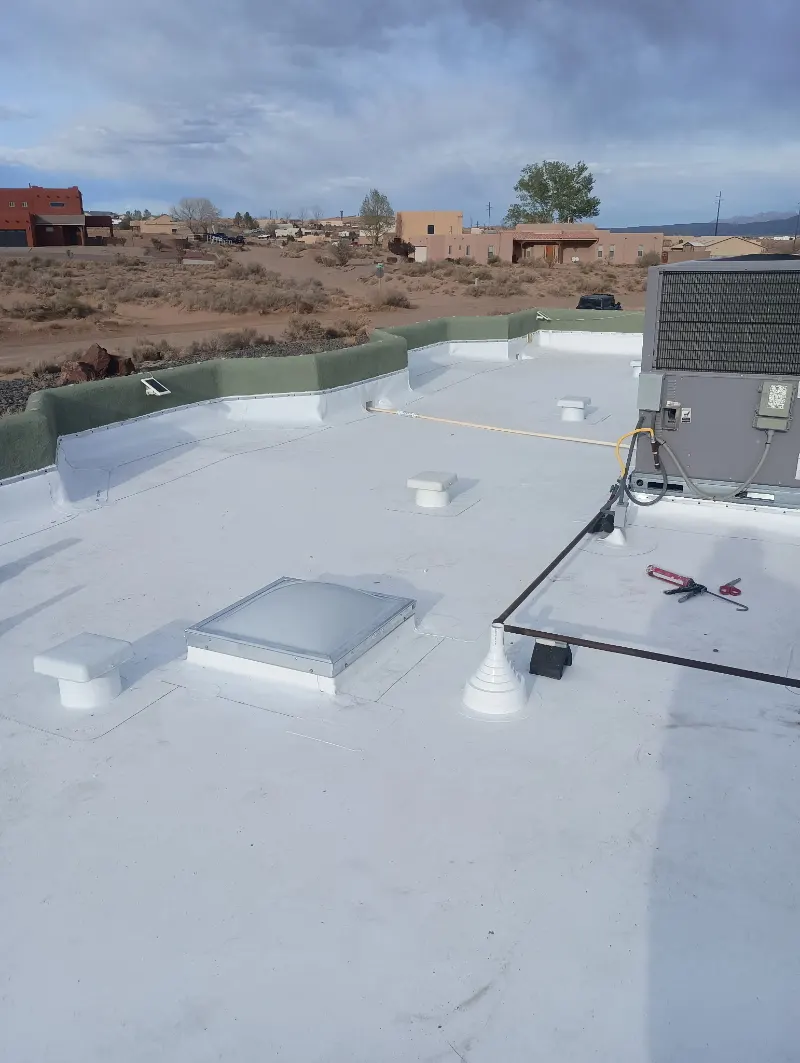
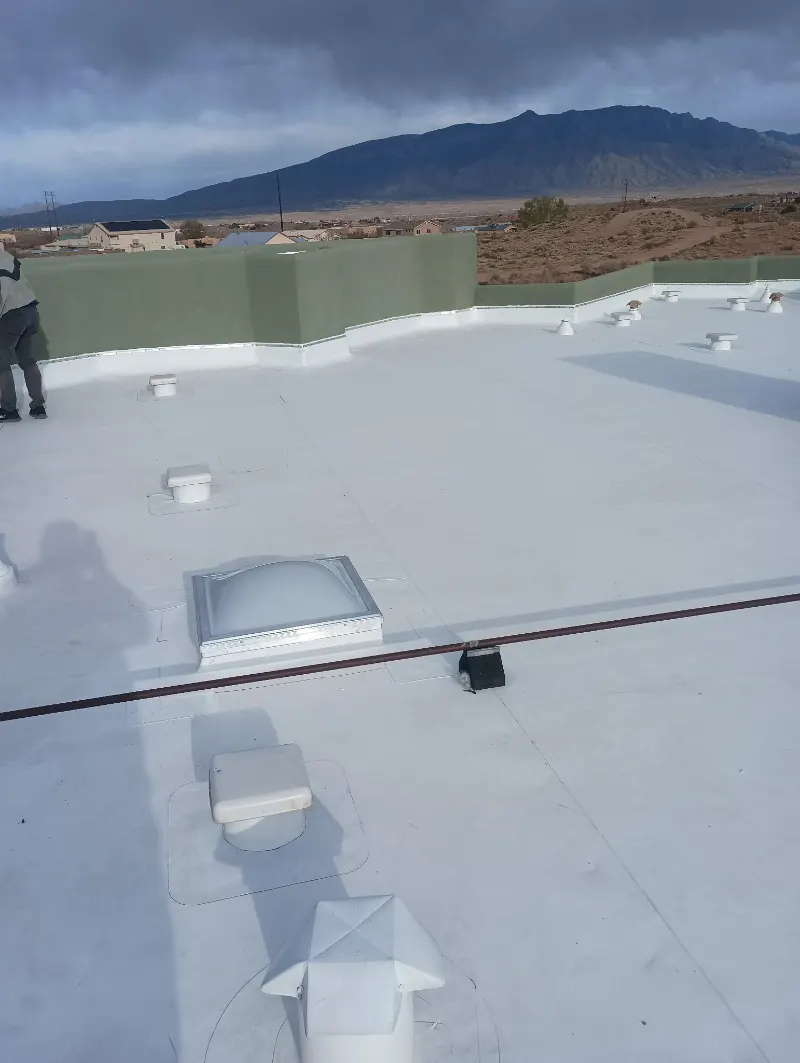
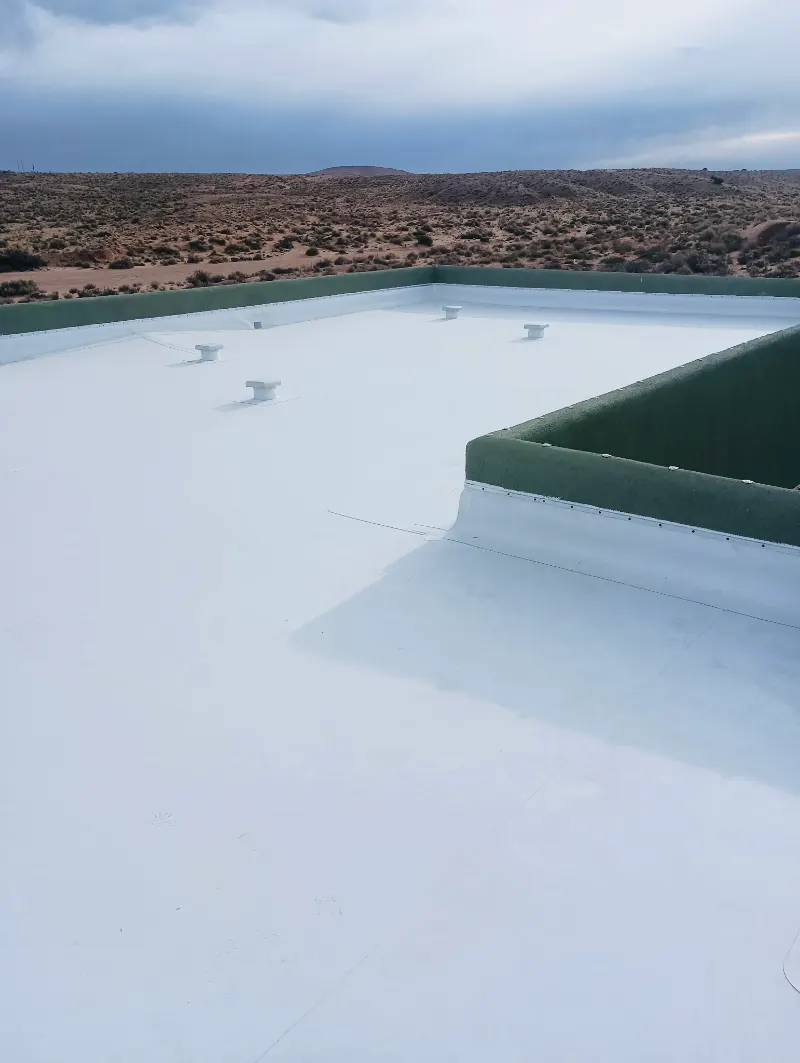
- Check all flashings. Inspect the flashing at every wall termination, parapet edge, penetration (swamp cooler curbs, pipes, skylights), and canale base. Any lifted or separated edge is a likely leak point once the monsoon rains start.
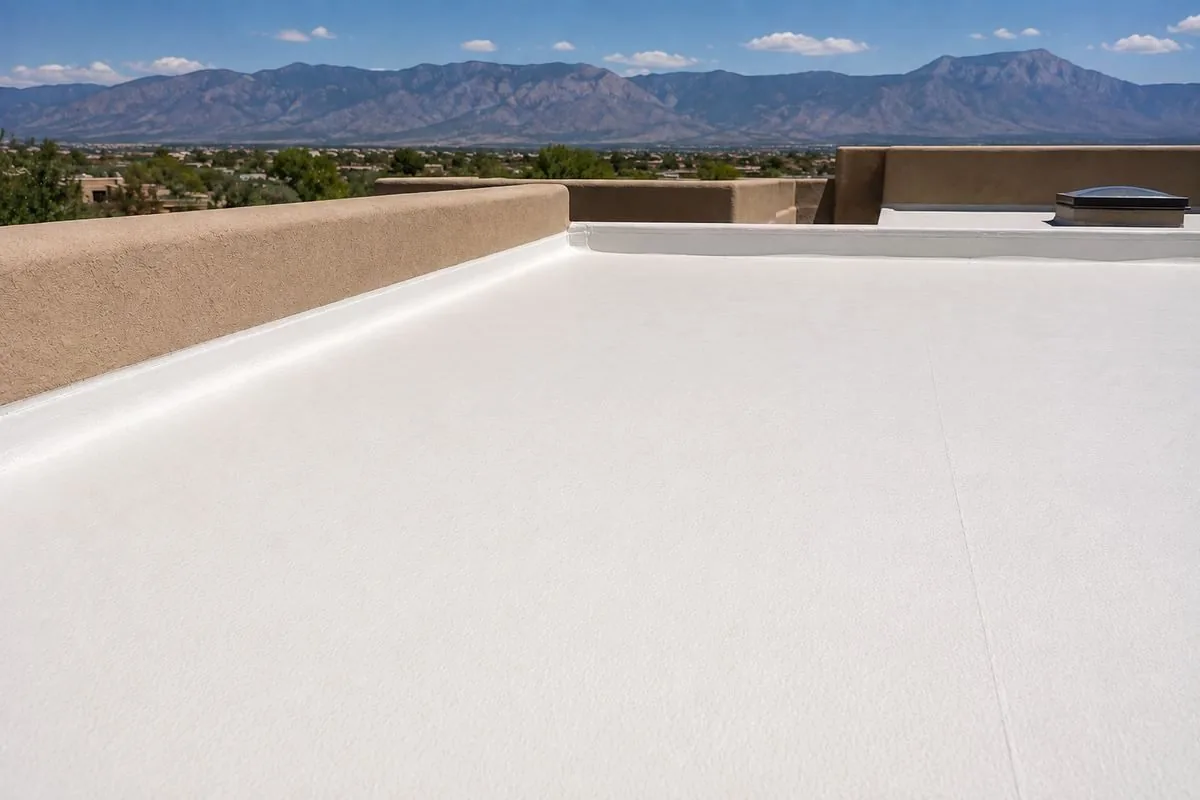
- Look at the parapet cap. The cap on top of the parapet wall should be caulked, well-secured, and slope away from the roof surface. Missing caps or open joints let water into the wall cavity directly.
- Schedule a professional inspection. If you haven't had a documented inspection in 2+ years, spring is the right time. A professional can spot problems your eye won't catch, like membrane delamination, thin areas, and undersized drainage, before monsoon amplifies them.
Summer (July–September): Active Monsoon Season
- Clear debris after each major cell. Monsoon cells carry dirt, leaves, and cottonwood debris from all over the region. After any significant storm, clear the drain points. Don't wait for the next cell.
- Check your ceilings after the first storm. A new water stain after the first monsoon event reveals a problem that developed over the dry months. Find it early, before it saturates insulation and ceiling materials.
- Don't patch blisters in wet conditions. If you find a blister, document it and call for repair. Don't try to cut it yourself if there's moisture inside, because sealing moisture into a blister speeds up the damage.
Fall (October–November): Post-Monsoon Review
- Assess any monsoon damage while temperatures are still workable. Most roofing materials require temperatures above 40°F for proper adhesion and curing. Fall is the last reliable window for roof repairs before winter.
- Drain and winterize swamp cooler supply lines. Disconnect the water supply, drain the pan, and either cap the curb or cover the unit before the first freeze.
- Document what you saw this season. A simple photo record of any problem areas on your roof creates a baseline for tracking membrane aging and evaluating repair vs. replacement decisions.
Winter (December–March)
- Check after snow events. Albuquerque sees occasional significant snowfall. Standing snow load is rarely a structural issue on residential flat roofs, but ice dams at scuppers or canales can back water under flashings. Clear ice blockages with a roof rake from ground level. Don't stand on an icy flat roof.
- Plan spring work now. Roofing contractors in Albuquerque book out during peak season. If your spring inspection reveals work that needs doing, scheduling in February or March gets you better availability and often better pricing than a July emergency call.
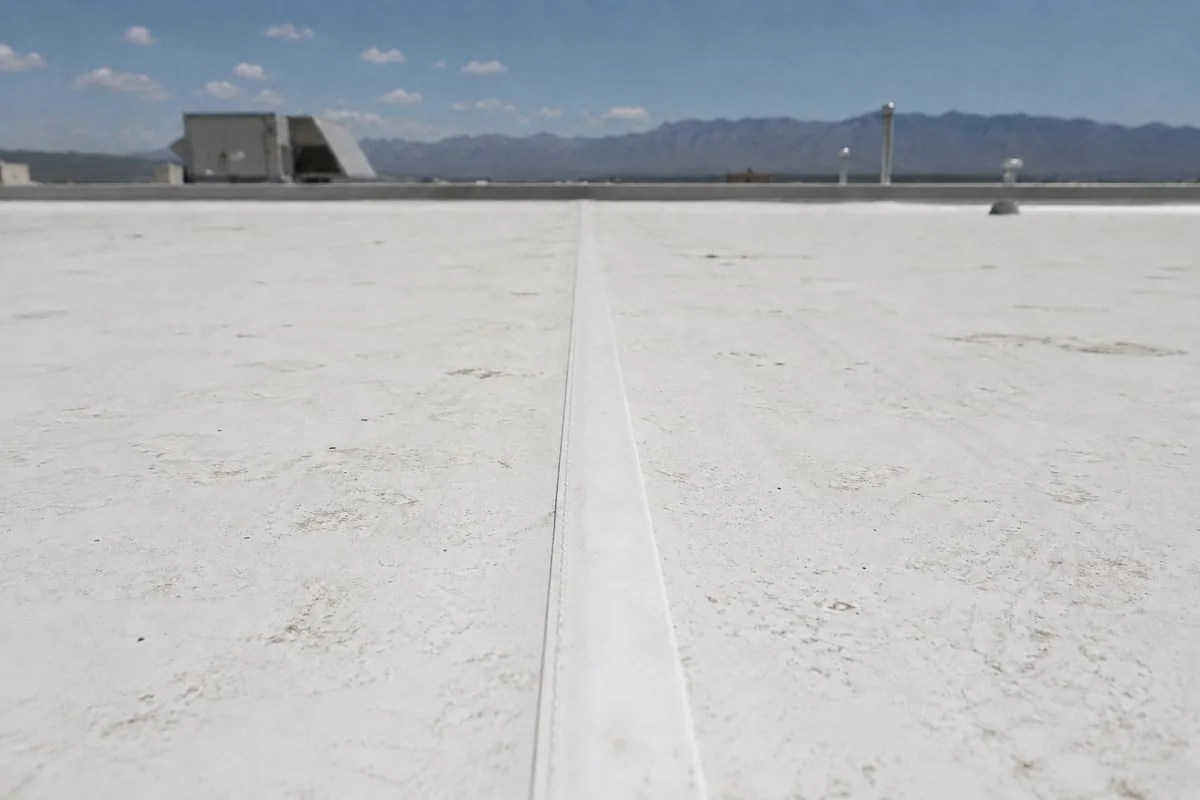
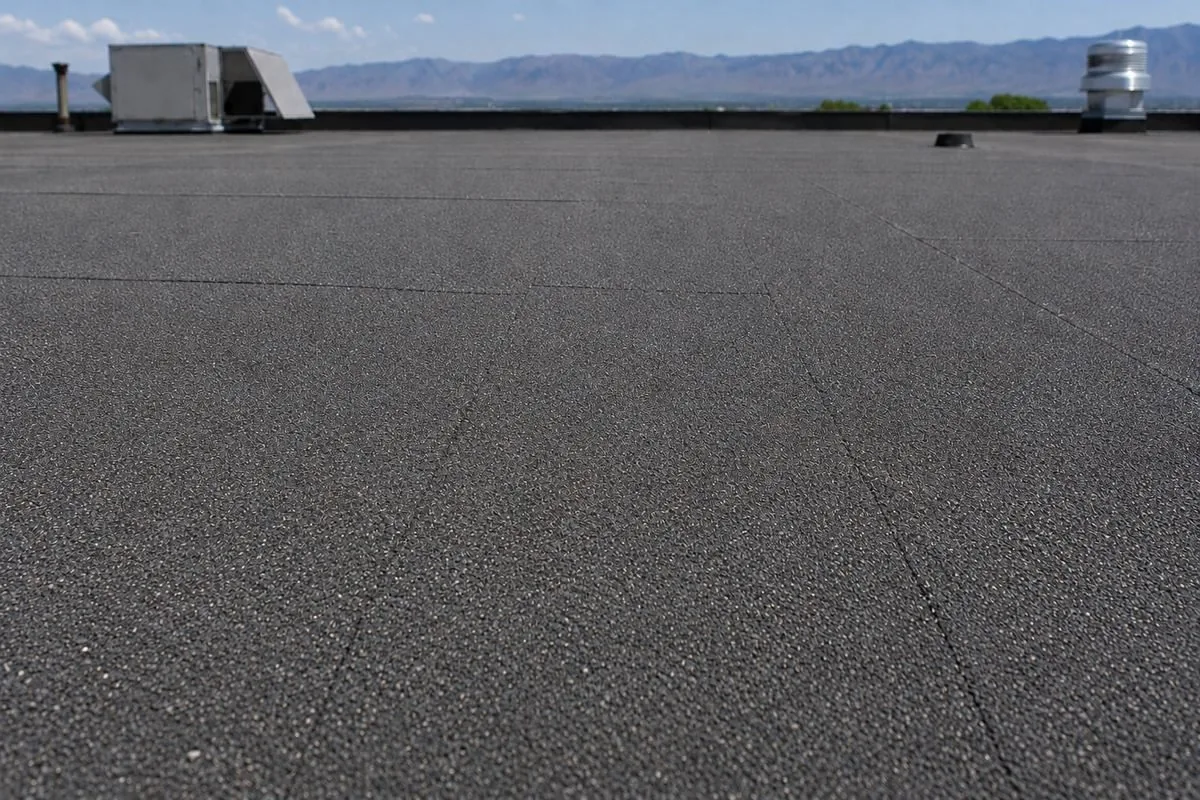
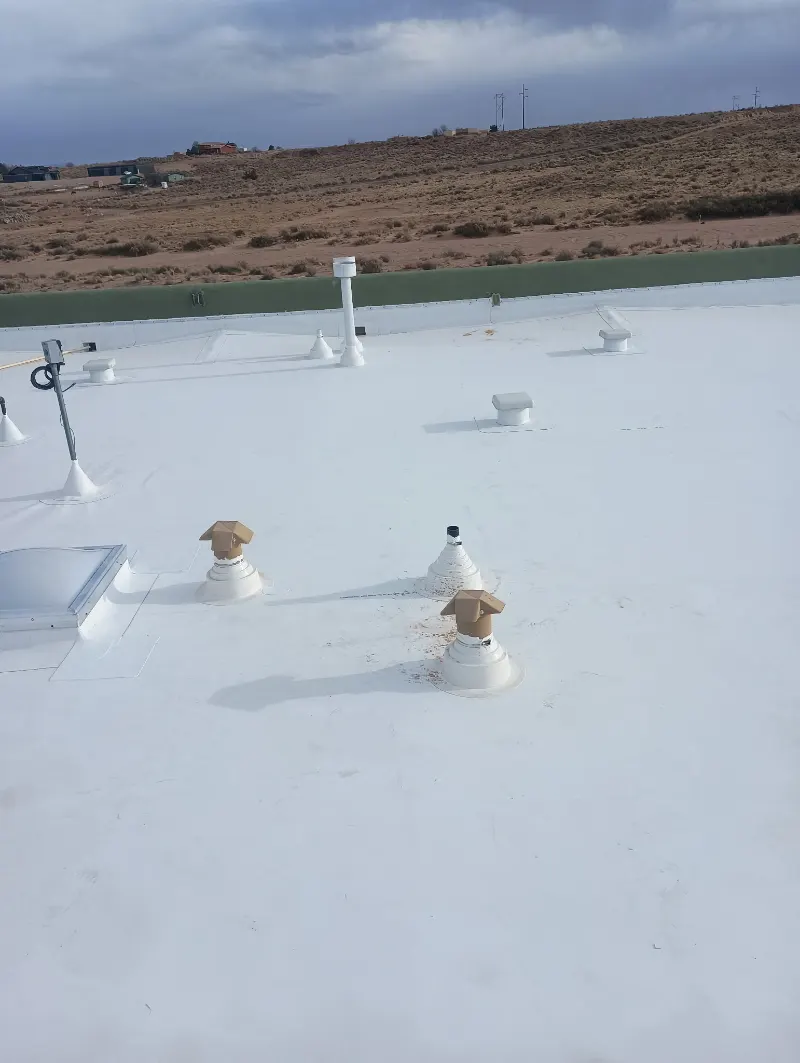
Flat roof details worth checking
DIY vs. Professional Maintenance
Homeowners can safely handle debris clearing, drain checks, and basic visual inspections from ground level or safely from the roof surface. What requires a professional:
- Blister cutting and repair (improperly cut blisters introduce moisture)
- Flashing re-termination and base flashing replacement
- Moisture scanning and deck condition assessment
- Any work on TPO, modified bitumen, or foam-coated roofs that involves membrane integrity
For more on foam-coated roofs, including blisters, soft spots and moisture testing, see our spray foam guide.
Frequently Asked Questions
How often should a flat roof be professionally inspected?
We recommend a professional inspection every 1–2 years for flat roofs under 10 years old, and annually once the roof is past 10 years. After any major hail or wind event, inspect regardless of age. Our free roof report covers everything in a standard inspection.
How long do flat roofs last in Albuquerque?
With regular maintenance: TPO and modified bitumen 15–25 years, tar-and-gravel 20–30 years, foam-coated 10–15 years before recoat. Without maintenance, subtract 30–50% from those figures. In New Mexico's UV environment, the difference is even more pronounced than elsewhere.
What's the most common cause of flat roof leaks in ABQ?
Blocked or undersized drainage (canales and scuppers), in our experience, followed closely by flashing failure at penetrations and parapet walls. The membrane field is usually the last thing to fail. The joints and transitions go first, which is why regular inspections pay off: we find flashing issues before they turn into ceiling damage.
Schedule Your Pre-Monsoon Flat Roof Inspection
A free inspection with documented findings and clear recommendations, before monsoon season exposes the problems.
Request Your Free Roof Report