Home / Materials / Metal Roofing Profiles Explained: Which Zia Panel Fits Your Roof
Materials Center
Metal Roofing Profiles Explained: Which Zia Panel Fits Your Roof?
Reviewed by: Matt Kennerly, Co-founder & Owner · NM Lic. #426379 · GB-98Updated September 12, 2026
Quick answer
Timberwolf's metal roofs use panels from Zia Metal Roofing Supply in Albuquerque. Standing seam hides its fasteners and is rated down to a 1:12 slope. Zia Rib, PBR, PBU, and corrugated are exposed-fastener panels with different rib shapes and minimum slopes. All five carry UL 2218 Class 4 impact and UL 790 Class A fire ratings.
Timberwolf's metal roofs are built with panels from Zia Metal Roofing Supply, a locally owned supplier here in Albuquerque. Zia makes five panel profiles. They look different, attach differently, and work on different roof slopes, so the right one depends on your roof as much as your taste. Below is the whole lineup, using Zia's own specifications.
The Five Zia Panels at a Glance
Panel
Fastening
Coverage
Gauges
Minimum slope
Typical use
1-1/2" A-Lock Standing Seam
Concealed clips
15"
24
1:12
Residential and commercial roofs
Zia Rib / AG Panel
Exposed
36"
24, 26, 29
2:12
Roofing and siding
PBR / R-Panel
Exposed
36"
24, 26
1:12
Low-slope roofs, steel-frame buildings
PBU Panel
Exposed
36"
24, 26
3:12
Siding and soffit, occasional roofing
7/8" Corrugated
Exposed
32"
24, 26
1:12
Longer spans, modern or industrial look
"Minimum slope" is the flattest roof pitch the panel is rated for. A 2:12 slope rises 2 inches for every 12 inches across. Below a panel's minimum, water can back up under the laps.
Material partner
Not Sure What Your Roof Needs?Get a Free Roof Report with photos, or see a price for your home in about a minute.
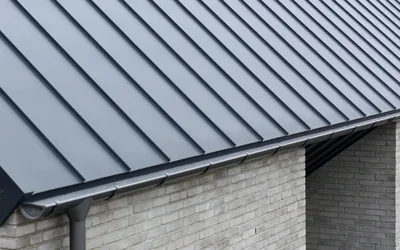
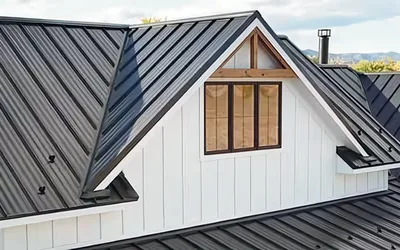
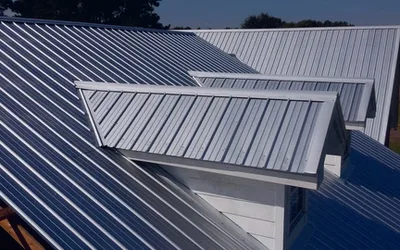
Zia roll-forms its panels right here in Albuquerque. Timberwolf installs them. Here are the five Zia roofing profiles we work with, each shown installed and in cross-section so you can see how it looks and how it is shaped.
Made in Albuquerque
UL 2218 Class 4 impact rated
Installed by Timberwolf
Photo: Zia Metal Roofing Supply
1-1/2" A-Lock Standing Seam
Concealed fastener
Coverage
15"
Gauge
24 ga
Min. slope
1:12
Lengths
From 1'6"
Best for: Homes that want clean lines and no exposed screws.
Product photos courtesy of Zia Metal Roofing Supply. Cross-section illustrations by Timberwolf, drawn from Zia's published dimensions. Rib heights are exaggerated for clarity. Official specs, colors and spec sheets are at Zia Metal Roofing Supply. Ready to pick one? Request a free inspection and we'll recommend the right profile for your roof.
Standing Seam vs. Exposed Fastener: The Big Difference
With standing seam, the panels are held down by clips hidden under the raised seams. No screws go through the face of the panel, so there are fewer places for water to get in, and the panels can expand and contract with Albuquerque's big daily temperature swings.
With exposed-fastener panels (Zia Rib, PBR, PBU, and corrugated), screws with rubber washers go straight through the panel into the roof deck or framing. These systems cost less to buy and install, but those screws and washers take the full sun and should be checked periodically over the life of the roof.
Each Panel in Detail
1-1/2" A-Lock Standing Seam
Zia's premium roofing panel. It has a 1-1/2" seam and 15" of coverage, comes in 24 gauge, and is rated down to a 1:12 slope. It's concealed-fastened with an external clip system. Zia recommends 5/8" plywood with a 30 lb moisture barrier underneath, though it can also go over open structural framing. It's the cleanest look for homes and the best choice when you want no exposed screws.
Zia Rib / AG Panel
A bold, classic ribbed profile with 36" of coverage, available in 24, 26, and 29 gauge. It's rated for slopes of 2:12 and steeper and is exposed-fastened. It includes an anti-siphon groove that helps stop water from wicking into the side laps. It works for roofing and for interior or exterior siding. Zia recommends 7/16" OSB with synthetic underlayment beneath it. This is a popular choice when you want the look of metal at a lower cost than standing seam.
PBR / R-Panel
A heavier-duty ribbed panel with 1-1/4" ribs spaced 12" apart and 36" of coverage, in 24 or 26 gauge. It's rated for slopes as low as 1:12 and can span up to five feet between supports, which is why it's common on commercial, agricultural, and steel-frame buildings. It's exposed-fastened.
PBU Panel
A lower-profile panel with 3/4" ribs spaced 6" apart and 36" of coverage, in 24 or 26 gauge. Zia positions it mainly for siding and soffits. It can be used for roofing on slopes of 3:12 and steeper. It's exposed-fastened and also carries a Texas Windstorm evaluation (RC-196).
7/8" Corrugated
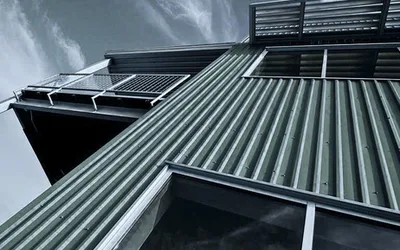
The classic wavy profile, with 7/8" depth and 32" of coverage, in 24 or 26 gauge. It's rated down to 1:12. Its deeper profile lets it span longer distances and carry heavier loads than shallower panels. It's exposed-fastened and popular for modern and industrial designs as well as roofing and siding.
Ratings Every Zia Panel Carries
All five profiles are UL Classified with the same four ratings:
UL 2218 Class 4 impact resistance, the highest hail-impact rating
UL 790 Class A fire resistance, the highest fire rating for roof coverings
UL 263 fire resistance rating
UL 580 Class 90 wind uplift
An impact rating describes how a panel performs in testing. It isn't a promise that hail will never dent it, and cosmetic dents are handled differently than leaks. See our Class 4 impact-resistance guide for how ratings and insurance discounts work.
Paint, Warranty, and Gauge
Paint: Zia's colored panels are coated with Sherwin-Williams coil coatings.
Paint warranty: 40 years against cracking, flaking, or peeling, and 30 years against chalking and color change.
Galvalume (unpainted): an acrylic-coated finish backed by a 25-year warranty.
Gauge: a lower gauge number means thicker steel, so 24 gauge is heavier than 26, and 26 is heavier than 29. Zia's standard colors come in 26 and 29 gauge. Premium colors come in 26 gauge only.
Colors
Zia stocks 18 colors. Standard: Polar White, Ivory, Light Stone, Saddle Tan, Ash Gray, Charcoal, Cocoa Brown, Rustic Red, Hawaiian Blue, Evergreen, and Galvalume. Premium: Colony Green, Burnished Slate, Gallery Blue, Crimson Red, Copper Penny, Matte Black, and Gloss Black. Printed and on-screen colors are close but not exact, so always confirm with a physical sample before ordering. We can bring samples to your home.
Which Colors Stay Coolest in Albuquerque Sun
Color makes a real difference in how much heat a metal roof absorbs. Sherwin-Williams tested the solar reflectance of the coatings on Zia's panels (report 2024-2131R). A higher Solar Reflectance Index (SRI) means the roof reflects more sun and stays cooler: The full lab-tested list for all 17 colors is in which metal roof color stays coolest.
Color
Solar reflectance
SRI
Ivory
0.66
80
Polar White
0.65
78
Light Stone
0.56
66
Copper Penny
0.48
54
Ash Gray
0.46
52
Charcoal
0.36
38
Evergreen
0.35
38
Cocoa Brown
0.33
35
Crimson Red
0.33
35
Hawaiian Blue
0.32
33
Burnished Slate
0.32
33
Gallery Blue
0.26
24
These are initial values measured on new, unwashed panels, and Sherwin-Williams notes they aren't intended for ENERGY STAR certification. The pattern still holds: light colors like Ivory, Polar White, and Light Stone reflect roughly twice as much sun as dark blues and browns. That matters on a hot Albuquerque summer afternoon. Also see our color guide for New Mexico homes.
Which Panel Should You Choose?
You want the cleanest look and no exposed screws: A-Lock standing seam.
You want a metal roof at a lower cost, on a slope of 2:12 or steeper: Zia Rib.
Your roof is low-slope (down to 1:12), or it's a shop, barn, or steel-frame building: PBR / R-Panel.
You need siding, soffits, or accents: PBU, or Zia Rib for a bolder rib.
You want a modern or industrial look, or longer spans: 7/8" corrugated.
Your roof's slope, what's underneath the current roof, and how the home looks from the street all narrow the choice. We'll walk through it at your inspection. For cost and lifespan tradeoffs, see metal vs. shingles and metal roof cost in Albuquerque, or start with our metal roofing page.
Framing, Decking and Panel Lengths
Zia designs all five profiles for open structural framing, and all are compatible with solid decking. Homes typically use solid decking with underlayment. Here's what Zia recommends for each:
Profile
Recommended decking and underlayment
Panel lengths
1-1/2" A-Lock Standing Seam
5/8" plywood with 30 lb underlayment
From 1' 6"; ask us about maximum run length
Zia Rib / AG Panel
7/16" OSB with synthetic underlayment
3' 2" to 45'
PBR / R-Panel
5/8" plywood with 30 lb moisture barrier or synthetic underlayment
3' 2" to 45'
PBU Panel
5/8" plywood with 30 lb felt or synthetic underlayment
3' 2" to 48'
7/8" Corrugated
5/8" plywood with 30 lb felt or synthetic underlayment
3' 2" to 45'
Long single-piece panels mean fewer end laps, which are a common place for leaks on low slopes. We'll size panels to your roof during your Free Roof Report.
FAQs
What's the difference between standing seam and exposed-fastener metal roofing?
Standing seam panels are held down by hidden clips under raised seams, so no screws go through the roof surface. Exposed-fastener panels, like Zia Rib, PBR, PBU, and corrugated, are screwed through the face of the panel. They cost less, but the screws and washers should be checked periodically over the roof's life.
Which metal panel works on a low-slope roof?
Zia's A-Lock standing seam, PBR / R-Panel, and 7/8" corrugated are all rated down to a 1:12 slope. Zia Rib needs at least 2:12, and PBU needs 3:12 when used as roofing. Very flat roofs below those minimums need a flat-roof system like TPO instead.
Are Zia metal panels hail resistant?
All five Zia profiles carry a UL 2218 Class 4 impact rating, the highest hail-impact classification. That rating describes performance in testing. It doesn't guarantee a panel will never dent, so ask your insurer how they treat Class 4 metal roofs and cosmetic damage.
What metal roof color stays coolest in Albuquerque?
Lighter colors reflect the most sun. In Sherwin-Williams testing of Zia's coatings, Ivory (SRI 80), Polar White (SRI 78), and Light Stone (SRI 66) scored highest, while dark blues and browns scored in the 20s and 30s.
What gauge metal roof should I get?
A lower gauge number means thicker steel: 24 gauge is heavier than 26, and 26 is heavier than 29. Zia's standing seam comes in 24 gauge. Premium colors are only available in 26 gauge, while standard colors come in 26 and 29. We'll recommend a gauge based on your panel choice and your roof.