

Coping and Edge Metal: ES-1 Compliance for Commercial Roofs
Coping caps and edge metal are among the highest-failure-rate details on commercial flat roofs in the Southwest. When they fail, they can do more than leak. They can peel the entire roof membrane in a wind event. This page covers what proper installation looks like and when yours needs attention.
What Are Coping and Edge Metal?
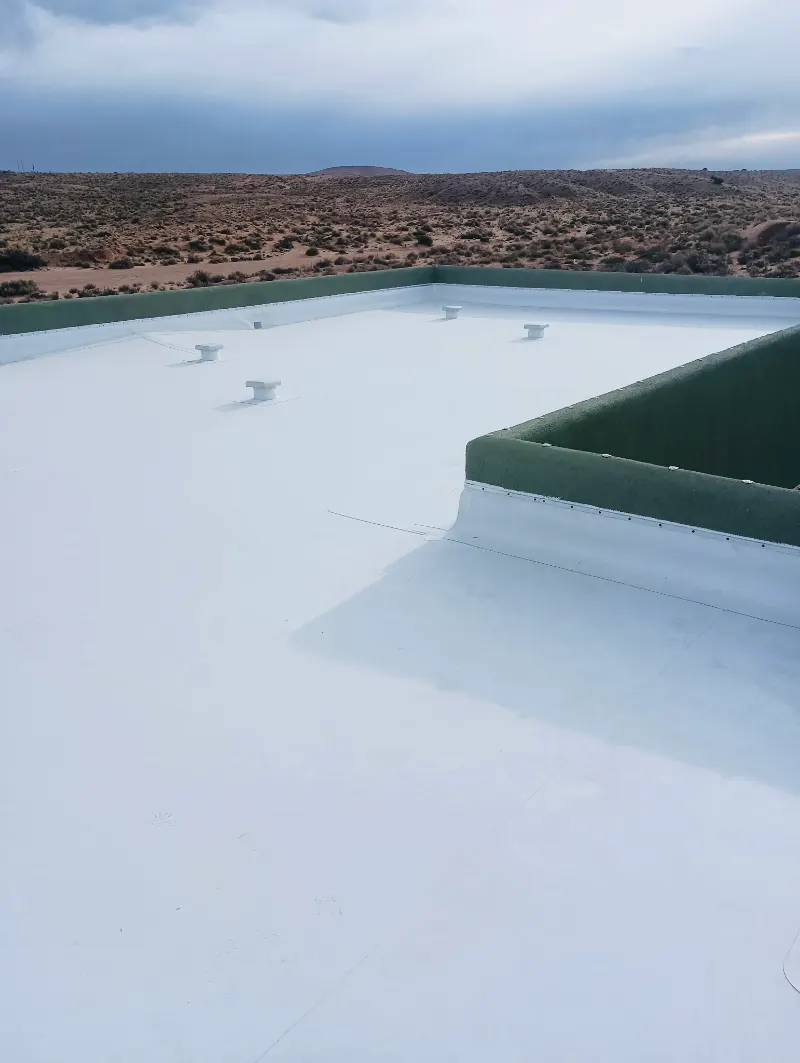
Coping is the metal cap installed over the top of a parapet wall on a commercial building. It waterproofs the top of the wall, sheds water to one or both sides, and anchors the roof membrane termination, which is its most critical job. A coping failure is one of the most common entry points for water into the building envelope on commercial and large residential flat roofs.
On commercial buildings, coping and edge metal are part of a commercial roof assessment, and loose or failed pieces are a commercial roof repair item.
For the other places a parapet lets water in, and what New Mexico's code requires on a plastered parapet, see why parapet walls leak.
Edge metal (also called drip edge, gravel stop, or fascia metal) is the formed metal trim installed at the edge of a flat roof where there is no parapet wall. Edge metal terminates the roof membrane, prevents water from wicking back under the membrane at the eave, and gives a clean finished appearance to the roof edge.
ES-1 and ANSI/SPRI Standards
The ANSI/SPRI ES-1 standard specifies the wind-uplift performance requirements for edge metal and coping on low-slope commercial roofs. In New Mexico, most jurisdictions reference ASCE 7 wind load calculations for their specific elevation and terrain. Albuquerque, at 5,312 feet, has meaningfully higher design wind speeds than coastal areas at the same latitude.
ES-1 classifies edge metal and coping by tested pull-off strength in pounds per linear foot. The required classification depends on:
- Building height and the exposure category of the site
- Local design wind speed from ASCE 7 maps (currently 110–115 mph for most of central NM)
- Whether the roof is a re-cover or a new installation (new installations require ES-1 testing; some re-covers can reference existing tested assemblies)
Many older commercial buildings in Albuquerque have coping that was installed before ES-1 was widely enforced, or that was re-installed during a re-roof without upgrading the coping to current standards. That's a compliance gap worth addressing, especially after any wind event.
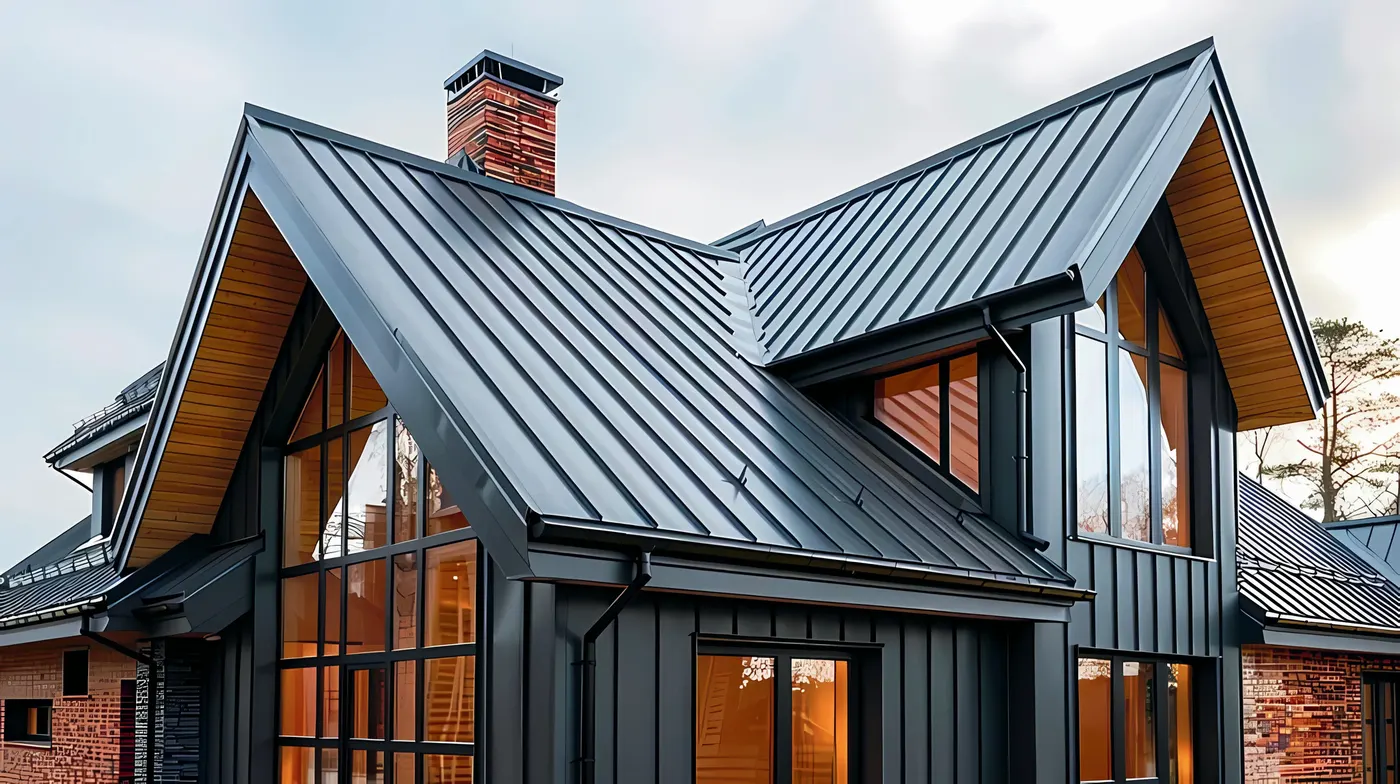
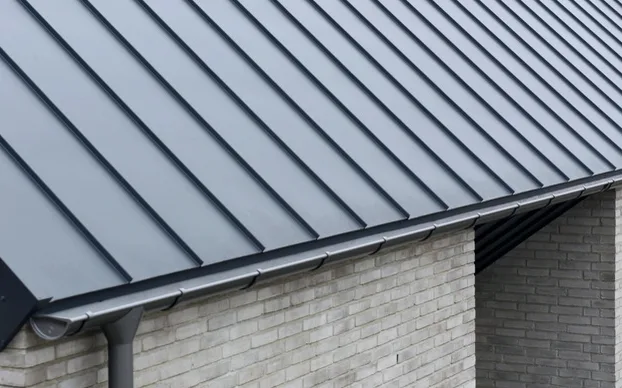
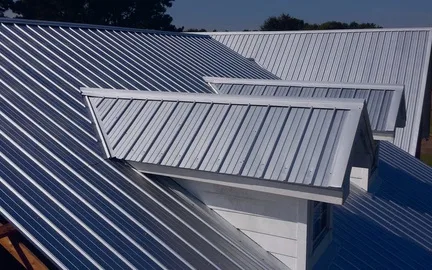
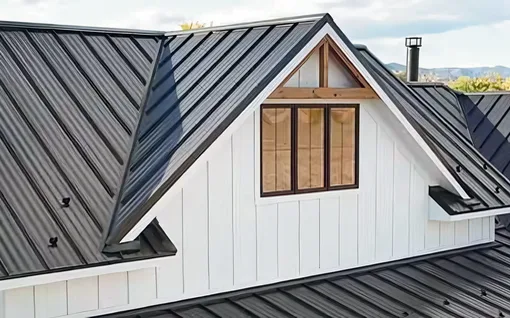
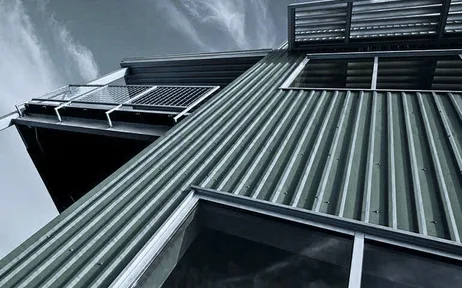
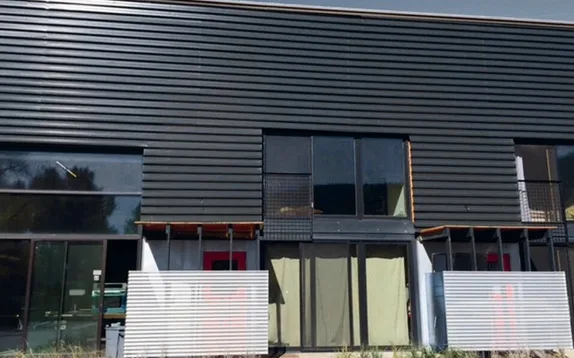
Examples of metal edge and panel details
How Coping Fails
- Joint separation. Coping joints expand and contract with temperature. Without properly sized expansion joints and correctly lapped cover plates, the coping opens at joints during winter cold and gaps allow water infiltration during monsoon.
- Inadequate clip spacing. ES-1 specifies maximum clip spacing for each tested assembly. When clips are installed at wider intervals, the coping can lift and pull away under wind load and take the membrane termination with it.
- Caulk-only termination. On older installations, the coping-to-membrane joint was often finished with nothing more than a bead of lap sealant. That sealant dries and cracks within a few seasons in New Mexico's UV environment, leaving an open joint.
- Metal corrosion at fasteners. Galvanized clips and fasteners in contact with pressure-treated wood nailers or dissimilar metals accelerate corrosion. Corroded fasteners lose pull-out capacity well before the coping metal itself degrades.
What ES-1 Compliant Installation Looks Like
Verify the nailer
The wood nailer the coping clips fasten to must be structurally sound, properly secured to the parapet, and compatible with the clip material. Rotted or delaminated nailers void any tested assembly performance.
Install clips at specified spacing
Clip spacing is dictated by the tested assembly, typically 12–24 inches on center at corners and edge zones, up to 36 inches at field zones. We verify against the published ES-1 report for the specific coping product being installed.
Lap the coping at joints
Coping sections are lapped or connected with properly designed cover plates that allow thermal movement without opening a gap. Laps run in the direction of prevailing drainage.
Integrate with the membrane
The membrane termination below the coping is secured with appropriate termination bar, cleat, or embedded flashing. It isn't left to rely solely on the coping to hold it down.
Document for the building owner
We provide the tested assembly designation (e.g., "SPRI ES-1 Class X") for the coping installed, which supports warranty claims and future inspection documentation.
Frequently Asked Questions
Does my commercial re-roof require new ES-1 compliant coping?
If you're doing a full tear-off and re-roof, most current building codes require the coping to meet ES-1 for the local design wind speed. If you're doing a recover (overlay) over existing membrane, the existing coping may be able to remain if it's structurally sound and properly attached. We evaluate this and note any deficiencies in our project documentation.
How can I tell if my existing coping is failing?
Walk the perimeter at parapet level and look for open joints, lifted sections, visible rust at fastener locations, or water staining on the interior wall face directly below the parapet. Any section of coping that lifts when you press on it is improperly secured and a wind event risk.
What coping materials do you install?
Primarily Kynar-coated aluminum (the industry standard for commercial work in New Mexico, with excellent UV and corrosion resistance) and galvanized steel for budget-sensitive applications. Copper is available for historic or architectural projects. We size all coping to the parapet width and specify the ES-1 class before ordering.
Coping Inspection for Your Commercial Property
We assess ES-1 compliance, clip spacing, and joint condition as part of every commercial roof inspection, at no charge.
Request a Commercial Roof Report